China’s Strategic Tech Push Challenges U.S. Export Restrictions
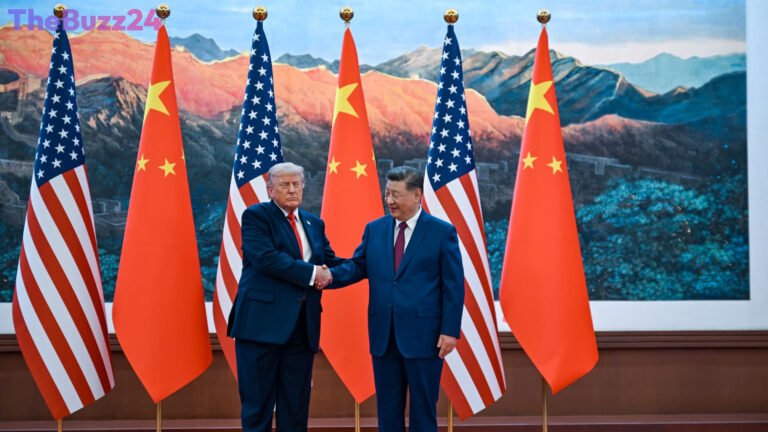
As high-level diplomatic discussions between Beijing and Washington commence, China is signaling a defiant stance regarding its technological autonomy. A series of rapid-fire announcements from domestic tech giants, including Huawei and Alibaba, suggests that the nation is attempting to demonstrate that U.S.-led export controls on advanced semiconductors have failed to stifle its AI ambitions. By accelerating production timelines and unveiling new processing hardware, Beijing aims to project an image of resilience, asserting that while Western sanctions may create friction, they cannot fully halt the country’s progress in the artificial intelligence sector.
The recent unveiling of Huawei’s Ascent 960DT and Alibaba’s Zhenwu V900 chip indicates a deliberate effort to showcase domestic innovation ahead of critical state visits. Industry observers note that these moves are calculated to provide Chinese leadership with leverage, framing the narrative around the idea that the nation can circumvent technological bottlenecks. By linking thousands of less-advanced chips into massive computing clusters, Chinese firms are attempting to compensate for the lack of access to top-tier hardware from companies like Nvidia, effectively creating alternative pathways to maintain their AI development momentum.
Despite this outward display of confidence, the underlying reality remains complex. Experts point out that while China has achieved genuine acceleration in its development cycles, it still faces significant hurdles. Domestic firms continue to struggle with production capacity and the sheer computational power required to match the performance of leading U.S. models. Furthermore, the reliance on imported technology and the logistical challenges of scaling these clusters suggest that the fundamental competitive gap between the two nations has not yet been bridged. As both sides navigate these diplomatic waters, the focus appears to be shifting toward managing geopolitical tensions rather than resolving the core technological disputes.
Key Takeaways
- Chinese tech giants are accelerating chip development schedules to signal that U.S. export restrictions are not effectively halting their AI progress.
- Beijing is utilizing large-scale computing clusters to compensate for the lack of access to the most advanced individual AI processors.
- Despite these advancements, China remains heavily dependent on foreign technology and faces significant challenges in matching the performance and profitability of U.S. AI leaders.
Editor’s Analysis & Impact
The current standoff over semiconductor technology represents a critical inflection point in global trade and national security. China’s strategy of ‘technological defiance’ is designed to shift the diplomatic narrative, moving away from a position of vulnerability to one of managed competition. However, the industry impact is nuanced; while China is successfully building a domestic ecosystem, the reliance on legacy hardware and complex clustering architectures creates long-term inefficiencies. For global markets, this suggests a bifurcated tech landscape where supply chains will become increasingly fragmented. Future outlooks indicate that while export controls will continue to slow China’s ascent, they are unlikely to trigger a total collapse of its AI sector. Instead, we are likely to see a prolonged period of ‘technological decoupling’ where both nations prioritize self-sufficiency over global integration, ultimately driving up costs and slowing the pace of global AI innovation.
Frequently Asked Questions
Q: Are U.S. export controls effectively stopping China's AI development?
A: While U.S. controls have successfully restricted access to the most advanced AI chips and manufacturing equipment, they have not stopped China's progress. Instead, they have forced Chinese firms to accelerate domestic innovation and adopt alternative architectures, such as linking multiple less-powerful chips together.
Q: Why is China timing these tech announcements with diplomatic summits?
A: The timing is largely strategic. By showcasing new hardware and AI capabilities during high-level meetings, Beijing aims to demonstrate strength and resilience, providing its leadership with leverage to argue that technological 'choke points' are ineffective and that the nation remains a formidable competitor.
AI Disclosure: This article is based on verified data and official reports. Our Team and AI have cross-referenced every financial detail with primary sources to ensure total accuracy.
More from this Category