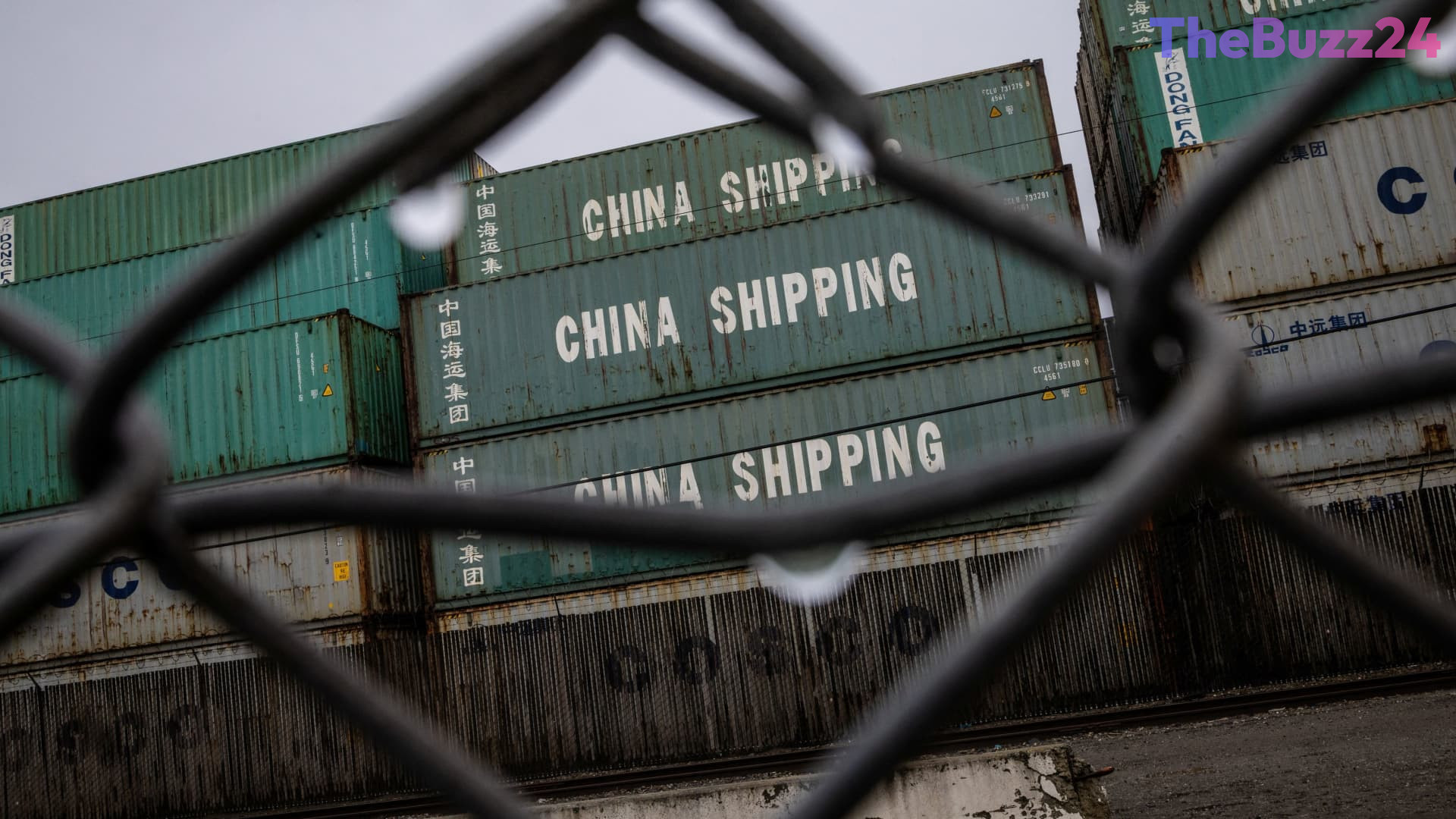
Chinese Export Momentum to U.S. Stalls Amid Economic Headwinds
China’s export sector, which recently served as a primary engine for the nation’s economic growth, experienced a notable contraction in July. After a robust performance in June that saw exports to the United States climb by 14%, new survey data indicates that U.S.-bound shipments have fallen for the first time in several months. This reversal marks a significant shift from the previous month, where overall exports surged by 27%, the highest growth rate observed in nearly five years.
The recent decline follows a period of aggressive frontloading by businesses attempting to bypass anticipated tariff increases. While the surge in June was bolstered by demand for components related to AI data center infrastructure, the momentum appears to have dissipated. Surveyed businesses reported a deceleration in factory activity throughout July, with the manufacturing sector facing particularly difficult conditions regarding employment growth, which has weakened across all surveyed industries compared to the previous year.
Beyond the manufacturing sector, domestic consumption is also showing signs of strain. Retail sales experienced a decline in July, with the hospitality and travel industries recording sharp year-over-year downturns. In response to these cooling indicators, policymakers in Beijing have signaled an urgent need to stimulate domestic demand and strengthen international trade cooperation, while maintaining a strategic focus on achieving critical technological breakthroughs to stabilize the broader economy.
Key Takeaways
- U.S.-bound shipments from China declined in July, reversing the 14% growth observed in June.
- Manufacturing employment and retail performance have both weakened, signaling a broader economic slowdown.
- Beijing is prioritizing domestic demand stimulation and technological advancement to counter the cooling export sector.
Editor’s Analysis & Impact
The cooling of Chinese exports to the U.S. highlights the fragility of the current global trade environment, which is heavily influenced by tariff uncertainty and shifting supply chain strategies. The initial June surge was largely a reactive measure by firms frontloading inventory, rather than a sign of sustainable long-term demand. As manufacturing activity decelerates and domestic retail spending falters, China faces a dual challenge: maintaining its role as a global manufacturing hub while simultaneously attempting to pivot toward a consumption-led growth model. The emphasis on technological ‘breakthroughs’ suggests that Beijing is looking to move up the value chain to insulate itself from traditional trade volatility. Investors should monitor upcoming official trade and retail data closely, as these figures will confirm whether the current downturn is a temporary correction or the beginning of a more prolonged period of economic stagnation.
Frequently Asked Questions
Q: Why did Chinese exports to the U.S. surge in June?
A: The June surge was largely driven by businesses frontloading shipments to avoid anticipated U.S. tariff increases and sustained demand for components used in AI data center development.
Q: What sectors are currently showing signs of weakness in China?
A: The survey indicates weakness across manufacturing, particularly in employment, as well as a sharp downturn in the retail, travel, and restaurant sectors.
AI Disclosure: This article is based on verified data and official reports. Our Team and AI have cross-referenced every financial detail with primary sources to ensure total accuracy.
More from this Category