Cosmic Cotton Candy: NASA’s TESS Discovers Unprecedentedly Low-Density ‘Super-Puff’ Planets
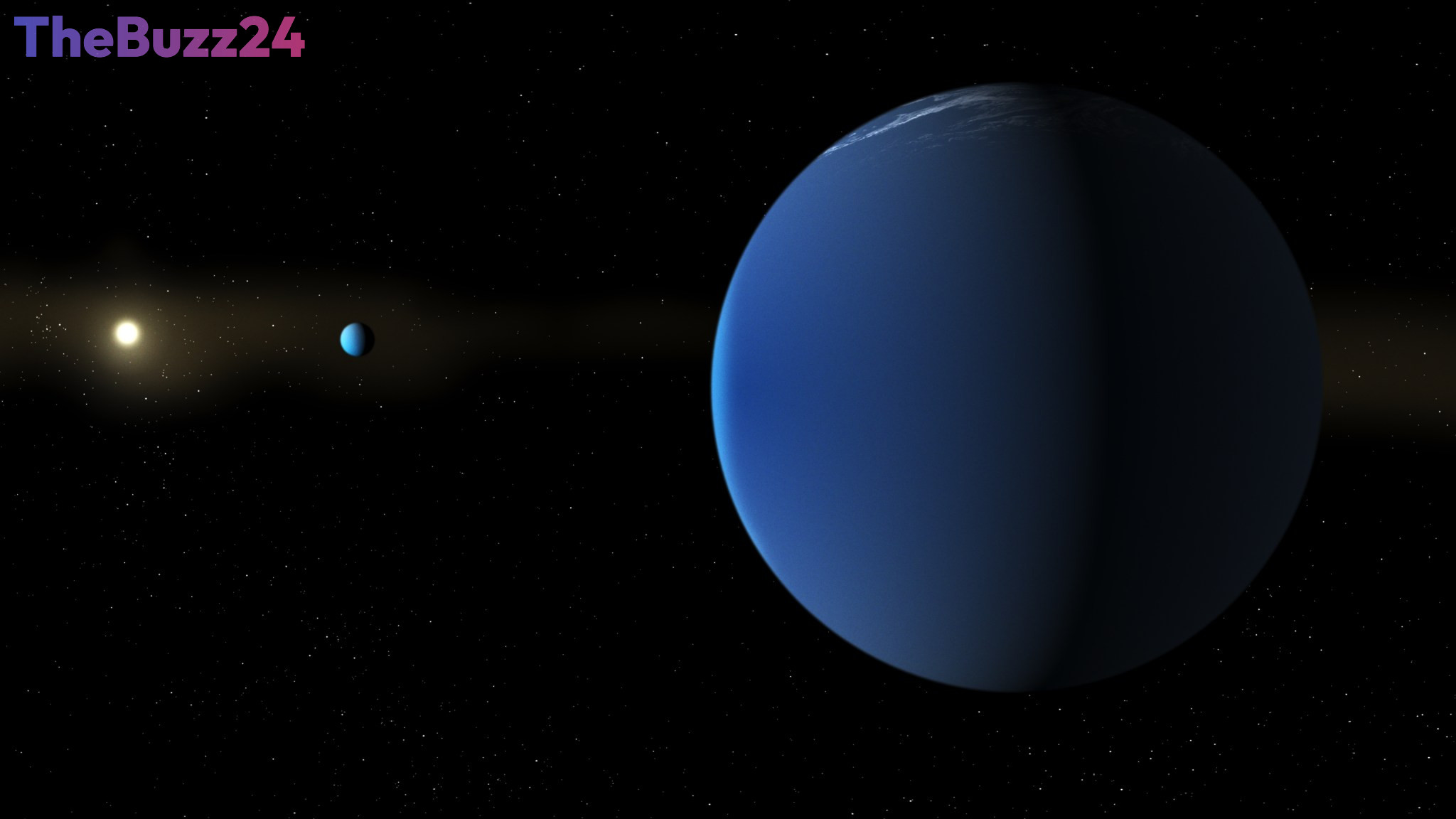
Astronomers utilizing NASA’s Transiting Exoplanet Survey Satellite (TESS) have identified two extraordinary exoplanets, designated TOI-791 b and TOI-791 c, which are being hailed as the “puffiest” worlds ever discovered. These celestial bodies are roughly the size of Jupiter but possess a minuscule fraction of its mass, resulting in densities so low they are comparable to cotton candy. This remarkable discovery challenges current understandings of planetary formation.
The two super-puff planets orbit a star similar to our Sun, named TOI-791, located approximately 1,113 light-years from Earth. TESS detected these planets by observing periodic dimming of the star’s light, indicating a planet passing in front of it. Subsequent analysis revealed the unusual characteristics of TOI-791 b and TOI-791 c. TOI-791 b, while Jupiter-sized, holds only about 3.0 percent of Jupiter’s mass, and TOI-791 c, even larger than Jupiter, contains just 5.9 percent of its mass.
These planets also boast unusually long orbital periods, with TOI-791 b completing a circuit around its star in 139 days and TOI-791 c in 232 days. Discovering planets with such extended orbits requires extensive observation periods, which TESS was able to provide by collecting 1,122 days of data over seven years. The gravitational interplay between the two planets, evidenced by variations in their transit timings, allowed scientists to accurately calculate their masses and confirm their exceptionally low densities.
The existence of these super-puffs presents a significant puzzle for planetary scientists. “The main reason these planets are interesting to study is that we didn’t expect to see them at all,” noted Jon Jenkins, science lead for NASA’s Ames Research Center. “They represent a puzzle for us to solve about how giant planets like Jupiter and the super-puffs form.” The rarity of finding two such planets within the same system further amplifies their scientific importance, offering a unique opportunity to probe the mechanisms behind planetary system evolution.
Key Takeaways
- NASA's TESS mission has discovered two 'super-puff' exoplanets, TOI-791 b and TOI-791 c, with extremely low densities, comparable to cotton candy.
- These Jupiter-sized planets have only a small fraction of Jupiter's mass, challenging existing theories on giant planet formation.
- The discovery of two such rare planets in the same system provides a unique opportunity to study planetary evolution and formation processes.
Editor’s Analysis & Impact
The discovery of the TOI-791 super-puff planets marks a significant advancement in exoplanet research, pushing the boundaries of our understanding of planetary formation. Their exceptionally low densities challenge established models, suggesting that a wider range of formation pathways may exist for gas giants than previously thought. The presence of two such planets in a single system offers a rare laboratory for studying planetary dynamics, orbital evolution, and atmospheric composition. This finding underscores the value of missions like TESS in uncovering the diversity of planetary systems and could lead to revised theories on how gas giants form and migrate, impacting the broader field of astrophysics and our search for potentially habitable worlds.
Frequently Asked Questions
Q: What makes TOI-791 b and TOI-791 c 'super-puff' planets?
A: These planets are classified as 'super-puffs' because they are roughly the size of Jupiter but have extremely low masses, resulting in densities comparable to cotton candy. This means their atmospheres are vastly expanded relative to their core masses.
Q: How were these planets discovered?
A: The planets were discovered by NASA's Transiting Exoplanet Survey Satellite (TESS) by observing the slight dimming of their host star, TOI-791, as the planets passed in front of it. Further analysis of transit timing variations, caused by the planets' gravitational tugs on each other, helped determine their masses.
Q: Why are these discoveries important for science?
A: These discoveries are important because they present a puzzle for current planetary formation theories. The existence of such low-density giant planets challenges our understanding of how gas giants form and evolve, offering a unique opportunity to refine scientific models and learn more about the diversity of planetary systems in the universe.
AI Disclosure: This article is based on verified data and official reports. Our Team and AI have cross-referenced every financial detail with primary sources to ensure total accuracy.
More from this Category