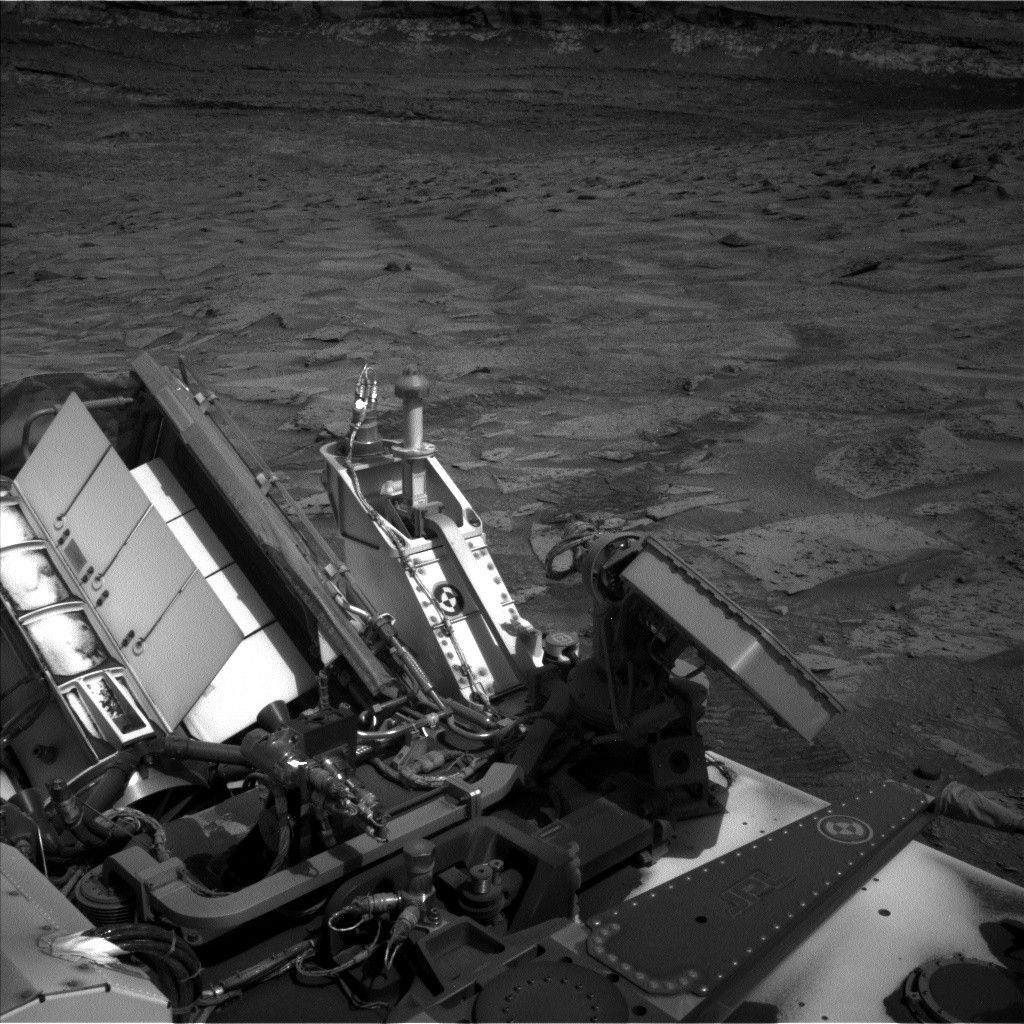
Curiosity Rover Investigates Mysterious Martian Crater and Honeycomb Rock Formations
The Curiosity rover is currently navigating toward a small, scientifically significant crater on Mars, informally dubbed “Antofagasta.” Measuring roughly 10 meters in diameter, the crater is believed to be a relatively young geological feature, potentially dating back less than 50 million years. By acting as a natural excavation site, the crater provides researchers with a rare opportunity to examine subsurface materials that have remained shielded from the planet’s intense surface radiation for eons. Scientists are eager to analyze these exposed layers, hoping they reveal chemical signatures that could provide insights into the planet’s long-term geological history.
As the rover traverses the Martian landscape, it has encountered a widespread and visually striking phenomenon: honeycomb-shaped polygonal rock formations. These intricate patterns, captured in high resolution by the rover’s Mastcam, have become a primary focus for the mission team. Researchers are currently synthesizing chemical data and imagery to determine the precise environmental conditions that led to the creation of these geometric textures, which span vast stretches of the terrain.
In addition to its geological survey, Curiosity continues to perform vital atmospheric monitoring. The rover is tracking local weather patterns, including the movement of dust devils, as the mission team prepares for the onset of the Martian summer and the associated increase in atmospheric dust. To maintain efficient progress, the rover is utilizing its autonomous navigation system, which allows it to make real-time driving decisions. The mission team expects that upcoming ground-level imagery of the Antofagasta crater rim will be instrumental in shaping future research priorities on the Red Planet.
Key Takeaways
- Curiosity is approaching the 'Antofagasta' crater, a young geological site that may reveal protected subsurface materials.
- The rover has identified extensive honeycomb-shaped polygonal rock patterns that are currently under scientific investigation.
- Curiosity is utilizing autonomous navigation to manage its journey while simultaneously monitoring Martian weather and dust activity.
Editor’s Analysis & Impact
The ongoing mission of the Curiosity rover continues to provide invaluable data regarding the geological evolution of Mars. By focusing on relatively young craters like Antofagasta, researchers can bridge the gap between ancient Martian history and more recent environmental shifts. The discovery of widespread polygonal rock formations adds a layer of complexity to our understanding of Martian surface processes, suggesting that the planet’s history of erosion and mineral deposition is more intricate than previously assumed. As the rover continues to leverage autonomous navigation, the efficiency of these missions increases, allowing for more frequent data collection. This progress is critical for future human exploration efforts, as understanding the Martian surface composition and atmospheric behavior is essential for mitigating risks and identifying potential resources for long-term habitation.
Frequently Asked Questions
Q: Why is the Antofagasta crater considered scientifically important?
A: It is believed to be a young geological feature that has excavated subsurface materials, allowing scientists to study rocks that have been protected from surface radiation.
Q: What are the honeycomb-shaped formations found by Curiosity?
A: They are polygonal rock patterns observed across the Martian surface; the mission team is currently analyzing data to understand the specific geological processes that formed them.
AI Disclosure: This article is based on verified data and official reports. Our Team and AI have cross-referenced every financial detail with primary sources to ensure total accuracy.
More from this Category