Deep-Sea Discovery: Wreckage of Historic Pan Am Flight Found After 74 Years
The wreckage of a Pan American Airways Douglas DC-4, known as the Clipper Endeavor, has been located on the Atlantic Ocean floor, 74 years after it crashed off the coast of Puerto Rico. The aircraft, which went down on April 11, 1952, following a catastrophic multi-engine failure shortly after takeoff, was discovered at a depth of 2,000 feet using advanced autonomous sonar drone technology. The find marks the conclusion of a long-term search effort to locate the site where 52 of the 69 passengers and crew lost their lives.
While the majority of those onboard did not survive the aftermath of the emergency water landing, the tragedy served as a pivotal moment in aviation history. Survivors reported significant difficulty locating life vests and emergency rafts as the aircraft rapidly submerged, a realization that prompted immediate and sweeping changes to global aviation safety protocols. The disaster is widely credited as the primary catalyst for the mandatory pre-flight safety briefings and standardized flotation equipment demonstrations that are now standard practice on every commercial flight worldwide.
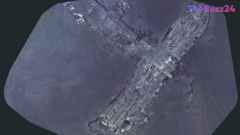
The search mission, led by the Air/Sea Heritage Foundation, utilized historical records, including maps drawn by witnesses and Civil Aeronautics Board reports, to narrow the search area to a 10-square-nautical-mile zone. Upon the drone’s first pass on June 2, the team identified the fuselage and tail, with subsequent photographic surveys confirming the identity of the aircraft through the still-visible Pan Am logo. The discovery not only provides closure for the historical record but also offers a glimmer of hope for modern search efforts regarding other missing aircraft, demonstrating that even decades later, deep-sea technology can successfully locate lost wreckage.
Key Takeaways
- The Clipper Endeavor, which crashed in 1952, was located 2,000 feet underwater off the coast of Puerto Rico.
- The 1952 disaster was the direct catalyst for modern mandatory pre-flight safety briefings and improved flotation equipment requirements.
- The discovery was made possible by combining historical flight records and witness testimony with modern autonomous sonar drone technology.
Editor’s Analysis & Impact
The discovery of the Clipper Endeavor serves as a poignant reminder of how modern aviation safety is built upon the lessons learned from past tragedies. From an industry perspective, this find highlights the increasing efficacy of deep-sea exploration technology, which continues to improve in resolution and accessibility. Beyond the historical significance, the successful location of this wreckage provides a proof-of-concept for search-and-recovery operations in deep-water environments. This has broader implications for ongoing efforts to locate missing modern aircraft, such as MH370, suggesting that with enough historical data and refined sonar capabilities, the ‘unfindable’ can eventually be located. The incident underscores the enduring importance of rigorous safety standards and the role of historical research in informing current technological and regulatory frameworks.
Frequently Asked Questions
Q: Why is the discovery of the Clipper Endeavor significant to modern air travel?
A: The crash of the Clipper Endeavor was the catalyst for the mandatory pre-flight safety briefings and the standardized use of flotation equipment that passengers experience on every commercial flight today.
Q: How were researchers able to find the plane after 74 years?
A: Researchers used historical records, including maps drawn by air force pilots who witnessed the crash, to narrow the search area to 10 square nautical miles before deploying an autonomous sonar-equipped drone.
AI Disclosure: This article is based on verified data and official reports. Our Team and AI have cross-referenced every financial detail with primary sources to ensure total accuracy.
More from this Category