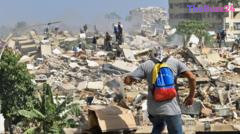
Devastating Twin Earthquakes Strike Venezuela: Death Toll Climbs as Global Rescue Efforts Intensify
A catastrophic series of twin earthquakes has struck northern Venezuela, resulting in at least 920 confirmed deaths and over 3,360 injuries. The tremors, which occurred in rapid succession on Wednesday, included a powerful 7.5 magnitude quake—the strongest to hit the region in a century. The northern coastal state of La Guaira has suffered the most severe damage, with critical infrastructure, including hospitals and shopping centers, left in ruins.
Rescue operations are currently underway, though they are hampered by damaged roads and disrupted communication networks. While hundreds of survivors have been pulled from the debris, including a notable rescue of three siblings in La Guaira, officials warn that the death toll is likely to rise as search teams continue to navigate the wreckage. At least 172 individuals remain missing, and over 200 aftershocks have been recorded, further complicating the efforts of first responders.
International aid has begun to arrive, with search and rescue teams from the United States, the United Kingdom, the Netherlands, Mexico, and Switzerland deploying to the affected regions. The United States has pledged $150 million in aid and mobilized military assets to assist with logistics. Despite the influx of foreign support, local medical facilities remain severely overwhelmed, struggling with pre-existing supply shortages that have been exacerbated by the scale of this disaster.
Government officials and humanitarian organizations have highlighted the vulnerability of the region, noting that decades of underinvestment in infrastructure have left the country ill-equipped to handle a crisis of this magnitude. As the nation grapples with the aftermath, the focus remains on locating survivors and providing emergency medical care to those in makeshift facilities across the northern coastline.
Key Takeaways
- Twin earthquakes, including a 7.5 magnitude tremor, have resulted in 920 deaths and thousands of injuries across northern Venezuela.
- La Guaira is the hardest-hit region, with widespread destruction of critical infrastructure and hospitals already struggling with limited resources.
- A massive international relief effort is underway, involving multiple nations providing search and rescue teams, medical supplies, and financial aid.
Editor’s Analysis & Impact
The earthquake disaster in Venezuela represents a critical inflection point for a nation already suffering from prolonged economic instability and systemic infrastructure decay. The inability of the state to manage the immediate aftermath highlights the fragility of the country’s public services, which were already operating at a deficit. From a geopolitical perspective, the arrival of international aid—particularly from the United States—marks a significant moment in the country’s volatile political landscape. While the immediate focus is humanitarian, the long-term implications involve a massive reconstruction challenge that will require sustained international cooperation. The disaster will likely exacerbate existing social tensions, as the government’s capacity to manage recovery efforts will be under intense scrutiny by both the domestic population and the international community, potentially influencing future political stability.
Frequently Asked Questions
Q: What was the magnitude of the strongest earthquake that hit Venezuela?
A: The second of the two earthquakes was recorded at a magnitude of 7.5, making it one of the strongest tremors to strike the country in the last 100 years.
Q: Which international countries are providing aid to Venezuela?
A: Several nations have mobilized to assist, including the United States, the United Kingdom, the Netherlands, Mexico, and Switzerland, providing search and rescue teams, medical aid, and logistical support.
AI Disclosure: This article is based on verified data and official reports. Our Team and AI have cross-referenced every financial detail with primary sources to ensure total accuracy.
More from this Category