Diplomatic Tensions Rise as Zelensky Returns Poland’s Highest Honor
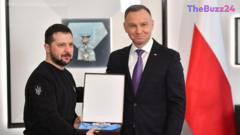
Ukrainian President Volodymyr Zelensky has formally returned the Order of the White Eagle, Poland’s highest state honor, following a public declaration by Polish officials that the award would be revoked. The move comes amid a deepening diplomatic rift sparked by Kyiv’s decision to name a military unit after the Ukrainian Insurgent Army (UPA), a group historically associated with World War II-era conflicts.
The Order of the White Eagle was originally presented to Zelensky in 2023 by then-President Andrzej Duda as a symbol of the strong alliance between the two nations. However, the recent decision to honor the UPA—a group viewed by Poland as responsible for the genocide of approximately 100,000 ethnic Poles during the 1940s—has caused significant friction. In a show of solidarity with their president, several senior Ukrainian officials have also returned their own Polish state awards.
While the UPA is celebrated by many in Ukraine as a symbol of the struggle for independence against Soviet and Nazi forces, the historical legacy remains a point of intense contention in Poland. Polish leadership has labeled the naming decision as “outrageous” and “deeply disappointing,” arguing that it undermines the trust established between the two countries. Despite the heated rhetoric, Polish officials have maintained that this historical dispute will not diminish their ongoing military and logistical support for Ukraine in its current conflict with Russia.
In response to the controversy, Zelensky emphasized that Ukraine remains committed to constructive dialogue with Poland to navigate the “difficult and painful chapters” of their shared history. Meanwhile, Polish Prime Minister Donald Tusk has urged both sides to de-escalate, warning that internal divisions between the two allies only serve to benefit the Kremlin.
Key Takeaways
- President Zelensky returned the Order of the White Eagle after Polish officials moved to strip him of the honor.
- The dispute was triggered by Ukraine naming a military unit after the UPA, a group accused by Poland of committing genocide during World War II.
- Despite the diplomatic fallout, both nations have indicated that the disagreement will not halt Poland's strategic support for Ukraine against Russia.
Editor’s Analysis & Impact
The diplomatic friction between Kyiv and Warsaw highlights the persistent challenge of reconciling conflicting national historical narratives during an active existential war. While Poland has been a primary logistical and humanitarian lifeline for Ukraine, the ‘history wars’ regarding the UPA threaten to erode the political capital necessary for long-term cooperation. The immediate impact is a cooling of bilateral relations, which creates a strategic opening for Russian disinformation campaigns aimed at fracturing the Western-aligned coalition. Looking forward, both nations face the difficult task of compartmentalizing historical grievances to maintain a unified front against external aggression. Failure to manage these tensions could complicate Ukraine’s path toward EU integration, as historical disputes often become leverage points in broader European diplomatic negotiations.
Frequently Asked Questions
Q: Why did Poland decide to strip Zelensky of his award?
A: Poland took the action because Ukraine named a military unit after the Ukrainian Insurgent Army (UPA), which Poland holds responsible for the mass killing of ethnic Poles during World War II.
Q: Will this dispute affect Poland's military support for Ukraine?
A: Polish leadership has stated that despite the diplomatic row over historical memory, the conflict will not impact their ongoing support for Ukraine in the war against Russia.
AI Disclosure: This article is based on verified data and official reports. Our Team and AI have cross-referenced every financial detail with primary sources to ensure total accuracy.
More from this Category