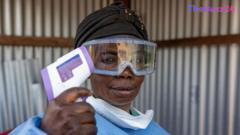
DR Congo Imposes Mass Gathering Ban in Capital Amid Ebola Fears and Political Backlash
The Democratic Republic of Congo (DRC) has implemented a strict ban on public gatherings in its capital, Kinshasa, and three neighboring provinces—Tshopo, Haut-Uele, and Bas-Uele—in an effort to halt the spread of a deadly Ebola outbreak. Although the current outbreak remains concentrated in three eastern provinces roughly 1,800 kilometers away, authorities are taking preemptive measures to protect Kinshasa’s 18 million residents. The decision follows reports of a doctor who tested positive for the virus in France after traveling through the capital from the outbreak’s epicenter, prompting a mandatory 21-day quarantine for individuals traveling from affected zones.
The government’s directive has sparked intense political controversy, with opposition leaders accusing the administration of using public health as a pretext to suppress political dissent. The ban coincides with a major protest march scheduled for July 8, organized by the C64 coalition to oppose constitutional changes that could allow President Felix Tshisekedi to extend his presidency beyond the two-term limit. Opposition spokespersons have labeled the ban a “political maneuver,” urging citizens to defy the order, while the government has yet to officially address these allegations.
On the medical front, the outbreak is proving exceptionally difficult to contain. The virus has infected at least 1,274 people and claimed 360 lives in the DRC, with neighboring Uganda also reporting cases. This particular outbreak is driven by the Bundibugyo strain of Ebola, for which no approved vaccine currently exists. However, the Africa Centres for Disease Control and Prevention (Africa CDC) has indicated that clinical trials for new antiviral treatments could begin imminently.
Containment efforts are further complicated by ongoing geopolitical instability in the eastern DRC. The World Health Organization (WHO) has warned that active conflict involving the M23 rebel group, which controls significant portions of North and South Kivu, severely restricts healthcare workers’ access to affected communities. Because the virus circulated undetected for several weeks before being identified, health officials warn this could escalate into one of the most severe Ebola outbreaks on record.
Key Takeaways
- DR Congo has banned mass gatherings in Kinshasa and three other provinces to prevent the spread of Ebola, despite the current epicenter being 1,800 km away.
- Opposition groups claim the ban is a politically motivated attempt to block a scheduled protest against President Felix Tshisekedi's potential term extension.
- The outbreak is caused by the Bundibugyo strain, which lacks a vaccine, and containment is severely hindered by M23 rebel conflict in the eastern region.
Editor’s Analysis & Impact
The intersection of a severe public health crisis and deep-seated political instability in the Democratic Republic of Congo presents a highly volatile scenario. By implementing a gathering ban in the capital, the government has inadvertently fueled suspicions of authoritarian overreach, potentially undermining public trust at a time when compliance with health directives is critical. From an epidemiological standpoint, the lack of an existing vaccine for the Bundibugyo strain, combined with active conflict involving the M23 rebel group, severely limits the international community’s ability to deploy standard containment protocols. If the virus establishes a foothold in Kinshasa—a dense metropolis of 18 million—the economic and humanitarian fallout could devastate the region. The upcoming antiviral trials offer a glimmer of hope, but success will ultimately depend on establishing secure humanitarian corridors and restoring public trust in state-led health initiatives.
Frequently Asked Questions
Q: Why was the mass gathering ban implemented in Kinshasa if there are no confirmed cases there?
A: Authorities implemented the ban as a preventative measure to protect the capital's 18 million residents, especially after a doctor who tested positive for Ebola in France was revealed to have traveled through Kinshasa from the outbreak's epicenter.
Q: Why is this specific Ebola outbreak so difficult to control?
A: The outbreak is caused by the Bundibugyo strain, which does not have an established vaccine. Additionally, the virus spread undetected for weeks before confirmation, and ongoing conflict with the M23 rebel group in the eastern provinces prevents health workers from safely accessing affected areas.
Q: What is the political controversy surrounding the ban?
A: Opposition parties argue the ban is a political tactic designed to block a planned protest on July 8 against proposed legal changes that could allow President Felix Tshisekedi to seek a third term in office.
AI Disclosure: This article is based on verified data and official reports. Our Team and AI have cross-referenced every financial detail with primary sources to ensure total accuracy.
More from this Category