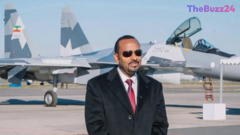
Ethiopia Bolsters Air Defense with Advanced Russian Fighter Jets Amid Regional Tensions
Ethiopia has significantly upgraded its military capabilities by taking delivery of twelve Su-35 fighter jets from Russia. Prime Minister Abiy Ahmed highlighted the acquisition as a critical milestone designed to enhance the nation’s defense infrastructure, noting that the advanced combat aircraft arrived ahead of schedule following an agreement finalized several years prior.
During his address in Moscow, Abiy emphasized that the acquisition makes Ethiopia the first sub-Saharan African nation to operate this level of advanced aerial technology. Beyond the Su-35 jets, the Ethiopian government has also outlined plans to procure four S-400 air defense systems from Russia. Military analysts point out that the combination of these fighter jets and sophisticated surface-to-air missile systems will provide strategic air superiority, helping to safeguard critical national assets such as the Grand Ethiopian Renaissance Dam.
The delivery coincides with renewed fighting in the northern Tigray region and persistent geopolitical friction with neighboring Eritrea. While the administration in Addis Ababa maintains that the military hardware is vital for deterring external threats and ensuring regional survival, observers suggest the buildup reflects broader strategic preparations amid ongoing internal instability and diplomatic disputes regarding sea access.
Key Takeaways
- Ethiopia has received 12 advanced Su-35 fighter jets from Russia ahead of schedule.
- The country plans to further strengthen its defense by acquiring four S-400 air defense systems.
- Prime Minister Abiy Ahmed emphasized that the military upgrade is essential for protecting national sovereignty and critical infrastructure.
Editor’s Analysis & Impact
The strategic acquisition of advanced Russian military hardware by Ethiopia marks a notable shift in the regional balance of power within the Horn of Africa. By integrating Su-35 fighter jets and planned S-400 air defense systems, Addis Ababa is signaling a long-term commitment to projecting air power and securing vital infrastructure like the Grand Ethiopian Renaissance Dam. However, this militarization risks exacerbating fragile geopolitical tensions with neighboring Eritrea and intensifying domestic friction. As regional rivalries evolve, the economic and diplomatic toll of sustaining high-end military acquisitions could weigh heavily on Ethiopia’s development, even as it achieves short-term deterrence objectives.
Frequently Asked Questions
Q: What military equipment did Ethiopia acquire from Russia?
A: Ethiopia has received 12 Su-35 fighter jets and has announced plans to purchase four S-400 air defense systems.
Q: Why is Ethiopia upgrading its military capabilities?
A: The Ethiopian government states that the advanced hardware is necessary to protect the country from external threats, secure critical infrastructure like the Renaissance Dam, and ensure regional survival.
AI Disclosure: This article is based on verified data and official reports. Our Team and AI have cross-referenced every financial detail with primary sources to ensure total accuracy.
More from this Category