European Union Convenes Emergency Summit Following Mass Migrant Influx in Ceuta
The European Union has scheduled an urgent high-level meeting to address a rapidly escalating migration crisis at the Spanish enclave of Ceuta, which recently saw tens of thousands of arrivals from Morocco. The extraordinary gathering comes in the wake of sharp diplomatic friction between Spain and several other bloc members over border management and security protocols.
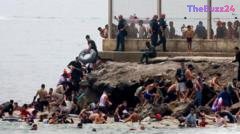
Twenty-two member states recently united behind a formal letter urging coordinated regional action and enhanced security along the EU’s external perimeters. This unified stance follows an unprecedented wave of approximately 60,000 individuals crossing into the Spanish territory, triggering severe political fallout. While Spanish authorities managed to stabilize the situation and prevent unauthorized transit into continental Europe within a tight window, the surge resulted in at least 67 fatalities and ignited intense debate over regional migration policies.
The crisis exposed deep divisions within the bloc. Several European nations expressed acute alarm over the porous nature of the border, prompting some governments to temporarily reconsider or suspend standard travel arrangements, including the border-free Schengen framework. Spanish leadership forcefully pushed back against unilateral criticisms, characterizing certain European reactions as politically motivated and legally unfounded, while emphasizing that Ceuta falls outside the Schengen zone.
In response to the crisis, local authorities have successfully restored order, reopened commercial districts, and initiated plans for physical marine barriers to deter future unauthorized maritime crossings. Meanwhile, international leaders continue to debate structural reforms, demanding increased cooperation from transit nations like Morocco as the broader continent grapples with recurring pressures at its southern frontiers.
Key Takeaways
- An emergency EU meeting was called after roughly 60,000 migrants crossed from Morocco into the Spanish enclave of Ceuta.
- Disagreements surfaced among member states, with nations like Italy briefly suspending Schengen arrangements while Spain defended its border control efforts.
- Spanish officials report that the situation has largely stabilized, with businesses reopening and plans underway for new maritime barriers.
Editor’s Analysis & Impact
The sudden surge of migrants into Ceuta underscores the ongoing fragility of Europe’s southern borders and the persistent geopolitical tensions surrounding migration management. This event highlights a recurring policy dilemma: balancing humanitarian obligations with national security and border sovereignty. The friction between Spain and other Schengen-area members reveals deep-seated political divisions within the EU, which could threaten the integrity of Europe’s passport-free travel zone if a cohesive, unified migration strategy is not enacted. Moving forward, the bloc will likely face increased pressure to strengthen external border fortifications while negotiating more robust repatriation and cooperation agreements with key transit countries like Morocco. The outcome of these emergency discussions will serve as a critical litmus test for the EU’s collective crisis-response mechanism and its long-term immigration framework.
Frequently Asked Questions
Q: What triggered the recent emergency EU meeting?
A: The meeting was called in response to a massive influx of roughly 60,000 migrants who crossed from Morocco into the Spanish enclave of Ceuta, creating diplomatic friction among European nations.
Q: Is Ceuta part of the Schengen area?
A: No, Ceuta is not part of the Schengen area, which became a key point of contention during debates over temporary border suspensions and travel restrictions.
Q: How did Spain respond to the crisis?
A: Spanish authorities restored border control within 48 hours, prevented unauthorized onward movement into continental Europe, safely managed the departure of the migrants, and announced plans for new marine barriers.
AI Disclosure: This article is based on verified data and official reports. Our Team and AI have cross-referenced every financial detail with primary sources to ensure total accuracy.
More from this Category