Evaluating Exchange Liquidity and Investigating the On-Chain Impact of the Coldcard Wallet Exploit
Navigating the digital asset landscape requires sophisticated tools to evaluate exchange liquidity, detect anomalous trading behaviors, and understand the structural risks inherent in various custody methods. Recent evaluations utilizing holistic scorecard frameworks have shed light on the nuances of market execution, highlighting how spread and slippage metrics interact across different venues. While traders continually seek the most cost-effective platforms for executing orders, data shows that liquidity forms a complex continuum rather than a single dominant marketplace.
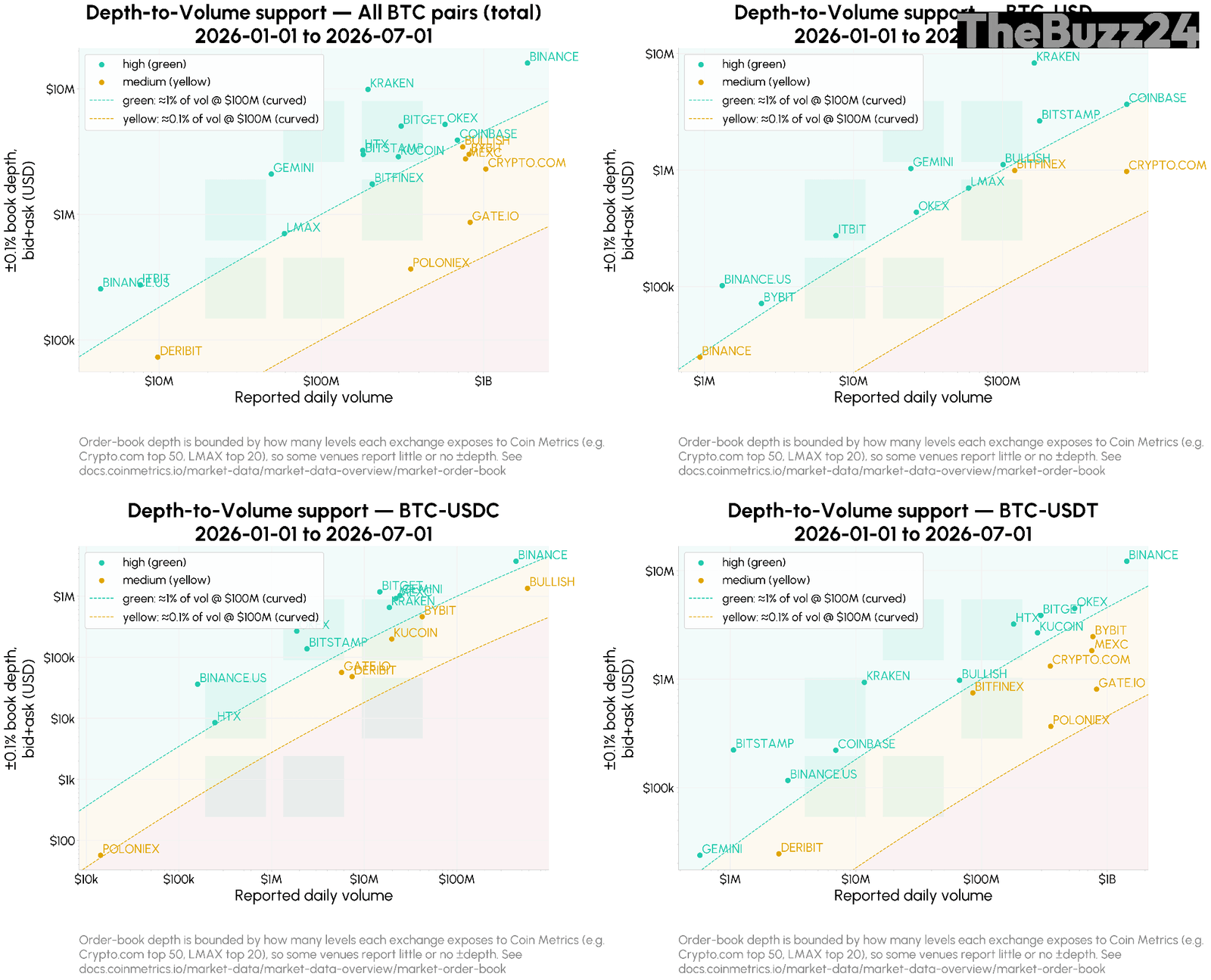
Analyzing orderbook depth relative to active trading volume remains a critical practice for market participants aiming to gauge true platform stability. Platforms with robust depth-to-volume ratios are inherently better equipped to absorb sudden institutional order flows during periods of heightened volatility without triggering extreme price movements. Furthermore, examining trade size distributions continues to serve as an effective mechanism for spotting suspicious or artificial trading activity, distinguishing organic market noise from irregular, anomalous trends observed on certain exchanges.
Beyond exchange dynamics, recent security incidents involving hardware wallets have thrust self-custody vulnerabilities into the spotlight. A significant firmware vulnerability involving a predictable random number generator compromised numerous seed phrases, leading to substantial digital asset thefts. On-chain analysis of the event reveals that the exploit unfolded in multiple distinct waves, initially consolidating large volumes into a small group of collector addresses before fragmenting the pilfered funds across hundreds of separate destinations.
This security breach has sparked broader conversations regarding the ongoing debate between self-custody and third-party custodial platforms. Immediate aftermath data revealed notable surges in net inflows to exchanges and elevated on-chain transfer volumes, suggesting that some users may be reassessing their security posture. However, industry observers note that while hardware wallet vulnerabilities introduce unique challenges, utilizing centralized exchanges presents an entirely separate set of counterparty risks, reinforcing the reality that no single custody setup offers absolute security.
Key Takeaways
- Exchange liquidity functions as a broad continuum, with no single venue consistently offering the cheapest execution across all Bitcoin pairs.
- A predictable random number generator in Coldcard hardware wallet firmware led to the theft of over 1,800 BTC across thousands of addresses.
- On-chain data following the hardware wallet exploit showed notable surges in transfer volumes and temporary net inflows into custodial exchanges.
Editor’s Analysis & Impact
The intersection of exchange market quality and hardware wallet security highlights the delicate balance market participants must maintain between execution efficiency and asset safety. As institutional and retail participants demand greater transparency, frameworks that evaluate liquidity, spread, slippage, and wash-trading indicators become vital tools for maintaining market integrity. Simultaneously, the Coldcard exploit serves as a stark reminder of the foundational risks associated with cryptographic entropy and firmware integrity in self-custody solutions. While incidents of this scale invariably prompt short-term shifts in user behavior—such as temporary flights to custodial platforms—they ultimately accelerate the industry’s push toward more rigorous open-source auditing, advanced key management solutions, and robust multi-layered security protocols.
Frequently Asked Questions
Q: What is the purpose of exchange liquidity scorecards?
A: Exchange scorecards unify metrics such as bid-ask spread, slippage, and orderbook depth to help traders and researchers evaluate execution costs, market efficiency, and the presence of anomalous trading volumes.
Q: How did the Coldcard wallet vulnerability occur?
A: The vulnerability stemmed from a predictable random number generator utilized in certain firmware versions to create seed phrases, allowing attackers to systematically drain funds from affected self-custody wallets.
Q: Did the security incident cause a permanent shift away from self-custody?
A: While on-chain data showed a temporary increase in net inflows to exchanges following the exploit, long-term trends suggest users continually weigh the unique counterparty risks of custodial platforms against the inherent responsibilities of self-custody.
AI Disclosure: This article is based on verified data and official reports. Our Team and AI have cross-referenced every financial detail with primary sources to ensure total accuracy.
More from this Category