Federal Reserve Chairman Warsh Poised to Sidestep Key Market Concerns at Jackson Hole
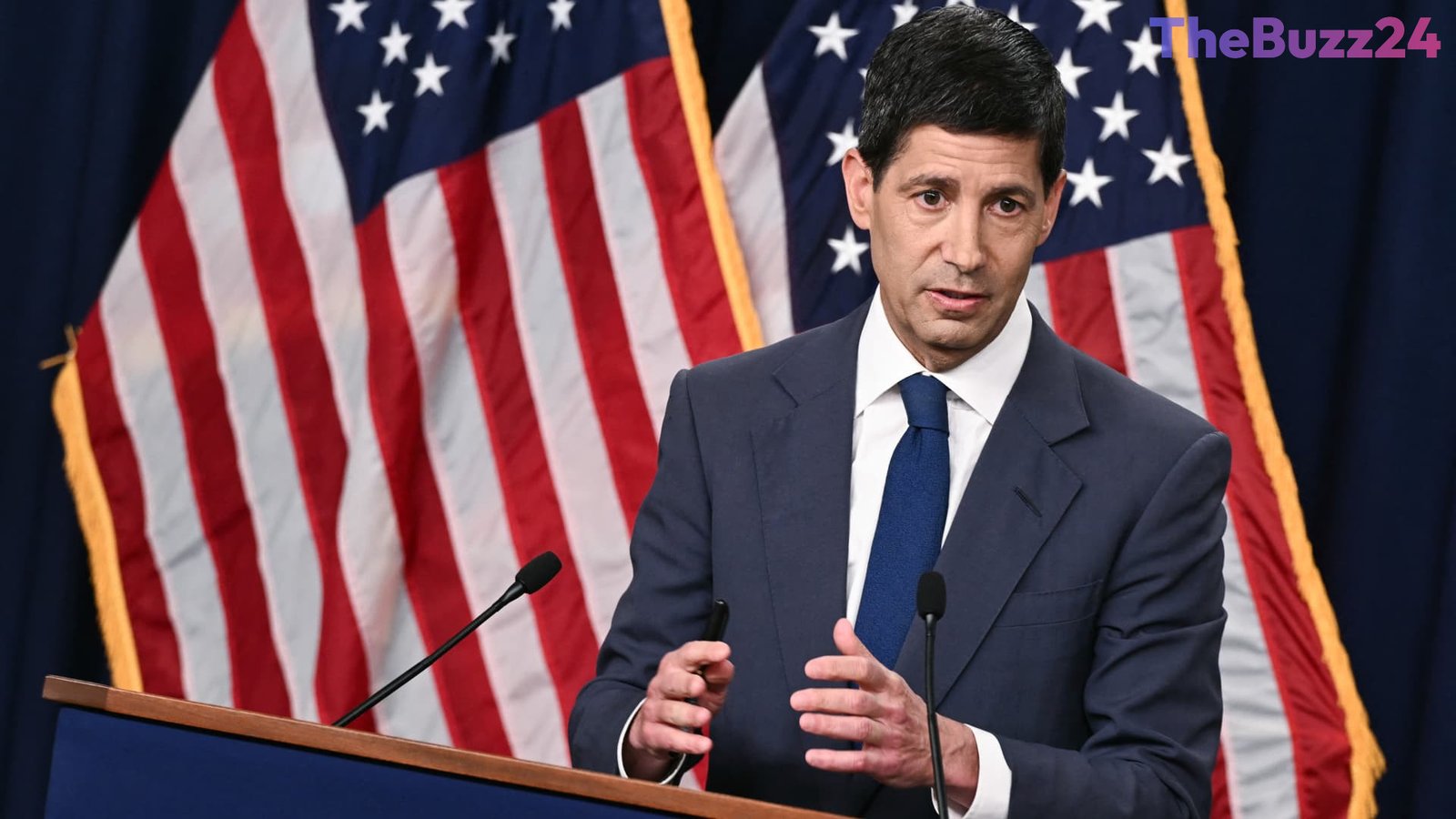
Federal Reserve Chairman Kevin Warsh is widely expected to deliver a keynote address at the annual Jackson Hole Symposium in Wyoming this Friday, with market participants closely scrutinizing his remarks for insights into the central bank’s future policy direction. However, current indicators from prediction markets suggest a low probability that Warsh will delve into critical topics such as bond markets, the yield curve, or the prospect of a rate cut, despite recent significant movements in Treasury yields.
The anticipation surrounding Warsh’s speech comes amidst a period of heightened volatility in government debt markets. Last week, the 30-year Treasury yield surged past 5.3%, reaching levels not seen since June 2007. In response, the U.S. Treasury Department announced a decision to double its buybacks of long-term government debt, increasing them to at least $4 billion from $2 billion. This move was widely interpreted by experts as an effort to alleviate pressure on government bond yields, yet the chairman is not anticipated to acknowledge this intervention or the broader implications for bond markets.
Instead, expectations are leaning towards Warsh focusing on the Federal Reserve’s primary objective of containing inflation, which remains targeted at 2%. There is also a higher likelihood he will reference the “task forces” the Fed established in June to monitor monetary policy implementation. Analysts, including David Mericle, chief U.S. economist at Goldman Sachs, have noted Warsh’s historical reluctance to openly share his policy views or economic assessments, suggesting he is unlikely to offer strong hints about the Fed’s September decision. Peter Boockvar, chief investment officer at One Point BFG Wealth Partners, further commented that the Treasury’s recent actions might complicate the Fed’s operational landscape.
Market observers are also considering the potential immediate impact of Warsh’s address, with some projections indicating a moderate chance of a 0.5% movement in the S&P 500 following his speech. The prevailing sentiment, however, is that the chairman will maintain a cautious stance, avoiding direct commentary on immediate policy shifts or the recent dynamics in the bond market, thereby leaving investors to interpret the central bank’s next moves largely on their own.
Key Takeaways
- Federal Reserve Chairman Kevin Warsh is unlikely to address bond markets, yield curves, or rate cuts in his upcoming Jackson Hole speech.
- His address is expected to focus more on inflation control and the Fed's internal task forces.
- This anticipated silence comes despite recent significant surges in Treasury yields and the U.S. Treasury's intervention to ease bond market pressures.
Editor’s Analysis & Impact
Chairman Warsh’s anticipated decision to sidestep direct commentary on bond markets and potential rate cuts at Jackson Hole could have several implications. While maintaining a focus on inflation aligns with the Fed’s core mandate, ignoring recent significant movements in Treasury yields and the U.S. Treasury’s intervention might be perceived as a missed opportunity for clarity. This approach could lead to increased market uncertainty regarding the Fed’s understanding of current market dynamics and its future policy trajectory, particularly concerning the September decision. Investors might interpret the silence as either a deliberate attempt to avoid pre-committing or a lack of immediate concern, potentially leading to varied reactions in equity and bond markets. The broader implication is a potential disconnect between the central bank’s public communication and the pressing concerns of financial markets, which could influence investor sentiment and economic stability in the short term.
Frequently Asked Questions
Q: What is the Jackson Hole Symposium?
A: The Jackson Hole Economic Symposium is an annual conference sponsored by the Federal Reserve Bank of Kansas City, bringing together central bankers, finance ministers, academics, and financial market participants from around the world to discuss long-term policy issues.
Q: Why are bond markets and yield curves important?
A: Bond markets reflect the cost of borrowing for governments and corporations, influencing interest rates across the economy. The yield curve, which plots bond yields against their maturities, is a key indicator of economic health and future interest rate expectations, often signaling recessions or expansions.
Q: What was the U.S. Treasury's recent action regarding long-term debt?
A: The U.S. Treasury Department recently announced it would double its buybacks of long-term government debt to at least $4 billion from $2 billion. This action was interpreted by experts as an attempt to ease government bond yields, which had recently surged to multi-year highs.
AI Disclosure: This article is based on verified data and official reports. Our Team and AI have cross-referenced every financial detail with primary sources to ensure total accuracy.
More from this Category