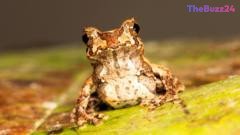
Five New Species of Miniature Horned Frogs Discovered in the Eastern Himalayas
A team of researchers from the University of Delhi and Harvard University has unveiled the discovery of five previously unknown species of miniature horned frogs in India’s eastern Himalayas. This significant finding more than doubles the number of known species within the Jingophrys group, shedding new light on the evolutionary history of the region. The study, which spanned five years of intensive fieldwork, underscores the eastern Himalayas as a critical, yet under-explored, hotspot for global biodiversity.
Among the most notable discoveries is the Jingophrys tanogogo, or the snail-eating horned frog. This species is particularly unique as it is the first recorded frog in India to subsist on a diet of snails, marking a distinct behavioral trait within its family. Other newly identified species include the Jingophrys taniitatii, named in honor of the local Tanii tribe, as well as the Jingophrys siangensis, Jingophrys hrdy, and Jingophrys wularsoni. These frogs were primarily located in the remote forests of Arunachal Pradesh, a region that remains one of the least studied areas in the Himalayan range.
DNA analysis conducted by the research team suggests that these frogs underwent rapid diversification as the Himalayan mountain range rose and the Asian monsoon patterns began to form millions of years ago. This environmental shift acted as a catalyst for the evolution of the region’s diverse wildlife. Researchers noted that the success of the expedition was heavily reliant on the support and traditional knowledge provided by local indigenous communities, who assisted in navigating the remote terrain where these secretive, seasonal creatures reside.
Moving forward, the scientific team emphasizes the need for further biological and conservation-focused studies. Because these miniature frogs are elusive and typically only emerge during brief breeding seasons, understanding their specific ecological requirements is essential for their long-term protection. The discovery serves as a poignant reminder that significant evolutionary milestones and biological diversity often remain hidden in plain sight within the world’s most rugged and remote landscapes.
Key Takeaways
- Researchers identified five new species of miniature horned frogs in the eastern Himalayas, significantly expanding the known Jingophrys group.
- The 'snail-eating horned frog' (Jingophrys tanogogo) is the first of its kind in India known to consume snails.
- Genetic evidence suggests the rise of the Himalayas and the development of the Asian monsoon drove the rapid evolution of these species.
Editor’s Analysis & Impact
The discovery of these five species highlights a critical gap in our understanding of Himalayan biodiversity. From a scientific perspective, the rapid diversification of the Jingophrys group provides a living laboratory for studying how geological and climatic shifts drive speciation. Economically and ecologically, this finding elevates the importance of the Arunachal Pradesh region, potentially influencing future conservation policies and land-use regulations. As global interest in biodiversity hotspots grows, the reliance on indigenous knowledge demonstrated in this study sets a precedent for future collaborative research. The primary challenge remains the ‘hidden’ nature of these species; their secretive behavior and reliance on specific, short-term environmental conditions make them highly vulnerable to climate change, necessitating proactive habitat protection strategies to prevent these newly discovered species from facing immediate threats.
Frequently Asked Questions
Q: Why are these new frog species considered significant?
A: These discoveries more than double the known species in the Jingophrys group and provide evidence of how the rise of the Himalayas and the Asian monsoon influenced the evolution of local wildlife.
Q: How did local tribes contribute to this research?
A: Local indigenous communities provided essential field support and traditional knowledge of the terrain, which allowed researchers to locate these secretive frogs. Some species were named after these tribes to honor their contributions.
AI Disclosure: This article is based on verified data and official reports. Our Team and AI have cross-referenced every financial detail with primary sources to ensure total accuracy.
More from this Category