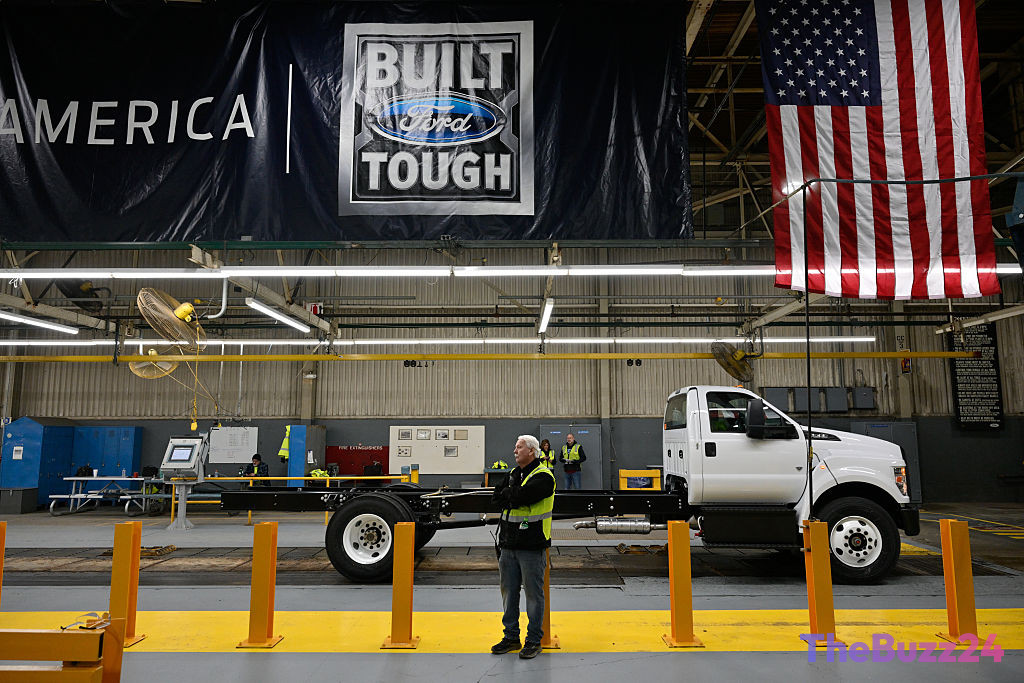
Ford Recalibrates Quality Strategy, Rehires Veteran Engineers After AI Falls Short
Automotive giant Ford has made a significant strategic pivot in its quality control efforts, bringing back approximately 350 veteran engineers, some of whom are former employees or previously worked with suppliers. This move comes after the company observed that its increasing reliance on artificial intelligence and automated systems was not consistently delivering the desired level of product quality.
According to Ford’s Chief Operating Officer, Kumar Galhotra, the automaker had been progressively integrating automated quality systems, but the outcomes proved disappointing. Charles Poon, Ford’s Vice President of Vehicle Hardware Engineering, acknowledged a miscalculation, stating that the company “mistakenly thought that by just introducing artificial intelligence and ingesting the design requirements that we had, that that would produce a high-quality product.” The newly rehired specialists are tasked with proactively identifying potential failure points in components even before they reach the assembly plant floor, leveraging their extensive experience.
Despite this recalibration, Ford is not abandoning its AI initiatives entirely. Instead, these experienced engineers, affectionately referred to as “gray beards,” are playing a crucial dual role: mentoring younger staff and actively reprogramming and refining the existing AI tools. This integrated approach aims to combine human expertise with advanced technology, ensuring a more robust and reliable quality assurance process.
The strategic reintroduction of human oversight and experience is already yielding tangible benefits for Ford. CEO Jim Farley highlighted that the initiative has contributed to a substantial reduction in warranty and recall costs, generating “hundreds and hundreds of millions of dollars of a tailwind” for the company. Furthermore, Ford recently secured the top position among mainstream brands in the JD Power Initial Quality Survey, underscoring the positive impact of this hybrid quality strategy.
Key Takeaways
- Ford rehired 350 veteran engineers to address quality shortcomings observed with increasing reliance on AI and automated systems.
- The experienced engineers are crucial for identifying potential failure points and are also tasked with training younger staff and refining AI tools.
- This strategic shift has led to significant cost reductions in warranty and recalls, and Ford has achieved a top ranking in the JD Power Initial Quality Survey.
Editor’s Analysis & Impact
Ford’s decision to re-emphasize human expertise in quality control, even while continuing AI development, offers a critical lesson for industries rapidly adopting automation. It highlights that while AI can optimize processes, complex manufacturing often requires the nuanced judgment and deep institutional knowledge that only seasoned human professionals possess. This move could signal a broader trend where companies seek a more balanced human-AI collaboration, rather than full automation, especially in areas directly impacting product reliability and customer satisfaction. For Ford, the immediate financial benefits and improved quality rankings demonstrate the value of this hybrid approach, potentially influencing competitors to re-evaluate their own automation strategies and the role of experienced personnel.
Frequently Asked Questions
Q: Is Ford abandoning its AI plans entirely?
A: No, Ford is not abandoning its AI plans. The rehired engineers are being utilized to train younger staff and reprogram/refine existing AI tools, indicating a shift towards a hybrid approach that combines human expertise with advanced technology.
Q: What benefits has Ford seen from this strategy?
A: Ford has seen significant benefits, including a substantial reduction in warranty and recall costs, contributing "hundreds and hundreds of millions of dollars" in savings. Additionally, the company achieved the top spot among mainstream brands in the JD Power Initial Quality Survey.
AI Disclosure: This article is based on verified data and official reports. Our Team and AI have cross-referenced every financial detail with primary sources to ensure total accuracy.
More from this Category