Fragile Lebanon Ceasefire Declared Amid Deadly Clashes and Deep Skepticism
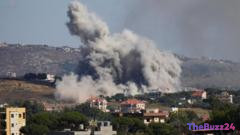
A newly brokered ceasefire between Israel and Hezbollah, aimed at halting the devastating conflict in Lebanon, faces immediate jeopardy following a surge of deadly violence. Despite official announcements of a truce, intense military actions on the ground have resulted in significant casualties on both sides. Israeli airstrikes in southern Lebanon reportedly claimed the lives of at least 47 people, while Hezbollah forces launched a fatal ambush that killed four Israeli soldiers, highlighting the extreme fragility of the diplomatic agreement.
The escalation has cast a shadow over the broader diplomatic framework, which also involves understandings between the United States and Iran. While Washington maintains that the ceasefire remains in effect, political figures on all sides have traded sharp warnings. Israeli National Security Minister Itamar Ben Gvir demanded a harsher military response, while Iranian Foreign Minister Abbas Araghchi cautioned that any failure to uphold the agreement would be blamed directly on the U.S. Meanwhile, Hezbollah’s Secretary General, Sheikh Naim Qassem, declared that attempts to dismantle his organization had failed, asserting that Israeli forces would eventually be forced to withdraw completely.
On the ground, the civilian population remains caught in the crossfire, with many expressing deep skepticism about the longevity of the peace deal. In the Nabatieh district, residents reported multiple airstrikes shortly after the ceasefire’s designated start time. Since the escalation of hostilities, the conflict has claimed over 3,900 lives in Lebanon, left more than 11,600 injured, and displaced approximately one million people. Many displaced families doubt that the truce will hold, citing a history of broken agreements.
Looking ahead, direct negotiations between the Lebanese government and Israel are scheduled to resume in Washington next week to establish a more permanent resolution. Lebanese President Joseph Aoun has emphasized that a comprehensive cessation of Israeli military operations on Lebanese soil is a prerequisite for any meaningful progress in these upcoming talks.
Key Takeaways
- A ceasefire agreement between Israel and Hezbollah has been announced, but immediate military clashes have severely threatened its implementation.
- Recent violence resulted in 47 Lebanese casualties from airstrikes and the deaths of four Israeli soldiers in a Hezbollah ambush.
- Diplomatic talks are scheduled to resume in Washington next week, though local populations and regional leaders remain highly skeptical of the truce's viability.
Editor’s Analysis & Impact
The immediate violation of the newly announced ceasefire underscores the immense difficulty of enforcing diplomatic agreements in highly polarized conflicts. The involvement of external brokers, particularly the United States and Iran, adds a layer of geopolitical complexity, as both nations struggle to restrain their respective allies. For Israel, domestic political pressure from far-right factions demands continued military action, while Hezbollah seeks to project resilience and maintain its defensive posture. The failure to establish immediate stability on the ground suggests that the upcoming Washington talks will face severe hurdles. Without a robust enforcement mechanism or a fundamental shift in the strategic objectives of both combatants, this ceasefire is likely to remain a nominal agreement rather than a functional peace, prolonging the humanitarian crisis in Lebanon and keeping the wider region on the brink of escalation.
Frequently Asked Questions
Q: What are the main terms of the ceasefire?
A: The ceasefire is intended to halt hostilities between Israel and Hezbollah, serving as a stepping stone for broader diplomatic talks in Washington aimed at securing a lasting peace.
Q: Why is there skepticism surrounding the agreement?
A: Both sides have immediately engaged in military actions post-announcement, with Israeli airstrikes and Hezbollah ambushes causing casualties. Furthermore, displaced civilians point to a history of unfulfilled peace agreements in the region.
Q: What is the humanitarian toll of the conflict so far?
A: The conflict has resulted in over 3,900 deaths and more than 11,600 injuries in Lebanon, alongside the displacement of approximately one million people and the destruction of numerous southern communities.
AI Disclosure: This article is based on verified data and official reports. Our Team and AI have cross-referenced every financial detail with primary sources to ensure total accuracy.
More from this Category