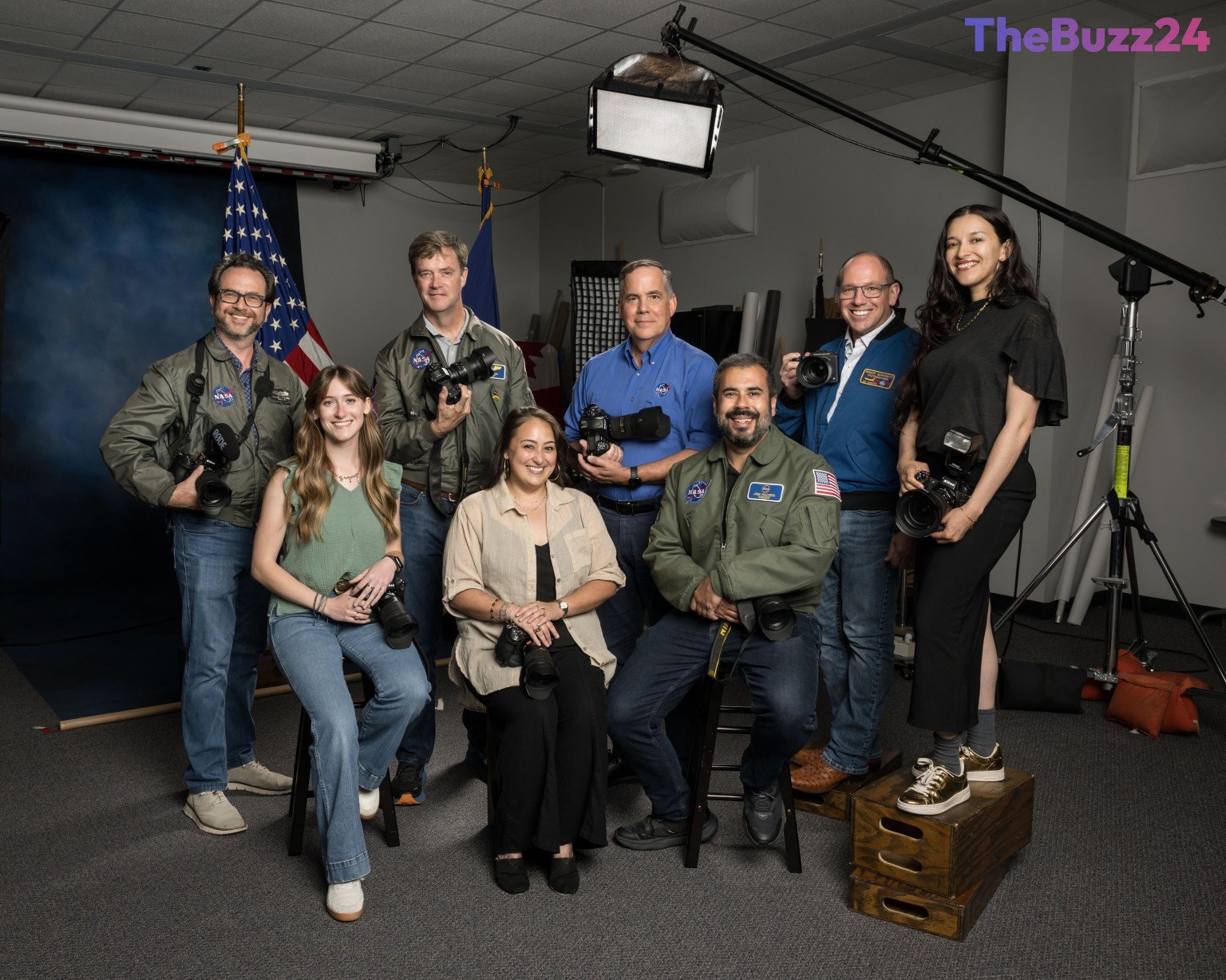
Framing the Future: The Essential Role of NASA Johnson’s Photographers
At the heart of humanity’s journey into space, a dedicated team at NASA’s Johnson Space Center in Houston works tirelessly to capture every pivotal moment. The Imagery Acquisition Group comprises skilled photographers who serve as the visual chroniclers of human spaceflight, documenting everything from rigorous astronaut training and intricate engineering tests to the intense operations within mission control and celebratory milestones. Their collective work forms an invaluable historical archive, preserving the legacy of exploration while simultaneously spotlighting the individuals and teams propelling the next era of space endeavors.
These visual storytellers bring diverse backgrounds and unique perspectives to their craft. Veterans like Robert Markowitz, with over three decades of experience, have documented the Space Shuttle program, 25 years of continuous human presence on the International Space Station, and the nascent Artemis missions. Markowitz recalls early career highlights, such as serving as a still photographer for the “Apollo 13” film’s zero-gravity flights, emphasizing the constant challenge and growth the job demands. Others, like Bill Stafford, combine a passion for science and technology with technical problem-solving, meticulously framing images to convey not just a moment, but its profound significance. Photojournalism roots are evident in the work of James Blair and Helen Arase Vargas, who leverage their experience to capture candid moments and serve the public interest, while Luna Posadas Nava focuses on the power of representation, hoping her images inspire more people to see themselves in the story of exploration. David DeHoyos, inspired by the Apollo era, finds joy in connecting with people and encouraging the next generation of space enthusiasts.
The role of a NASA photographer extends beyond mere documentation; it involves navigating complex environments, adapting to technical constraints, and understanding the emotional weight of each assignment. Whether coordinating large group photos, capturing the intricate details of new hardware, or documenting the return of Artemis crews, these photographers are tasked with translating monumental human achievements into compelling visual narratives. Their work demands adaptability, collaboration, and a deep connection to the mission’s purpose, ensuring that every photograph not only records an event but also communicates its broader impact and inspiration.
Ultimately, the Imagery Acquisition Group at Johnson Space Center does more than just take pictures; they shape the public’s understanding and perception of space exploration. Their images are critical tools for education, outreach, and historical preservation, ensuring that the triumphs, challenges, and human spirit behind NASA’s missions are vividly remembered and continue to inspire future generations to reach for the stars.
Key Takeaways
- NASA Johnson Space Center's Imagery Acquisition Group plays a vital role in documenting human spaceflight history and future missions through compelling visuals.
- The photographers come from diverse professional backgrounds, bringing unique skills to capture everything from astronaut training and engineering tests to mission control operations.
- Their work is crucial for preserving the legacy of space exploration, inspiring public interest, and shaping the narrative of humanity's journey beyond Earth for future generations.
Editor’s Analysis & Impact
The work of NASA’s photographers underscores the critical role of visual communication in the realm of science and space exploration. In an era dominated by digital media, high-quality, authentic imagery is paramount for public engagement, educational outreach, and maintaining political and financial support for ambitious space programs like Artemis. As humanity pushes further into space, the demand for compelling visuals documenting these endeavors will only intensify, making the skills of these photographers indispensable. Their ability to humanize complex scientific and engineering feats ensures that the public remains connected to the grand narrative of exploration, fostering a sense of shared achievement and inspiring future generations to pursue careers in STEM fields.
Frequently Asked Questions
Q: What is the primary role of NASA Johnson Space Center's photographers?
A: Their primary role is to document the history and ongoing efforts of human spaceflight, capturing everything from astronaut training and engineering tests to mission control operations and significant milestones for historical preservation and public outreach.
Q: How do these photographers contribute to public engagement?
A: By capturing compelling and authentic images, they help tell NASA's story to the world, inspiring public interest, fostering understanding of complex missions, and preserving the visual legacy of space exploration for future generations.
Q: What kind of events or subjects do NASA photographers typically cover?
A: They cover a wide range of subjects including astronaut training, spacecraft and hardware development, mission control activities, scientific experiments, historical events like the Space Shuttle program, and future missions such as Artemis.
AI Disclosure: This article is based on verified data and official reports. Our Team and AI have cross-referenced every financial detail with primary sources to ensure total accuracy.
More from this Category