France Rocked by Unprecedented Violence, Government Under Scrutiny Amid Political Tensions
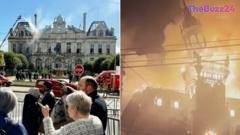
France has been plunged into a period of intense public disorder, experiencing some of the most severe scenes of violence and looting in its recent history. The aftermath saw Prime Minister Sébastien Lecornu convene a crisis cabinet meeting on Monday to address the widespread unrest that gripped the nation over the weekend. Interior Minister Laurent Nuñez reportedly offered his resignation, which President Emmanuel Macron declined, instead tasking him with enhancing street safety and ensuring accountability for those involved in the violence.
The weekend’s events began with over half a million largely peaceful demonstrations protesting escalating living costs and the perceived decline in public services, including state education. However, these protests quickly devolved into chaos with the emergence of masked activists and vandals. An estimated 1,500 shops and businesses suffered looting and destruction. Riot police deployed tear gas and water cannons, with reports of officers using batons. The interior ministry confirmed approximately 1,000 police officers were injured, seven seriously. Critics, including political opponents and trade unions, have accused Minister Nuñez of inadequate preparation and insufficient policing ahead of the scheduled demonstrations.
President Macron’s televised address to the nation on Sunday, intended to foster national unity and promise punishment for perpetrators, has been widely criticized in French media for its lack of specific details. Questions remain regarding how vandals will be held accountable, how cities will be better protected, how destroyed businesses will be compensated, and when a dialogue will commence with student and teacher bodies—the initial catalyst for these protests last month. The Secretary General of the CGT union, Sophie Binet, further criticized Macron for failing to address core concerns like the cost-of-living crisis and the quality of public services.
The current climate is exacerbated by a deeply divided parliament and an impending presidential election in six months, where candidates like Marine Le Pen from the nationalist right and Jean-Luc Melenchon from the anti-capitalist left are actively vying for attention. This political paralysis, coupled with France’s significant public debt and the government’s dilemma between fiscal cuts and potential further unrest, creates a volatile environment. With new mass demonstrations, including those by the “yellow jacket” movement, announced for early November, the nation remains on edge, grappling with profound questions about its future stability.
Key Takeaways
- Widespread violence and looting occurred across France, leading to significant damage and police injuries.
- The French government, particularly Interior Minister Laurent Nuñez and President Emmanuel Macron, faces intense criticism for its handling of the crisis and perceived lack of concrete solutions.
- Underlying issues like rising living costs, declining public services, and deep political divisions are fueling the unrest, with further large-scale protests anticipated.
Editor’s Analysis & Impact
The recent surge in violence across France signals a critical juncture for the nation’s political and economic landscape. For businesses, particularly those in urban centers, the extensive looting and destruction represent immediate financial losses and a deterrent to investment, potentially impacting local economies and employment. The perceived inability of the government to effectively manage public order could erode investor confidence, exacerbating existing concerns about France’s spiraling public debt. Politically, the unrest highlights deep societal divisions and a growing disillusionment with the current administration, potentially bolstering extremist factions ahead of the upcoming presidential election. This instability poses a significant challenge to democratic governance and could lead to further social fragmentation, making it difficult for any future government to implement necessary reforms without triggering renewed widespread dissent.
Frequently Asked Questions
Q: What triggered the recent wave of violence in France?
A: The violence erupted following large-scale, initially peaceful protests against rising living costs and a perceived decline in the quality of public services, particularly education. These demonstrations escalated into widespread looting and destruction after groups of masked activists and vandals joined the protests.
Q: How has the French government responded to the unrest?
A: Prime Minister Sébastien Lecornu convened a crisis cabinet meeting, and President Emmanuel Macron declined Interior Minister Laurent Nuñez's resignation, instead tasking him with improving street safety. Macron also delivered a televised address calling for national unity, though it was criticized for lacking concrete solutions.
Q: What are the potential long-term consequences of this instability for France?
A: The ongoing instability could have several long-term consequences, including a negative impact on the economy due to business losses and reduced investor confidence, further political polarization ahead of the presidential election, and challenges to social cohesion. The government faces a difficult path in addressing underlying grievances while managing public debt and maintaining order.
AI Disclosure: This article is based on verified data and official reports. Our Team and AI have cross-referenced every financial detail with primary sources to ensure total accuracy.
More from this Category