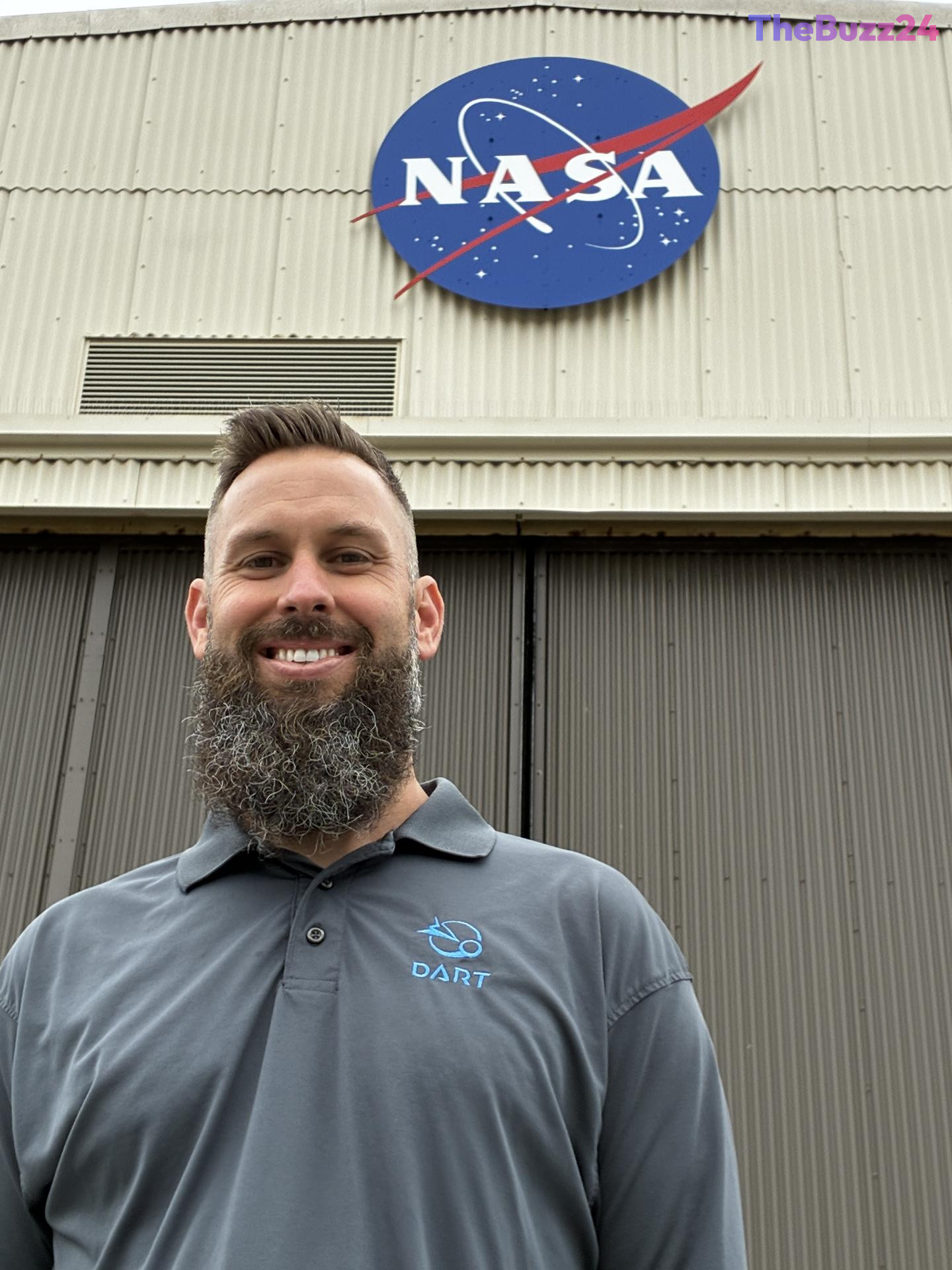
From Local Technician to NASA Engineer: A Career Journey at Vandenberg
Eric Fernandez, a lifelong resident of Orcutt, California, has transformed his career from local appliance repair to serving as a vital telemetry engineer for NASA at Vandenberg Space Force Base. Growing up in the shadow of the base, Fernandez initially viewed the facility as a strictly military operation, never imagining he would one day play a critical role in the agency’s scientific and robotic exploration missions. His path to the space industry began unexpectedly when a friend suggested he interview for a telemetry position, a field he knew little about at the time. Impressed by his hands-on experience in electronics and troubleshooting, the agency brought him on as a contractor 17 years ago.
Throughout his tenure, Fernandez has supported 27 NASA launches and hundreds of military and commercial missions. His work centers on telemetry—the complex process of collecting remote measurements to ensure rocket health during fueling, flight, and orbital insertion. By utilizing ground data streams, radio frequency links, and rigorous testing protocols like bit-error-rate tests, his team provides real-time data that is essential for mission-critical decision-making. This technical expertise ensures that the agency maintains high standards of safety and reliability for every launch.
Earlier this year, Fernandez reached a significant career milestone by transitioning from a contractor to a civil servant within the agency. This shift reflects a broader organizational move to internalize mission-critical roles, further cementing his place within the team he has worked alongside for nearly two decades. Today, he continues to live in his hometown, balancing his professional responsibilities in space exploration with his personal life, often watching launches with his own children from the same community where he once dreamed of a different future.
Reflecting on his journey, Fernandez emphasizes the importance of continuous learning and the collaborative nature of his team. Despite the rapid evolution of aerospace technology, he remains committed to the challenges of the field, noting that the constant innovation keeps the work engaging. His story serves as a testament to how specialized technical skills, combined with a willingness to embrace new opportunities, can lead to a fulfilling career at the forefront of human space exploration.
Key Takeaways
- Eric Fernandez transitioned from an appliance technician to a NASA telemetry engineer after 17 years of contract work.
- Telemetry is essential for monitoring rocket health and ensuring mission success through real-time data analysis during all phases of flight.
- NASA has recently moved to bring mission-critical roles, such as Fernandez's, into the civil service to strengthen core capabilities.
Editor’s Analysis & Impact
The transition of long-term contractors into civil service roles represents a strategic shift for NASA as it seeks to retain institutional knowledge and maintain tighter control over mission-critical operations. As the aerospace sector becomes increasingly crowded with commercial players, the ability to manage complex data streams and ensure the integrity of launch telemetry is more vital than ever. Fernandez’s career path highlights a growing trend in the industry: the high value placed on practical, hands-on technical skills—such as soldering and electronics troubleshooting—which remain foundational even as space technology advances. This narrative underscores the importance of workforce development and the long-term retention of specialized talent, which will be a decisive factor for agencies and private companies alike as they push toward more frequent lunar and Martian missions.
Frequently Asked Questions
Q: What does a telemetry engineer do at NASA?
A: A telemetry engineer collects and monitors remote measurements from a rocket to ensure it is functioning correctly during fueling, ascent, and orbital insertion, providing real-time data to mission controllers.
Q: Why did NASA transition contractors to civil service positions?
A: The agency initiated this shift to strengthen its core capabilities by bringing mission-critical roles directly into the civil service, ensuring better long-term control and retention of essential expertise.
AI Disclosure: This article is based on verified data and official reports. Our Team and AI have cross-referenced every financial detail with primary sources to ensure total accuracy.
More from this Category