Fusion Energy Breakthrough: Inertia Enterprises Slashes Fuel Pellet Production Time From Days to Minutes
In a major step forward for commercial fusion energy, startup Inertia Enterprises has successfully reduced the manufacturing time for its specialized fusion fuel pellets from several days to just a few minutes. This development addresses one of the primary technical and economic hurdles facing the company as it works toward establishing its first commercial power plant. By transitioning the fuel fabrication process from a slow, laboratory-scale method to a rapid, industrial-scale system, the company aims to make fusion power a viable commercial reality.
The technology builds upon foundational research conducted at the National Ignition Facility (NIF) at Lawrence Livermore National Laboratory, where fuel pellet creation has historically been a meticulous, week-long process costing significant resources. Inertia Enterprises, which secured $450 million in investor funding based on commercializing NIF’s scientific achievements, has focused on transforming these hand-crafted prototypes into mass-producible components. To achieve this, the startup has recruited industrial design and manufacturing experts from consumer technology giants to design high-volume factory processes.
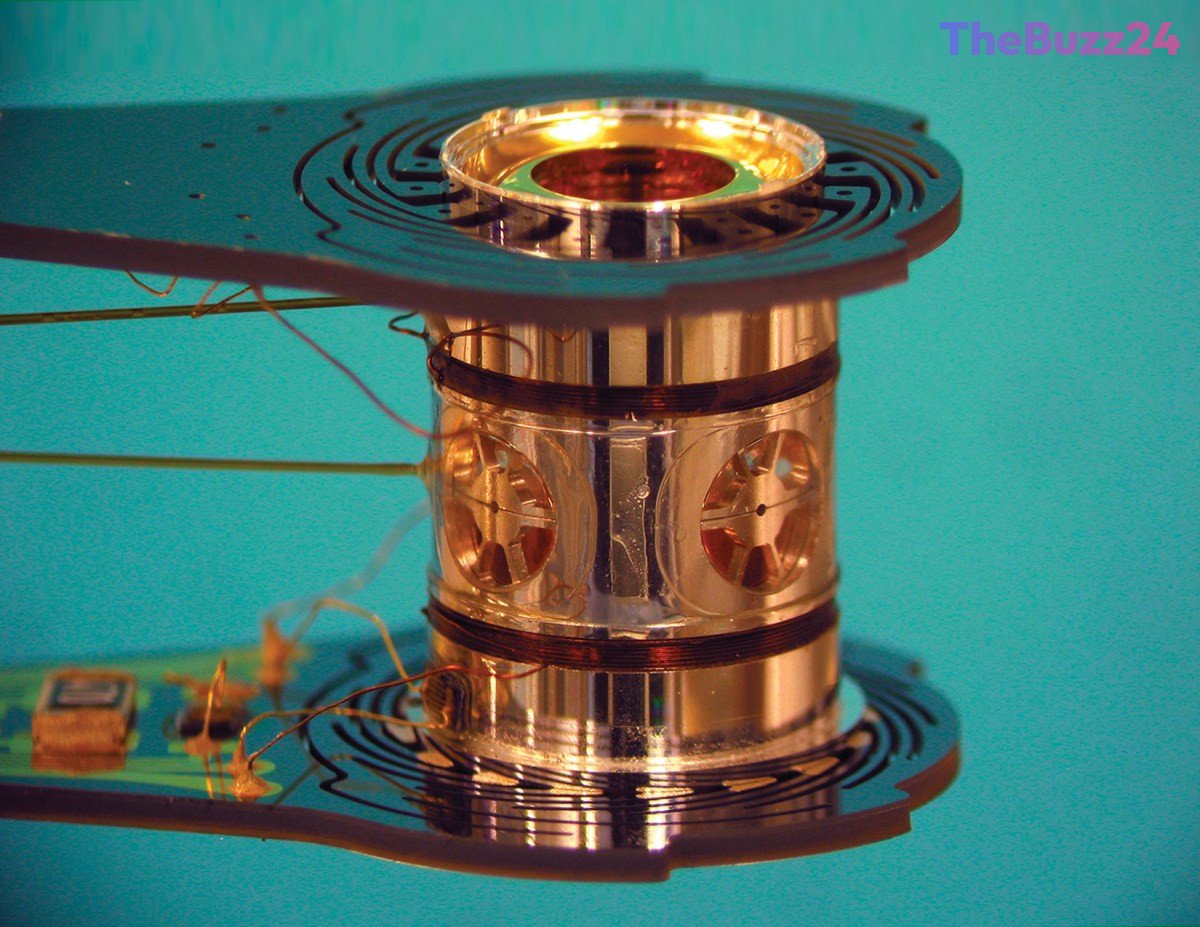
The fuel pellets consist of a spherical diamond shell containing frozen and gaseous isotopes of hydrogen, specifically deuterium and tritium, which must be shaped with extreme precision. These pellets are housed in gold casings called hohlraums that convert laser energy into X-rays to trigger the fusion reaction. While NIF requires near-perfect sphericity to achieve ignition, Inertia plans to utilize a laser system four times more powerful than NIF’s current setup. This increased power provides a wider margin of error, allowing the company to tolerate minor pellet imperfections and significantly accelerate the manufacturing process.
Beyond speed, the rapid production method dramatically reduces the amount of tritium the facility must store at any given time. Tritium is a rare, radioactive hydrogen isotope that currently costs approximately $30,000 per gram, with global stockpiles extremely limited. By shortening the production cycle, Inertia minimizes its active inventory requirements. The company’s ultimate commercial design envisions a power plant capable of consuming ten fuel pellets every second, making efficient, high-speed manufacturing essential for continuous operations.
Key Takeaways
- Inertia Enterprises has reduced the production time of fusion fuel pellets from days to minutes, overcoming a major commercialization barrier.
- The startup is leveraging a public-private partnership with Lawrence Livermore National Laboratory and hiring industrial engineers to scale up prototype designs.
- By utilizing a laser four times more powerful than the National Ignition Facility's, the system can tolerate minor pellet imperfections, enabling faster manufacturing and reducing tritium inventory needs.
Editor’s Analysis & Impact
Inertia Enterprises’ breakthrough in fuel pellet manufacturing represents a critical shift in the fusion energy sector from scientific experimentation to industrial scalability. Historically, the primary challenge of fusion energy has not only been achieving net energy gain but doing so in a cost-effective, continuous manner. By reducing pellet fabrication time to minutes, Inertia addresses the severe supply chain bottleneck associated with tritium and precision manufacturing. This development significantly de-risks the investment in inertial confinement fusion, proving that the extreme precision required at the laboratory level can be adapted for factory-scale production. If successful, this approach could accelerate the timeline for commercial fusion deployment, positioning Inertia as a frontrunner in the race to provide limitless, clean baseload power to the global grid.
Frequently Asked Questions
Q: What are fusion fuel pellets made of?
A: The fuel pellets feature a spherical diamond outer shell containing deuterium and tritium, which are isotopes of hydrogen used to fuel the fusion reaction.
Q: Why is reducing the manufacturing time of these pellets so important?
A: Fast production is essential for commercial viability, as a full-scale power plant will require ten pellets per second. It also reduces the need to store large, expensive inventories of radioactive tritium.
Q: How does Inertia Enterprises tolerate imperfections in its mass-produced fuel?
A: The company plans to use a laser system that is four times more powerful than the one at the National Ignition Facility, providing a larger energy margin that compensates for minor physical imperfections in the pellets.
AI Disclosure: This article is based on verified data and official reports. Our Team and AI have cross-referenced every financial detail with primary sources to ensure total accuracy.
More from this Category