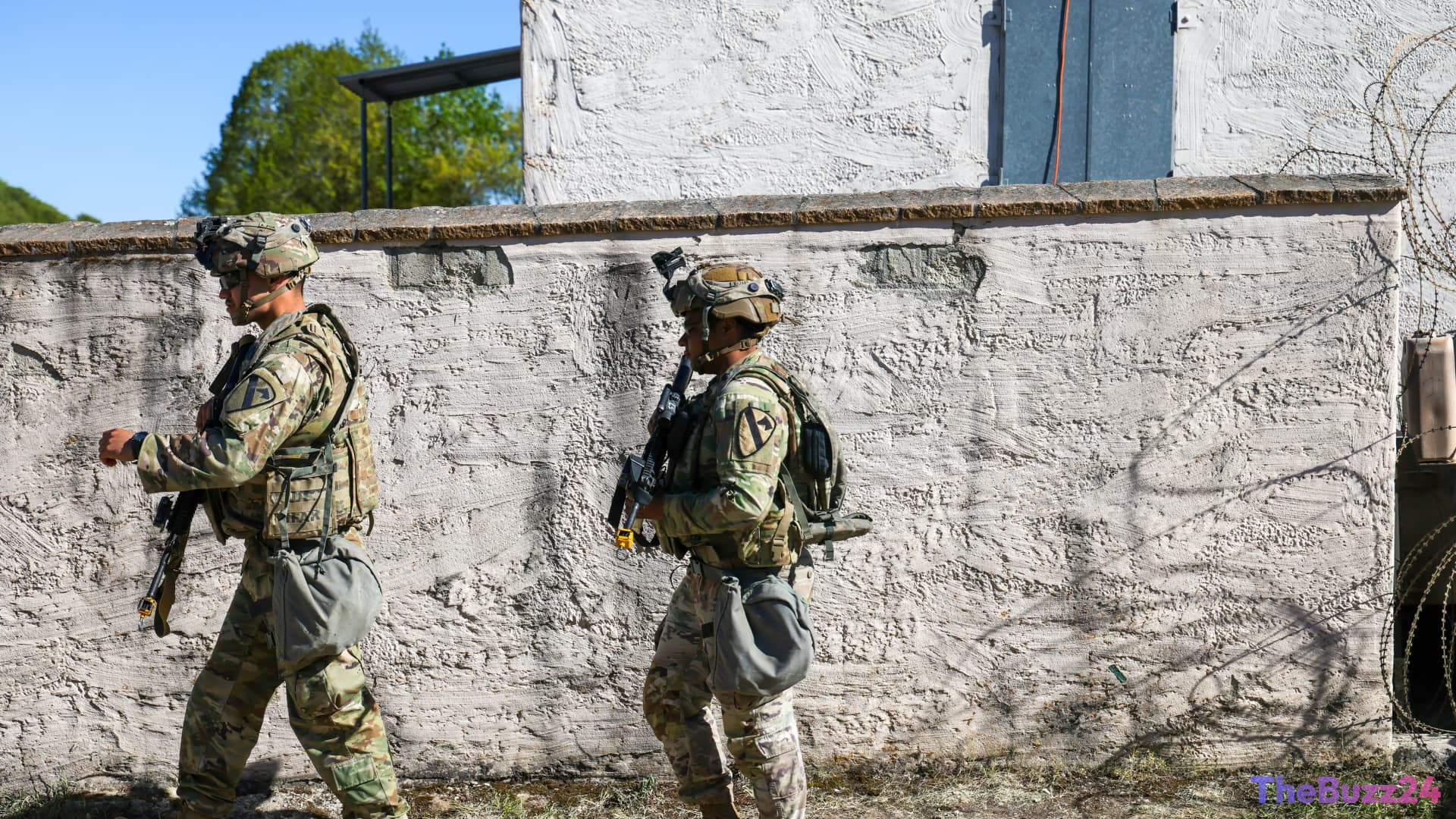
Germany Pivots Toward Strategic Defense Autonomy Amid U.S. Troop Drawdowns
The German government is aggressively pursuing a new era of strategic independence in regional security, prompted by the Pentagon’s decision to withdraw 5,000 troops from the country. This reduction, which trims a long-standing military presence that typically ranged between 35,000 and 40,000 personnel, follows a period of friction regarding transatlantic trade policies and divergent geopolitical strategies in the Middle East. German Defence Minister Boris Pistorius has characterized this shift as a definitive turning point, asserting that Europe must now take the lead in managing its own defense architecture.
To address the resulting security gaps, Berlin has initiated a significant expansion of the Bundeswehr, with plans to increase active-duty personnel from 185,000 to 260,000. This growth is paired with a massive overhaul of military infrastructure and an expedited procurement process for high-tech weaponry. Notably, the cancellation of a planned U.S. long-range fires battalion has left a void in regional deterrence, prompting Germany to fast-track the development of its own indigenous long-range missile systems to ensure national security.
Despite the political momentum behind these changes, experts caution that achieving true strategic autonomy is a complex, multi-year endeavor. While NATO members have committed to higher defense spending, the continent continues to grapple with systemic equipment shortages and the necessity for long-term financial stability. Furthermore, the continued operation of critical U.S. logistical hubs, such as the Ramstein airbase and Landstuhl hospital, underscores the ongoing interdependence between European security and American military infrastructure, highlighting the difficulty of a complete decoupling.
Key Takeaways
- Germany is increasing its active-duty military force from 185,000 to 260,000 personnel to offset the reduction of U.S. troops.
- Berlin is prioritizing the development of indigenous long-range missile technology to replace capabilities lost by the cancellation of a U.S. fires battalion.
- Achieving full strategic autonomy remains a long-term challenge due to existing equipment deficits and the requirement for sustained, multi-year defense investment.
Editor’s Analysis & Impact
The transition toward European defense autonomy marks a historic realignment of the post-WWII security landscape. For decades, the U.S. military footprint in Germany functioned as the primary pillar of NATO’s deterrence. As Washington shifts its strategic focus toward other global regions, Germany’s expansion of the Bundeswehr signals a move away from total reliance on external security guarantees. This shift will likely catalyze significant growth for European defense contractors, particularly in the sectors of long-range precision weaponry and infrastructure. While this transition may introduce short-term volatility in regional deterrence, it compels European nations to confront the systemic underfunding that has hindered military readiness for years. Ultimately, this move could lead to a more resilient, albeit fragmented, European security framework that is better equipped to handle localized threats without immediate American intervention.
Frequently Asked Questions
Q: Why is Germany increasing its military personnel?
A: Germany is expanding its active-duty force to 260,000 to compensate for the withdrawal of U.S. troops and to establish greater strategic independence in regional security.
Q: What is the main challenge for European strategic autonomy?
A: The primary hurdles include significant gaps in military equipment, the need for consistent long-term financial commitment, and the logistical complexity of replacing capabilities previously provided by the U.S. military.
AI Disclosure: This article is based on verified data and official reports. Our Team and AI have cross-referenced every financial detail with primary sources to ensure total accuracy.
More from this Category