Global Markets Brace for Impact as US-Iran Tensions Flare, Oil Prices Surge
Global stock futures showed a slight uptick on Sunday, even as escalating tensions between the United States and Iran cast a shadow over international markets. Renewed attacks in the Middle East have heightened concerns about prolonged conflict, prompting a rise in crude oil prices. Dow Jones Industrial Average futures gained 0.2%, while S&P 500 and Nasdaq-100 futures saw increases of 0.4% and 0.5% respectively.
Asia-Pacific markets experienced a mixed opening on Monday. Japan’s Nikkei 225 saw a marginal dip of 0.35%, though the Topix managed a 0.43% rise. South Korea’s Kospi dropped significantly by 2.29% at the start of trading, while its smaller counterpart, the Kosdaq, added 0.97%. In contrast, Australia’s S&P/ASX 200 benchmark climbed 0.41%.
The geopolitical situation intensified over the weekend with U.S. aircraft striking Iranian military targets. This action was a direct response to Iran’s strikes along the critical Strait of Hormuz. President Donald Trump issued a strong statement via Truth Social, vowing severe retaliation for what he described as Iran’s repeated violations of a ceasefire agreement. Meanwhile, reports from a Pakistani source involved in ceasefire negotiations indicated that discussions are currently on hold, though diplomatic channels remain open with representatives from involved nations stationed in Switzerland.
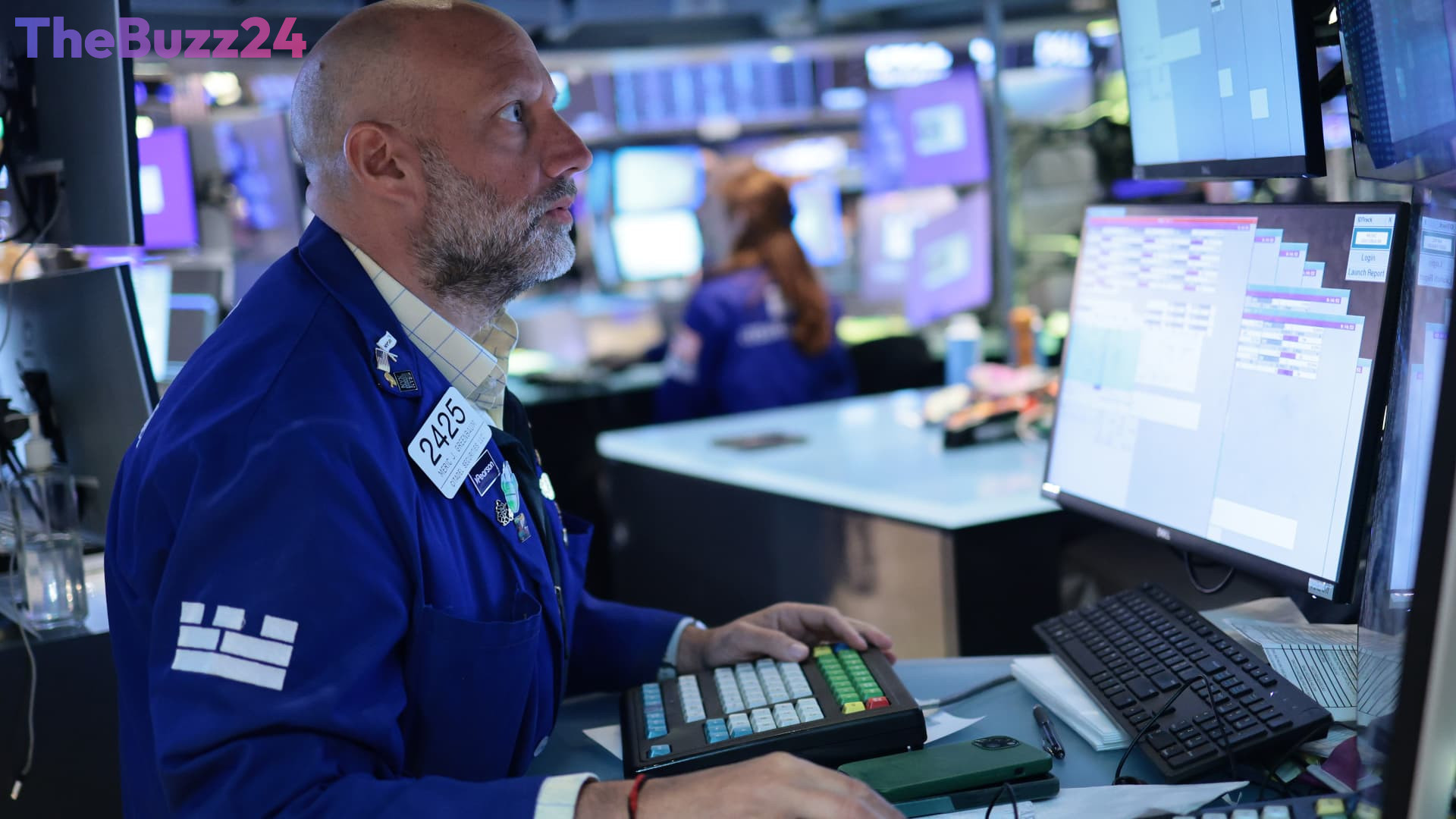
In response to the heightened risks of energy supply disruption, crude oil prices saw an increase. International Brent oil futures rose 0.8% to $72.57 per barrel, and West Texas Intermediate futures advanced 1.1% to $70. This development comes as Wall Street concludes a volatile week, which saw a notable rotation out of technology stocks. The S&P 500 and Nasdaq Composite experienced declines of nearly 2% and 4.6% respectively, with major tech firms like Nvidia and Alphabet losing over 8% each. Companies such as Meta Platforms, Apple, and Amazon also registered losses exceeding 4%, while SpaceX saw a significant drop of 17%. The Dow Jones Industrial Average, however, managed a 0.6% gain for the week, buoyed by strong performances from Merck and Johnson & Johnson, reflecting its lesser exposure to the tech sector.
Key Takeaways
- Global stock futures edged higher amid escalating US-Iran tensions and a surge in oil prices.
- Asia-Pacific markets traded mixed as investors reacted to Middle East developments and a previous tech stock sell-off.
- The conflict escalation has led to a rise in crude oil prices and a rotation out of tech stocks on Wall Street.
Editor’s Analysis & Impact
The renewed geopolitical friction in the Middle East is injecting significant uncertainty into global financial markets. The immediate impact is seen in rising oil prices, a perennial concern for economies worldwide, potentially fueling inflation and impacting consumer spending. The rotation away from tech stocks, partly attributed to ‘AI fatigue’ and concerns over unsustainable valuations, suggests a broader market recalibration. Investors are likely seeking safer havens and more defensive assets as geopolitical risks mount. The coming weeks will be crucial in determining whether diplomatic efforts can de-escalate the situation or if the conflict will lead to prolonged market volatility and a deeper economic impact.
Frequently Asked Questions
Q: What triggered the latest escalation between the US and Iran?
A: The recent escalation was triggered by renewed attacks in the Middle East, with the U.S. striking Iranian military targets in retaliation for Iran's strikes along the Strait of Hormuz.
Q: How are oil prices reacting to the increased tensions?
A: Crude oil prices have risen in response to the potential for further disruption in energy supplies. International Brent oil climbed 0.8% and West Texas Intermediate futures advanced 1.1%.
Q: What has been the impact on the stock market, particularly tech stocks?
A: The stock market experienced a mixed week, with a notable sell-off in tech stocks. The S&P 500 and Nasdaq Composite saw significant declines, while the Dow Jones Industrial Average, less exposed to tech, managed to advance.
AI Disclosure: This article is based on verified data and official reports. Our Team and AI have cross-referenced every financial detail with primary sources to ensure total accuracy.
More from this Category