Google Reimagines American History Through the Lens of Modern AI Tools
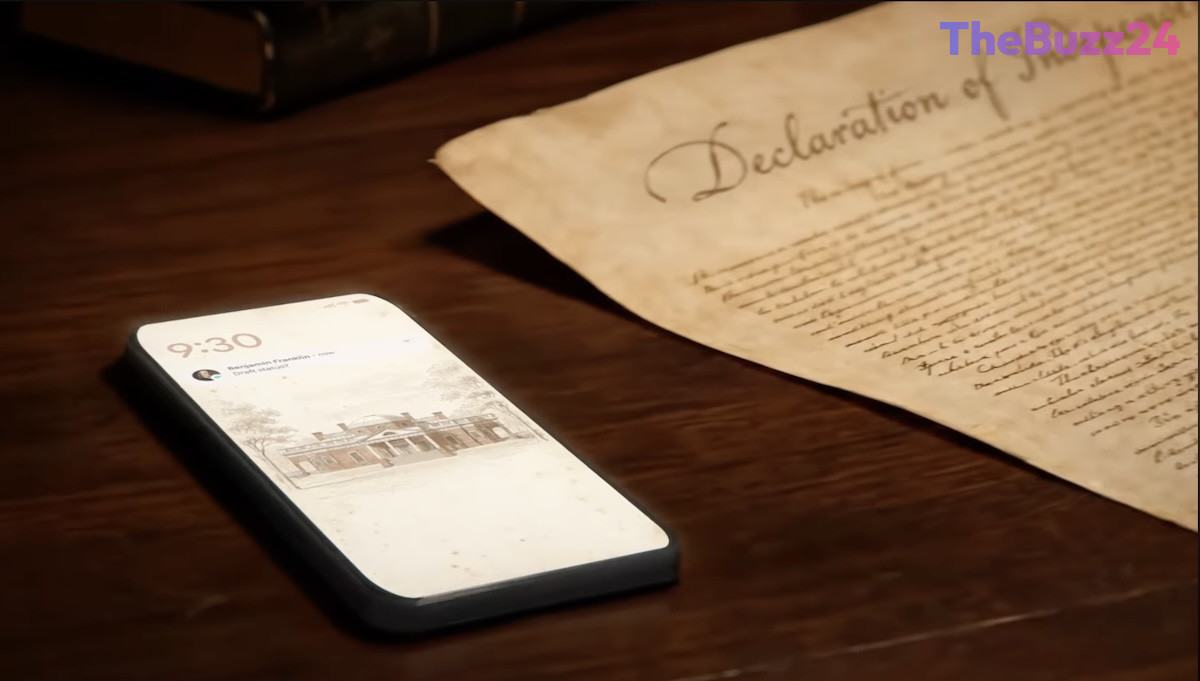
Google has launched a creative advertising campaign that playfully explores how the American Founding Fathers might have utilized modern digital collaboration tools if they were drafting the Declaration of Independence today. The commercial, titled ‘Group project, but make it 1776,’ depicts a humorous, tech-enabled version of the historical event, featuring Thomas Jefferson and Benjamin Franklin navigating a workflow that includes Google Docs, Calendar, and Meet.
The narrative leans heavily into the integration of artificial intelligence, showcasing fictionalized versions of the founders using Google’s ‘help me visualize’ tool to design the national seal and relying on Gemini to summarize meeting notes. In one scene, the founders even use a chatbot to draft a formal rejection of King George III’s request for document access, blending historical themes with contemporary office culture.
While the ad maintains a lighthearted, tongue-in-cheek tone, it has sparked a polarized reaction across social media platforms. Critics have labeled the campaign as tone-deaf, arguing that applying AI to the creation of foundational political documents trivializes the gravity of the historical process. Despite the backlash, the commercial highlights Google’s ongoing effort to normalize AI integration in everyday professional collaboration, even when applied to anachronistic scenarios.
Key Takeaways
- Google's new commercial depicts the Founding Fathers using modern productivity tools like Google Docs and Gemini to draft the Declaration of Independence.
- The ad utilizes AI-driven features, such as image generation and meeting summarization, to illustrate the practical applications of Google Workspace.
- The campaign has received mixed public reception, with critics questioning the appropriateness of using AI to reframe significant historical political events.
Editor’s Analysis & Impact
This campaign represents a strategic pivot in how big tech companies market generative AI to the general public. By placing AI tools in a familiar, albeit absurd, historical context, Google is attempting to demystify the technology and position it as a standard utility for ‘group projects’ rather than a complex, intimidating innovation. However, the backlash underscores a growing societal tension regarding the intersection of AI and human creativity. As companies continue to push AI into the mainstream, they face the challenge of balancing ‘relatable’ marketing with the risk of appearing to diminish the value of human intellectual labor. The industry should expect continued scrutiny as brands attempt to weave AI into cultural narratives, as audiences remain highly sensitive to the perceived encroachment of automation on historical and creative legacies.
Frequently Asked Questions
Q: What is the premise of Google's 'Group project, but make it 1776' commercial?
A: The commercial imagines the Founding Fathers using modern Google Workspace tools, such as Google Docs, Meet, and Gemini AI, to collaborate on the Declaration of Independence.
Q: How has the public reacted to the commercial?
A: The reaction has been mixed; while some viewers found the ad humorous and creative, others on platforms like Bluesky criticized it as 'tone-deaf' and questioned the necessity of involving AI in historical political contexts.
AI Disclosure: This article is based on verified data and official reports. Our Team and AI have cross-referenced every financial detail with primary sources to ensure total accuracy.
More from this Category