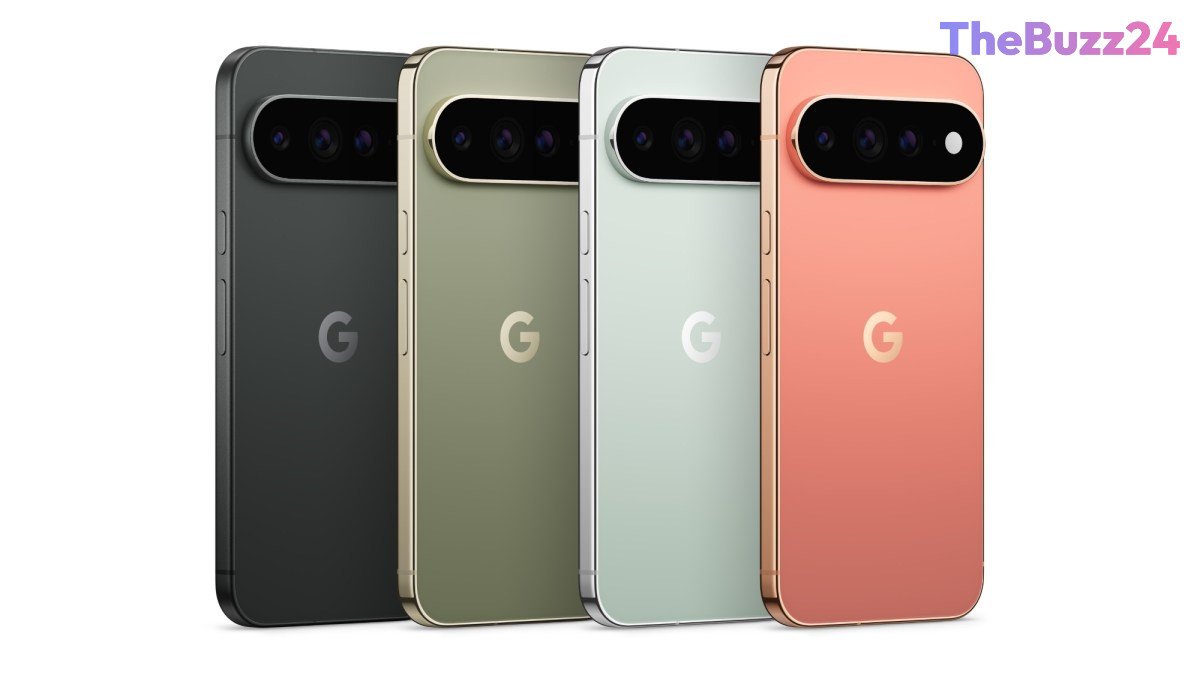
Google Unveils Pixel 11 Series: Minor Hardware Tweaks Paired with Major Gemini AI Upgrades
Google has officially introduced its latest flagship smartphone lineup, the Pixel 11 series. While the physical design and internal hardware see only incremental updates compared to last year’s models, the real evolution lies in the deep integration of Google’s Gemini artificial intelligence. The new devices are positioned as highly capable AI agents, designed to handle complex background tasks and streamline daily user workflows.
The standout upgrades focus heavily on agentic AI capabilities. Users in the United States can leverage Gemini to perform real-world tasks such as booking rides, ordering groceries, and making restaurant reservations. Google has also expanded Gemini’s ecosystem, partnering with third-party applications like OpenTable, Ticketmaster, and Zocdoc to execute actions seamlessly. Additionally, the Pixel 11 introduces “Rambler,” a new dictation and transcription tool, alongside real-time translation for videos and podcasts, and an innovative sign-language-to-text accessibility feature.
On the hardware and camera front, the Pixel 11 lineup is powered by the new Tensor G6 processor, which boasts a 20% improvement in power efficiency and 25% faster web browsing. The camera system benefits from “Magic Capture,” an AI-driven feature that extracts the best individual frames from video clips, auto-cropping and unblurring them for instant sharing. The Pro models feature an upgraded telephoto sensor allowing 32% more light, a 120x zoom capability, and “Instant Night Sight” which captures low-light photos significantly faster. A subtle new LED indicator light on the back of the phone also signals when Gemini is active or when notifications arrive.
Pre-orders for the Pixel 11 series are now open, with base storage starting at 256GB across all models. Pricing begins at $899 for the standard Pixel 11, $1,099 for the Pixel 11 Pro, and $1,299 for the top-tier Pixel 11 Pro XL. This represents a slight price hike for the premium tier, driven by rising component costs, though the entry-level pricing for equivalent storage capacities remains consistent with the previous generation.
Key Takeaways
- The Pixel 11 series prioritizes advanced 'agentic' AI features powered by Gemini, allowing users to automate tasks like booking rides and making reservations.
- Under the hood, the new Tensor G6 chip delivers a 20% boost in power efficiency and enables faster on-device AI processing and web browsing.
- Pricing starts at $899 with a baseline storage of 256GB, though the high-end Pro XL model sees a $100 price increase due to rising component costs.
Editor’s Analysis & Impact
Google’s strategy with the Pixel 11 highlights a broader industry shift: hardware iteration has plateaued, making software and artificial intelligence the primary battlegrounds for smartphone dominance. By branding the Pixel 11 as an ‘agentic’ AI device, Google is attempting to move beyond simple voice assistants toward proactive, autonomous digital agents. This deep integration of Gemini into daily tasks—like calling businesses and managing third-party apps—could set a new benchmark for user experience. However, the success of this strategy depends heavily on user trust and the reliability of AI-driven actions. Financially, the decision to eliminate the 128GB entry tier effectively raises the entry price point for consumers, a calculated risk as Google seeks to offset rising hardware manufacturing costs while positioning its devices as premium AI workstations.
Frequently Asked Questions
Q: What is the starting price of the Pixel 11 series?
A: The Pixel 11 starts at $899, the Pixel 11 Pro at $1,099, and the Pixel 11 Pro XL at $1,299, with all models now starting with 256GB of base storage.
Q: What are the main camera improvements in the Pixel 11?
A: The camera features 'Magic Capture' to extract high-quality photos from video frames, an upgraded telephoto sensor for better low-light performance, and up to 120x zoom on Pro models, alongside a faster 'Instant Night Sight' mode.
Q: What makes the Tensor G6 chip different?
A: The Tensor G6 processor offers 20% better power efficiency, 25% faster web browsing, and lower latency for running on-device AI models compared to its predecessor.
AI Disclosure: This article is based on verified data and official reports. Our Team and AI have cross-referenced every financial detail with primary sources to ensure total accuracy.
More from this Category