Hubble Telescope Captures Ancient Stellar ‘Sparkler’ in Milky Way Halo
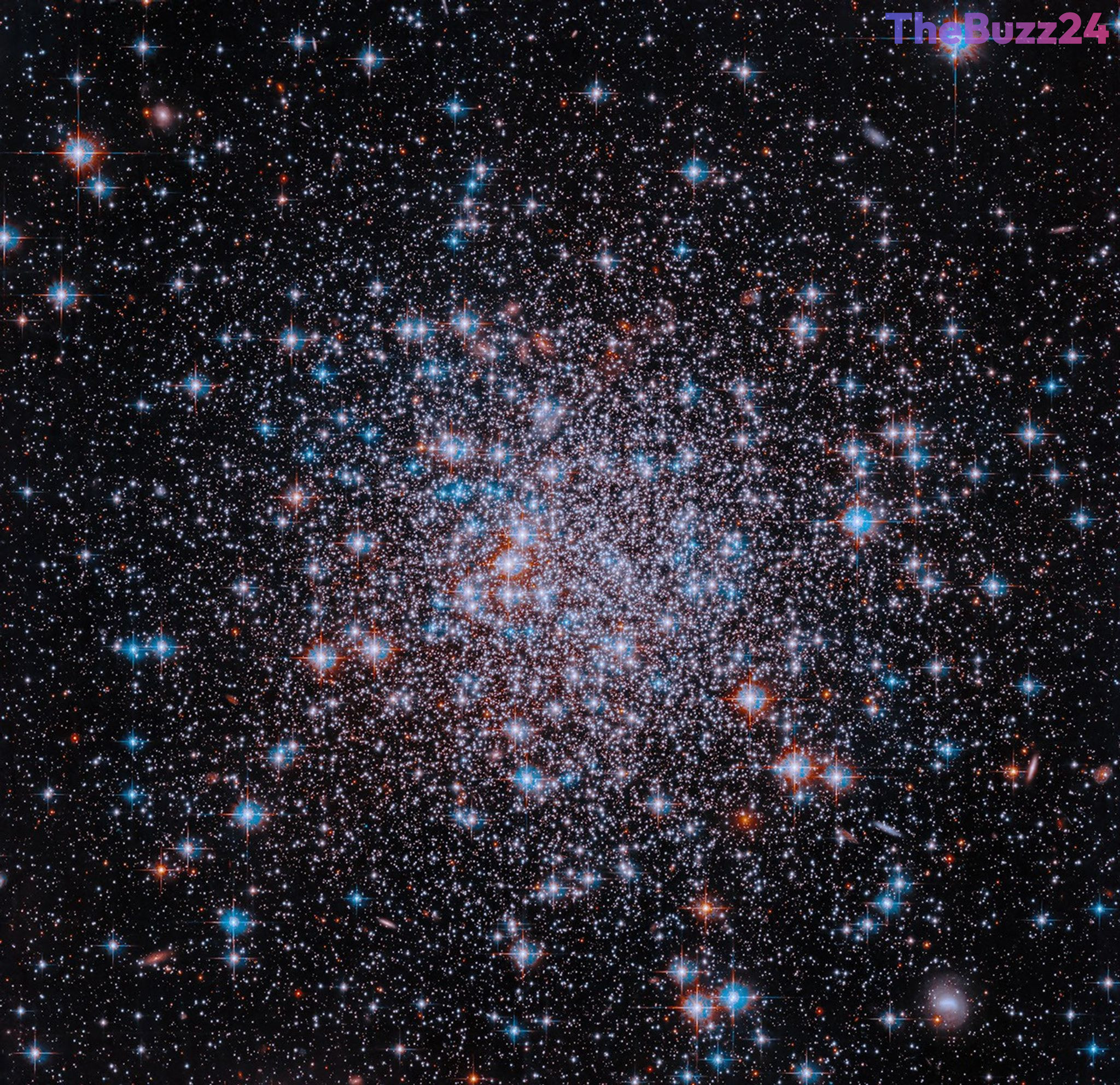
In a stunning display of cosmic history, the Hubble Space Telescope has captured a vibrant image of NGC 6426, a globular cluster located in the outer halo of the Milky Way. The cluster, which appears as a dazzling array of red, white, and blue stars, serves as a window into the early stages of the universe. At approximately 13 billion years old, NGC 6426 is nearly as ancient as the universe itself, offering astronomers a rare look at stellar evolution from the dawn of time.
Globular clusters like NGC 6426 are spherical collections of stars bound together by gravity, typically forming from the same collapsing cloud of gas. The distinct colors captured in the image provide vital data regarding the temperature of these stars; blue stars indicate higher temperatures, while red stars represent cooler, lower-energy states. The cluster is characterized by its low metallicity, meaning it contains fewer elements heavier than hydrogen and helium, a hallmark of the early universe before subsequent generations of stars enriched the cosmos with heavier materials.
Scientific analysis of the cluster has revealed two chemically distinct populations of stars. This suggests that the younger, more metallic stars within the group were formed from the debris of earlier, massive stars that ended their lives in supernova explosions. By studying these ancient clusters, researchers are gaining a clearer understanding of how the Milky Way formed and evolved over billions of years. This observation remains a cornerstone of Hubble’s ongoing mission to map the history of our galaxy and the broader universe.
Key Takeaways
- The Hubble Space Telescope captured a high-resolution image of NGC 6426, a 13-billion-year-old globular cluster in the Milky Way's halo.
- The cluster's low metallicity provides evidence of the chemical composition of the early universe, consisting primarily of hydrogen and helium.
- Researchers identified two distinct stellar populations within the cluster, indicating that later stars were enriched by the supernova remnants of their predecessors.
Editor’s Analysis & Impact
The continued operation of the Hubble Space Telescope remains vital for modern astrophysics, providing a longitudinal dataset that complements newer observatories like the James Webb Space Telescope. By focusing on ancient structures like NGC 6426, scientists are effectively performing ‘galactic archaeology.’ The discovery of chemically distinct populations within these clusters reinforces our understanding of how heavy elements are recycled through the cosmos, a process essential for the eventual formation of planets and life. As Hubble continues to provide high-resolution imagery and spectral data, it bridges the gap between early theoretical models of galaxy formation and current observational evidence. The synergy between Hubble’s legacy data and upcoming missions like the Nancy Grace Roman Space Telescope will likely lead to a more comprehensive map of the Milky Way’s formation history, solidifying the importance of long-term space-based observation platforms.
Frequently Asked Questions
Q: What is a globular cluster?
A: A globular cluster is a spherical collection of stars that are tightly bound together by their mutual gravity, typically found in the outer regions or 'halo' of a galaxy.
Q: Why are some stars in the image blue and others red?
A: The color of a star is directly related to its temperature. Blue stars are significantly hotter, while red stars are cooler.
Q: What does 'low metallicity' mean in astronomy?
A: In astronomy, metallicity refers to the abundance of elements heavier than hydrogen and helium. Low metallicity indicates that a star or cluster formed early in the universe's history, before many heavy elements had been created by stellar nucleosynthesis.
AI Disclosure: This article is based on verified data and official reports. Our Team and AI have cross-referenced every financial detail with primary sources to ensure total accuracy.
More from this Category