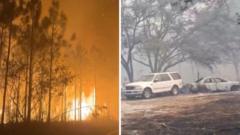
Unprecedented Wildfire Crisis Grips Florida and Georgia as Blazes Spread
A severe wildfire outbreak is currently tearing through parts of Florida and Georgia, creating a dangerous situation for local residents and emergency responders. The intensity of the fires has been exacerbated by prolonged dry conditions and high-velocity winds, which have allowed the flames to spread rapidly across the landscape. One of the primary blazes has already consumed over 30,000 acres, leaving authorities struggling to establish containment lines.
Emergency management teams are operating at full capacity, coordinating a multi-state effort to deploy additional resources and personnel to the front lines. The primary objective remains the protection of residential areas and critical infrastructure, though the unpredictable nature of the fire behavior continues to pose significant risks to both property and public safety. Officials have issued urgent warnings, advising citizens to remain alert and strictly adhere to all evacuation mandates as the situation evolves.
This surge in wildfire activity has reignited discussions regarding the increasing frequency of climate-related environmental extremes in the Southeast. As the fire season intensifies, local governments are emphasizing the need for community preparedness and long-term strategies to mitigate the impact of such large-scale natural disasters. Firefighting crews remain on high alert, bracing for further challenges as weather forecasts suggest little relief in the immediate future.
Key Takeaways
- Over 30,000 acres have been scorched by a single massive wildfire currently affecting Florida and Georgia.
- Dry weather and gusty winds are significantly hindering containment efforts by emergency crews.
- Authorities are urging residents to remain vigilant and follow all official evacuation orders as the fire season intensifies.
Editor’s Analysis & Impact
The current wildfire surge in Florida and Georgia highlights a growing vulnerability in regional infrastructure and emergency response capabilities. As climate patterns shift toward more frequent and severe drought conditions, the economic and environmental costs of these disasters are expected to rise. This event serves as a critical stress test for inter-state resource sharing and emergency management protocols. Looking ahead, the industry will likely see increased investment in predictive fire-mapping technology and forest management practices aimed at reducing fuel loads. The broader implication is a shift in how local governments approach land-use planning and insurance risk assessments in fire-prone zones, as the traditional ‘fire season’ window continues to expand and become more volatile.
Frequently Asked Questions
Q: What is the primary cause of the rapid spread of these wildfires?
A: The rapid spread is primarily driven by a combination of exceptionally dry weather conditions and strong, gusty winds that fan the flames and make containment difficult.
Q: How are authorities managing the wildfire crisis?
A: Emergency crews are working around the clock and utilizing resources from neighboring states to protect lives and property while focusing on establishing containment lines.
AI Disclosure: This article is based on verified data and official reports. Our Team and AI have cross-referenced every financial detail with primary sources to ensure total accuracy.
More from this Category