Iceland’s Treble Secures $18 Million to Advance Voice AI Simulation
The burgeoning field of voice artificial intelligence, attracting billions in investment for applications ranging from automated customer support to advanced smart glasses, is seeing a critical need for sophisticated testing infrastructure. At the forefront of this development is Treble, an Iceland-based startup that recently announced an $18 million extension to its Series A funding round. This latest capital infusion, led by Paladin Capital Group with continued support from existing investors such as KOMPAS VC, Frumtak Ventures, EIC, and Omega ehf, elevates Treble’s total funding to over $40 million since its inception in 2020.
Founded by acoustic engineers Finnur Pind and Jesper Pedersen, Treble is strategically positioning itself as a central player in the voice AI ecosystem. The company’s simulation platform is designed to serve a diverse clientele, including AI model developers, robotics firms, and consumer hardware manufacturers. Its offerings include a synthetic data generation platform crucial for speech enhancement, noise suppression, and model training. Furthermore, Treble specializes in evaluating voice AI models under various realistic conditions, providing essential feedback to development labs. Earlier this year, the company collaborated with Hugging Face to introduce a benchmark for speech recognition models, emphasizing real-world performance.
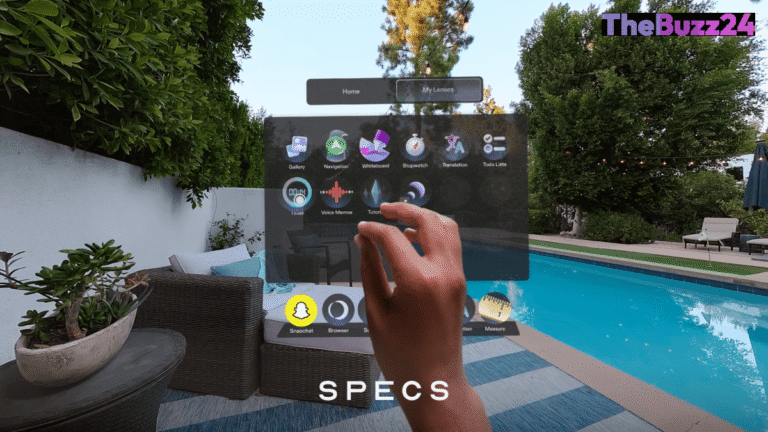
Beyond software, Treble also plays a pivotal role in hardware design and testing from an acoustic perspective. It partners with leading headphone and speaker companies for virtual prototyping, enabling them to refine product sound profiles before physical production. The platform can simulate how smart speakers interpret commands based on their placement, a critical factor for user experience. More recently, Treble has expanded its simulation testing capabilities to smart glasses and other advanced AI devices, with a particular focus on wearables that promise to enhance human hearing. The company envisions a future where devices offer “superhuman hearing,” allowing users to selectively focus on sounds in challenging acoustic environments, such as isolating conversations in a noisy restaurant or muting distractions in a seminar.
Looking ahead, Treble is committed to deepening its involvement in the physical AI domain, extending its simulation and testing expertise to sectors like robotics, automotive, and drones. This expansion aims to enable sophisticated sound-based functionalities for these emerging technologies. Industry observers note that as more products become reliant on understanding sound, platforms like Treble’s, which simulate diverse models and devices, will become increasingly indispensable, providing a shared, simulation-native acoustic infrastructure layer for innovation.
Key Takeaways
- Icelandic startup Treble raised $18 million in an extension of its Series A funding, bringing its total capital to over $40 million for its voice AI simulation platform.
- Treble's platform offers synthetic data generation, AI model evaluation, and virtual prototyping for hardware, serving customers like Amazon and Logitech.
- The company is expanding its focus to advanced wearables for "superhuman hearing" and physical AI applications in robotics, automotive, and drones.
Editor’s Analysis & Impact
The significant investment in Treble underscores the critical role of robust simulation and testing infrastructure in the rapidly expanding voice AI market. As AI models become more complex and integrated into diverse hardware, the ability to accurately predict and optimize acoustic performance virtually is paramount. Treble’s platform addresses a fundamental challenge in AI development: the need for high-quality, diverse data and reliable performance evaluation in real-world conditions. This funding will likely accelerate Treble’s innovation in synthetic data generation and advanced acoustic modeling.
The company’s strategic expansion into “superhuman hearing” wearables and physical AI sectors like robotics and automotive highlights a broader industry trend towards more intuitive, sound-aware devices. This positions Treble not just as a tool for developers but as an enabler of next-generation human-computer interaction and autonomous systems. The success of such platforms will be crucial for ensuring the reliability, safety, and user acceptance of AI-powered products across various industries, potentially setting new standards for acoustic performance and data integrity.
Frequently Asked Questions
Q: What is Treble's core business?
A: Treble develops a voice AI simulation platform that helps AI model makers, robotics companies, and consumer hardware manufacturers test and refine their sound-based products and technologies. This includes synthetic data generation, model evaluation, and virtual prototyping for devices like headphones, smart speakers, and smart glasses.
Q: How much funding has Treble raised in total?
A: With its recent $18 million Series A extension, Treble has now raised over $40 million in total funding since its founding in 2020.
Q: What are some future applications Treble is exploring?
A: Treble is actively exploring advanced applications such as "superhuman hearing" capabilities in wearables, which would allow users to selectively enhance or filter sounds in complex acoustic environments. The company is also expanding its simulation and testing services to physical AI domains like robotics, automotive, and drones to enable sophisticated sound-based functions.
AI Disclosure: This article is based on verified data and official reports. Our Team and AI have cross-referenced every financial detail with primary sources to ensure total accuracy.
More from this Category