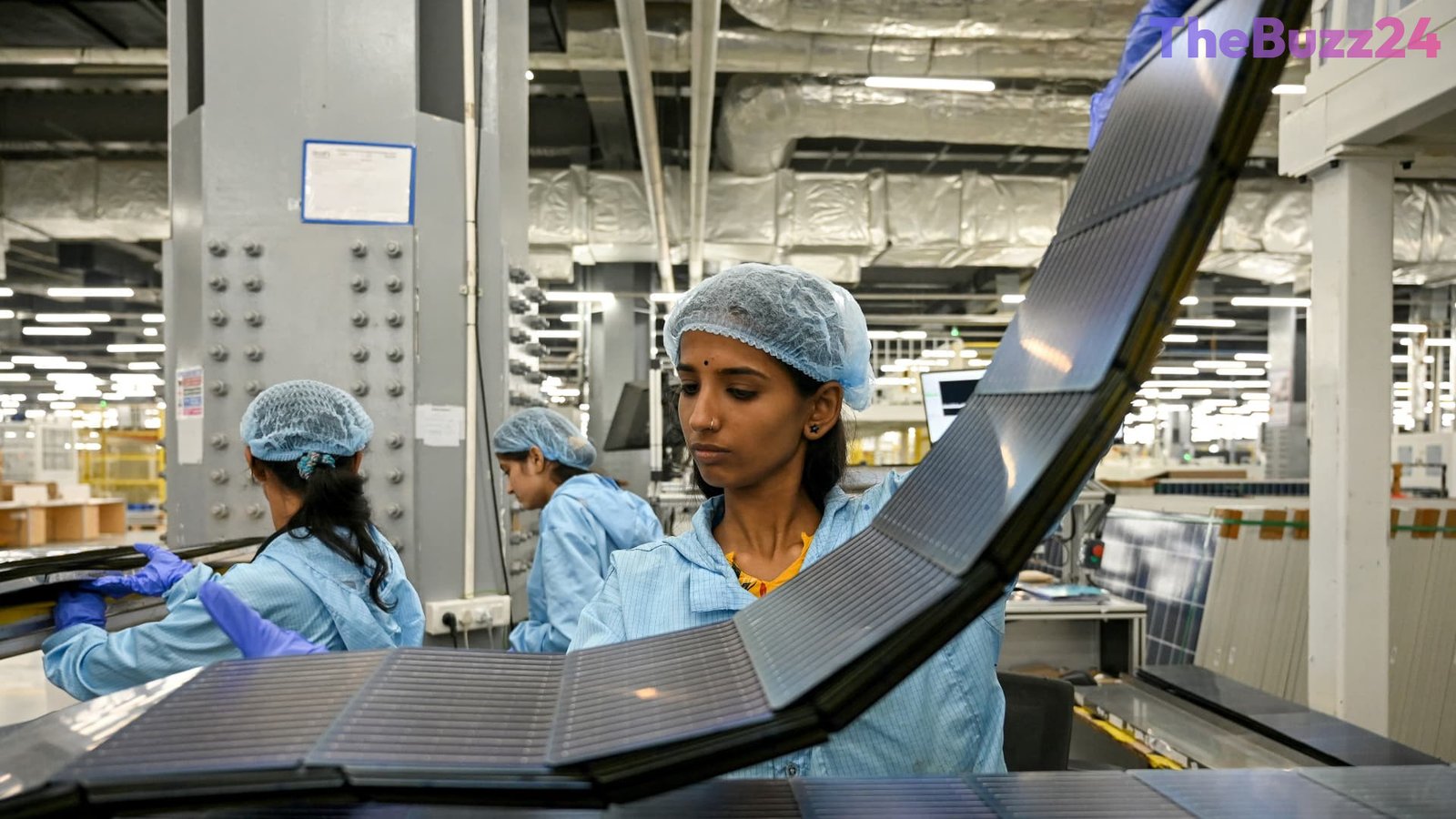
India’s Green Energy Ambitions Hit a Major Roadblock Due to Heavy Reliance on Chinese Batteries
India is aggressively expanding its renewable energy capacity to establish a self-reliant and sustainable power ecosystem, but the nation’s ambitious green push is confronting a significant hurdle: an overwhelming dependency on Chinese supply chains. While solar and wind power installations have surged over the past decade, making up a substantial share of the country’s overall electricity generation capacity, storing this intermittent energy efficiently remains a formidable challenge.
To address grid reliability issues, regulatory authorities have proposed mandatory battery storage requirements for all upcoming government solar and wind projects. However, the domestic manufacturing sector currently accounts for a negligible fraction of the massive demand pipeline. Data indicates that nearly 80% of the energy storage batteries required for renewable integration are imported directly from China, with the remainder sourced from other Asian manufacturing hubs. This dynamic leaves the South Asian nation vulnerable to geopolitical tensions, price volatility, and supply chain bottlenecks, directly contradicting broader national goals of achieving complete industrial self-reliance.
This heavy reliance on external suppliers creates a complex economic paradox for New Delhi. While the government aims to position the country as an alternative manufacturing hub to offset Western dependence on Beijing, critical sectors ranging from semiconductor fabrication to artificial intelligence data centers demand an uninterrupted, massive supply of reliable electricity. Experts note that building robust domestic cell manufacturing and robust supply chains will likely take over a decade, meaning India will remain tethered to Chinese battery technology while striving to secure its energy future.
Key Takeaways
- India's renewable energy push is heavily dependent on Chinese imports, which account for nearly 80% of the country's battery storage supply.
- New regulations require new government solar and wind projects to include battery storage, potentially deepening reliance on foreign manufacturers in the short term.
- Developing robust domestic battery production and cell manufacturing infrastructure could take over a decade, posing a long-term challenge to India's energy security.
Editor’s Analysis & Impact
The strategic friction between India’s green transition and its geopolitical reliance on Beijing highlights a critical vulnerability in global supply chains. As emerging economies race to electrify industrial bases, power data centers, and support artificial intelligence infrastructure, energy security has become synonymous with technological independence. India’s struggle to scale domestic battery manufacturing underscores how difficult it is to decouple from dominant manufacturing hubs like China, which controls the vast majority of critical mineral processing and battery supply components. For investors and industry leaders, this dynamic illustrates that the global energy transition will not be a smooth, localized evolution. Instead, it will be heavily dictated by geopolitical leverage, raw material access, and the speed at which emerging economies can successfully subsidize and build domestic manufacturing ecosystems.
Frequently Asked Questions
Q: Why does India need battery storage for its renewable energy?
A: Solar and wind power availability fluctuates based on time of day, weather, and seasonal changes, meaning peak generation rarely aligns with peak electricity demand. Battery storage allows the grid to capture surplus green energy and dispatch it when it is needed most.
Q: What percentage of renewable energy batteries does India import from China?
A: Nearly 80% of the batteries used for storing renewable power in India originate from China, with the remaining 20% coming from other Asian countries such as South Korea and Taiwan.
Q: How long might it take for India to establish local battery manufacturing?
A: Industry experts and market analysts estimate that it could take over a decade for India to fully ramp up its domestic battery manufacturing and cell production capabilities to meet local demand.
AI Disclosure: This article is based on verified data and official reports. Our Team and AI have cross-referenced every financial detail with primary sources to ensure total accuracy.
More from this Category