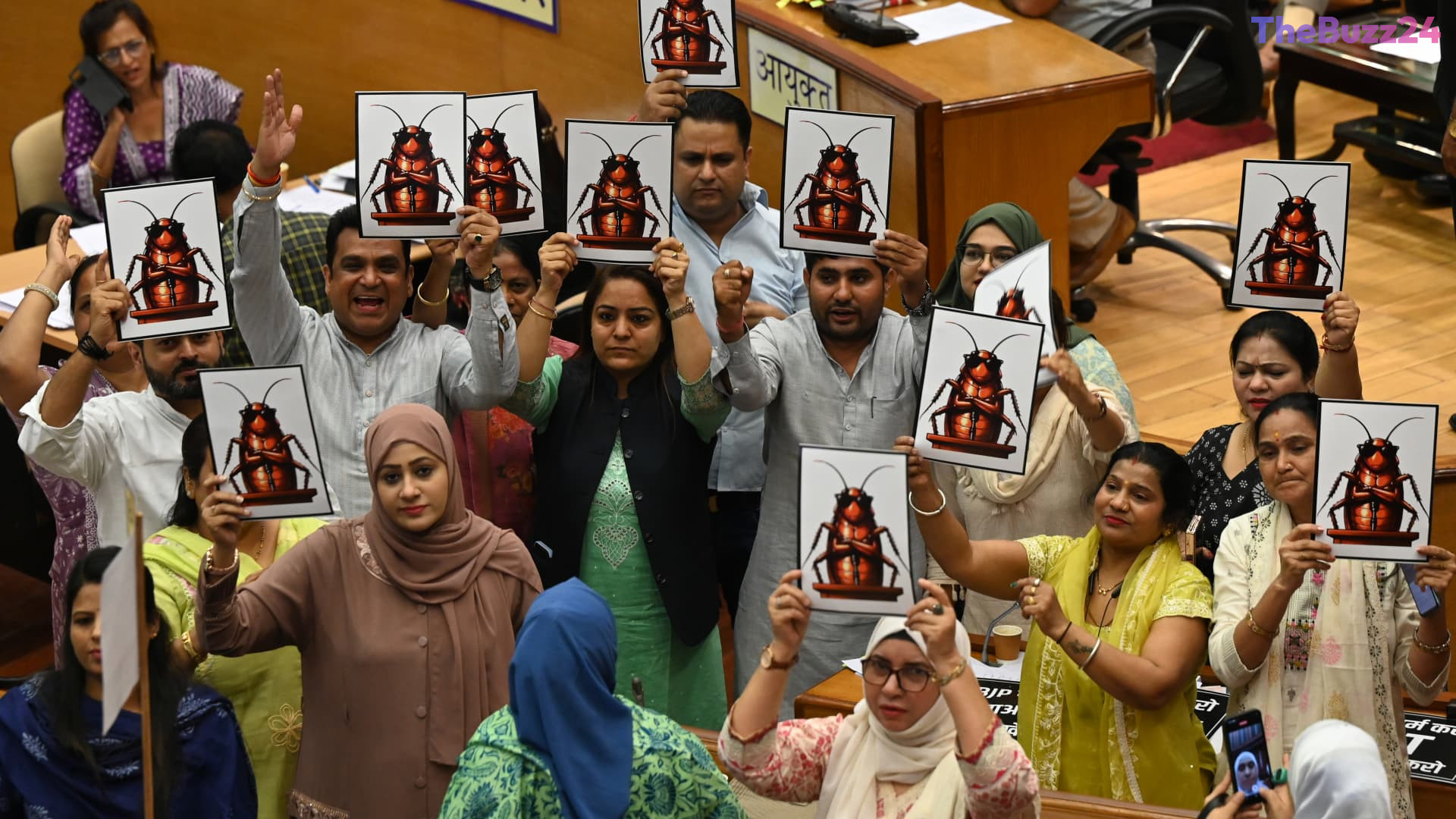
India’s Viral ‘Cockroach’ Movement Faces Critical Real-World Test
A burgeoning digital movement known as the Cockroach Janta Party (CJP) is preparing for its first major offline demonstration in New Delhi this Saturday. Launched in mid-May by political communications strategist Abhijeet Dipke, the group emerged as a satirical response to comments made by a high-ranking judicial official who referred to unemployed youth as ‘parasites’ and ‘cockroaches.’ Despite its humble origins, the movement has rapidly gained traction, claiming over 22 million followers on Instagram and positioning itself as the collective voice for India’s disillusioned and jobless youth.
While the CJP’s online presence is substantial, the upcoming protest serves as a litmus test for its actual influence. Analysts are closely monitoring the event to determine if the digital fervor translates into tangible ground-level mobilization. Historically, similar youth-led social media movements in neighboring nations like Bangladesh, Nepal, and Indonesia have successfully disrupted economic stability and, in some instances, forced significant political shifts. The CJP is currently leveraging its platform to demand accountability for systemic issues, specifically targeting recent irregularities in national high school and entrance examinations, and calling for the resignation of the education minister.
For investors and policymakers, the rise of the CJP highlights a growing frustration regarding India’s ‘demographic dividend.’ Despite India’s status as a major global economy, the country faces persistent challenges in job creation, exacerbated by rising inflation and the potential impact of generative AI on the IT sector. While experts note that the current government remains stable and popular, the ability of a digital-first movement to organize large-scale physical protests could signal a shift in the political landscape, forcing a reevaluation of how the state addresses the needs of its younger population.
Key Takeaways
- The Cockroach Janta Party, a viral digital movement, is holding its first major physical protest in New Delhi to challenge government accountability.
- The movement was sparked by derogatory remarks regarding unemployed youth and has since expanded to protest systemic failures in national education exams.
- Analysts are watching the protest size closely to determine if the group's massive online following can translate into real-world political influence.
Editor’s Analysis & Impact
The emergence of the Cockroach Janta Party underscores a critical disconnect between India’s economic growth narrative and the lived reality of its youth population. From a market perspective, the movement represents a ‘tail risk’ for political stability. While the current administration maintains a strong mandate, the history of youth-led movements in South Asia suggests that when digital frustration manifests into sustained physical mobilization, it can disrupt policy agendas and market sentiment. Investors should monitor whether this movement remains a fringe satirical entity or evolves into a structured political force capable of influencing legislative outcomes. The primary implication for the future is the increasing pressure on the government to deliver on job creation and educational reform, as the ‘demographic dividend’ risks becoming a source of volatility rather than a driver of growth.
Frequently Asked Questions
Q: What is the Cockroach Janta Party?
A: It is a mock political movement launched in May 2024 that uses social media to advocate for the interests of unemployed and disillusioned youth in India.
Q: Why is the upcoming protest in New Delhi significant?
A: It serves as a test to see if the movement's massive online following can translate into real-world, physical mobilization, which is necessary to exert actual political pressure.
AI Disclosure: This article is based on verified data and official reports. Our Team and AI have cross-referenced every financial detail with primary sources to ensure total accuracy.
More from this Category