Indonesia’s ‘Carbon Bombs’ Ignite: Volunteers Battle Deadly Peatland Wildfires
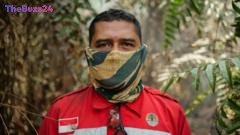
The skies over Borneo have become a suffocating blanket of amber smog, a toxic haze that has transcended international borders, impacting air quality in Singapore, Manila, and Kuala Lumpur. On the ground, the air is thick with the acrid smell of burning peat, a substance that releases millennia-old carbon into the atmosphere. Volunteer firefighters like Dwi Sujatmoko, a 35-year-old who has spent over a month battling these infernos, describe the experience as akin to tear gas, with stinging eyes and burning lungs.
These fires, exacerbated by a severe “Super El Niño” drought, have already consumed approximately 200,000 hectares of forest and farmland across Indonesian Borneo since early July. The situation is particularly alarming because the fires are burning through one of the world’s largest tropical peatland ecosystems. These peatlands, normally vast reservoirs of ancient carbon, transform into “carbon bombs” when ignited, releasing massive quantities of carbon dioxide, carbon monoxide, and methane into the atmosphere. Dr. Nisa Novita, a peatland researcher, explains that the waterlogged conditions that allow carbon to accumulate over thousands of years also make drained or burning peatlands a rapid source of greenhouse gas emissions, with deep peat deposits potentially holding over 6,000 tonnes of carbon per hectare.
The consequences of these fires extend far beyond environmental damage, creating a severe public health crisis across Southeast Asia. Air pollution indices have reached dangerous levels, leading to a surge in hospital admissions. In Indonesia alone, over 50,000 cases of respiratory infections were recorded between July and August, with a significant number affecting young children. Professor Susan Page, who has studied Asian peatlands for decades, highlights that the fine particulate matter from these fires can enter the bloodstream, causing systemic health issues. Volunteer firefighters on the front lines are not only exposed to these toxic fumes but are also risking their lives, with recent reports of two volunteers in Central Kalimantan dying due to health complications from firefighting efforts.
The root of this recurring crisis lies in decades of land-use changes, including extensive logging and the development of plantations on peatlands. While traditional farming methods involving controlled burns have sometimes been blamed, experts point to industrial-scale projects that have drained these vital peat swamps, rendering them highly susceptible to fire. Drained peatlands continuously emit carbon dioxide, with the current wildfires serving as a dramatic and deadly manifestation of this ongoing environmental degradation. Firefighters like Sujatmoko and his team continue their arduous work, facing challenges such as water shortages and extreme fatigue, driven by a sense of duty and a desperate hope for rain to quell the “carbon bombs” before they inflict further irreparable damage.
Key Takeaways
- Wildfires in Indonesian Borneo are burning through vast peatlands, releasing ancient carbon and creating a severe transnational haze crisis.
- Volunteer firefighters are risking their lives to combat these "carbon bombs," facing toxic smoke and difficult conditions due to the unique nature of peat fires.
- Decades of land-use changes, particularly industrial development and peatland drainage, have exacerbated the fire risk, turning a recurring issue into a major environmental and health disaster.
Editor’s Analysis & Impact
The ongoing peatland fires in Indonesia represent a critical intersection of environmental degradation, climate change, and public health. The “carbon bomb” phenomenon highlights the immense, often underestimated, climate impact of tropical peatlands. The reliance on volunteer efforts underscores a systemic failure in resource allocation and preventative measures, despite the recurring nature of these disasters. The long-term implications include significant contributions to global greenhouse gas emissions, severe health consequences for millions, and potential economic disruption due to agricultural damage and transboundary pollution. Addressing this crisis requires a multi-faceted approach, including stricter land-use regulations, sustainable agricultural practices, and robust international cooperation to mitigate the devastating effects of these “carbon bombs.”
Frequently Asked Questions
Q: What are 'carbon bombs' in the context of Indonesian wildfires?
A: 'Carbon bombs' refer to peatlands, particularly in Indonesia, that store vast amounts of ancient carbon underground. When these peatlands ignite and burn, they release this stored carbon rapidly into the atmosphere as greenhouse gases like carbon dioxide, methane, and carbon monoxide, contributing significantly to climate change and air pollution.
Q: Why are peatland fires so difficult to extinguish?
A: Peat is a spongy, waterlogged material composed of partially decayed vegetation. When it dries out, it becomes highly flammable and can smolder underground for extended periods, making it extremely difficult to reach the fire's source. Fires can reignite even after the surface appears extinguished, requiring saturation of the ground to a significant depth, often described as making it 'like porridge'.
Q: What is the role of El Niño in these wildfires?
A: A 'Super El Niño' event intensifies local drought conditions by reducing rainfall. This prolonged dryness dries out the peatlands, making them much more susceptible to ignition and allowing fires to spread rapidly and burn more intensely. El Niño acts as a significant catalyst, exacerbating the underlying conditions that lead to these devastating wildfires.
AI Disclosure: This article is based on verified data and official reports. Our Team and AI have cross-referenced every financial detail with primary sources to ensure total accuracy.
More from this Category