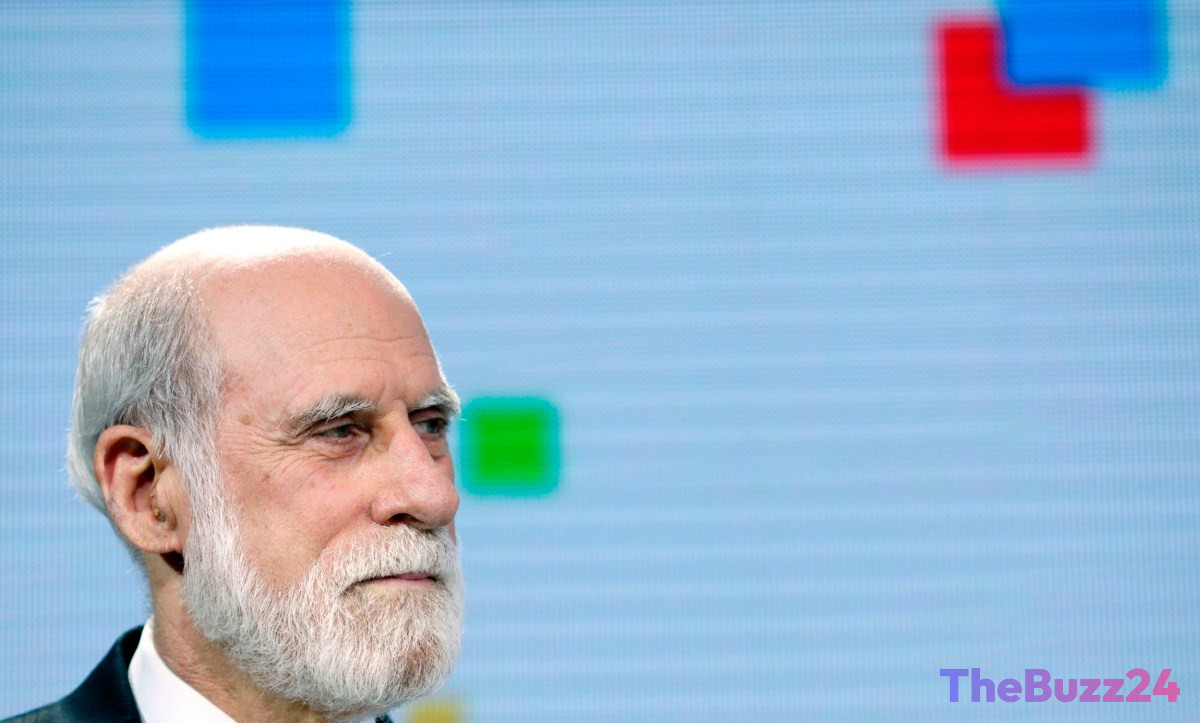
Internet Pioneer Vinton Cerf Announces Retirement After Two Decades at Google
Vinton Cerf, widely recognized as one of the “Fathers of the Internet,” is set to retire from his role as Google’s chief internet evangelist. The announcement of his departure, marking the end of a highly influential career spanning several decades, was shared during the Open Frontier conference hosted by the Laude Institute. During the event, UC Berkeley professor Dave Patterson commended Cerf’s outstanding contributions to the tech industry, prompting applause from the audience.
Cerf, 83, alongside collaborator Robert Kahn, designed the foundational TCP/IP networking protocols in the 1970s, which established the rules for how computer networks communicate and laid the groundwork for the modern internet. His pioneering work has earned him prestigious accolades, including the Presidential Medal of Freedom and the Turing Award. Since joining Google in 2005, Cerf has served as a vice president and a prominent advocate for global internet expansion and standardization.
Beyond reflecting on his career, Cerf shared forward-looking insights on the future of technology, particularly regarding artificial intelligence. He predicted that the rise of autonomous AI agents will inevitably drive the tech industry back toward standardized, precise communication protocols. While some industry experts suggest that natural language will suffice for AI-to-AI interactions, Cerf argued that formal, unambiguous standards are essential to prevent miscommunication and ensure reliable cooperation between autonomous systems.
Key Takeaways
- Vinton Cerf, co-creator of the TCP/IP protocols that built the internet, is retiring from his role as Google's chief internet evangelist.
- During his final public appearance before retirement, Cerf emphasized the critical need for standardized, precise communication protocols for future AI agents.
- Cerf warns that relying on natural language for AI-to-AI interactions could lead to dangerous ambiguities and errors.
Editor’s Analysis & Impact
Vinton Cerf’s retirement marks the end of an era for the foundational architects of the digital age. As the industry transitions from the decentralized web he helped build toward highly centralized, AI-driven ecosystems, his parting advice on standardization is incredibly timely. The current AI landscape is highly fragmented, with tech giants racing to build proprietary models. However, as autonomous AI agents begin to interact and execute complex tasks on behalf of users, interoperability will become a necessity rather than an afterthought. Companies that lead the charge in establishing these precise, non-ambiguous communication standards will likely hold significant leverage in the emerging agentic economy. Cerf’s warning against relying on natural language for machine-to-machine communication highlights a critical technical challenge that developers must address to ensure safety and reliability in future AI networks.
Frequently Asked Questions
Q: Who is Vinton Cerf and why is he famous?
A: Vinton Cerf is an American computer scientist widely known as one of the 'Fathers of the Internet.' Alongside Robert Kahn, he co-designed the TCP/IP protocols, which serve as the fundamental architecture of the global internet.
Q: What role did Vinton Cerf play at Google?
A: Cerf joined Google in 2005 as a Vice President and Chief Internet Evangelist, where he focused on global internet policy, infrastructure development, and advocating for open standards.
Q: What are Cerf's views on the future of AI communication?
A: Cerf believes that autonomous AI agents will require highly precise, standardized communication protocols rather than natural language (like English) to interact reliably and avoid misunderstandings.
AI Disclosure: This article is based on verified data and official reports. Our Team and AI have cross-referenced every financial detail with primary sources to ensure total accuracy.
More from this Category