Iowa Community Relieved as US Army Declares ‘Huge Success’ in Controlled Explosives Detonation
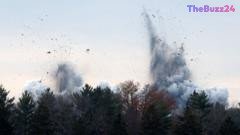
The US Army has declared the controlled detonation of nearly five tonnes of highly volatile lead azide explosives in Iowa a “huge success,” bringing relief to a region that had braced for potential health and environmental hazards. The operation, which took place shortly after 9:00 local time, saw smoke rise into the sky, but officials quickly assured the public that risks were “as close to zero as is absolutely humanly possible.” Acting Secretary of the US Army, Adam Telle, lauded the mitigation efforts, stating on social media that the detonation “exceeded all expectations.” President Donald Trump also noted that reports indicated mitigation efforts “far exceeded expectations.”
Residents in and around Middletown, Iowa, had expressed significant apprehension leading up to the blast. However, initial reports on environmental impact have been largely positive. The Environmental Protection Agency’s (EPA) extensive sensor network in the area has so far registered no lead readings above 0.0, according to Telle. Middletown Mayor Rodney Johnson, who monitored the event from eight miles away and a camera at his home just a mile from the site, expressed profound relief, stating, “We did not feel anything. We did not see anything.” Similarly, Sandy Mabeus, living eight miles from Middletown, confirmed she neither felt nor heard the explosion, despite watching live streams. Farmer David Vandenberg, about 20 miles away, reported hearing a rumble but no other effects, anticipating minimal impact.
The detonation became necessary due to the degradation of the lead azide, which had been stored for approximately 20 years. This degradation, known as recrystallization, made the compound increasingly susceptible to accidental detonation from friction or movement. Plans for the controlled blast were repeatedly delayed following widespread public outcry, legal challenges, and concerns over potential exposure to toxic lead dust. An appeals court ultimately overturned a decision to halt the blast, concluding that the risk of an unplanned explosion outweighed the valid environmental and health concerns. Despite the initial success, Iowa’s incoming Governor-elect Rob Sand has called for “immediate transparency” regarding the chaotic lead-up and emphasized the need to fully support any Iowans who may have been impacted. Cameron Hamilton, administrator of the Federal Emergency Management Agency (FEMA), confirmed additional resources and testing would be deployed in the coming weeks.
Key Takeaways
- The US Army successfully detonated nearly five tonnes of volatile lead azide explosives in Iowa, declaring the operation a "huge success" with minimal immediate environmental impact.
- Despite widespread public concern and legal challenges prior to the blast, initial environmental readings from EPA sensors showed no elevated lead levels, bringing relief to local residents.
- The detonation was necessitated by the degradation of the explosives over 20 years, but calls for continued transparency and support for potentially impacted residents persist from officials like Iowa's incoming Governor-elect Rob Sand.
Editor’s Analysis & Impact
This event highlights the complex challenges faced by authorities in managing hazardous materials, particularly those with long storage histories. The successful, controlled detonation in Iowa, despite initial public apprehension and legal hurdles, sets a precedent for how similar situations might be handled in the future, balancing public safety with environmental concerns. The meticulous planning and extensive monitoring, including EPA sensor arrays, underscore a commitment to mitigating risks, which could influence future emergency management protocols for dangerous substances. However, the lingering calls for transparency and ongoing testing emphasize the need for sustained public trust and accountability. This incident also serves as a reminder of the long-term implications of storing unstable materials and the critical importance of proactive disposal strategies to prevent future crises.
Frequently Asked Questions
Q: What type of explosive was detonated in Iowa?
A: The US Army detonated nearly five tonnes of lead azide, a highly volatile compound that had degraded over 20 years, making it susceptible to accidental explosion.
Q: What were the main concerns surrounding the detonation?
A: Primary concerns included potential health and environmental problems, particularly the release of toxic lead dust, which led to public outcry, legal challenges, and fears among local residents.
Q: What were the immediate results of the detonation regarding environmental impact?
A: The US Army declared the operation a "huge success," with initial readings from the Environmental Protection Agency's (EPA) sensor network showing no lead levels above 0.0 in the area, alleviating immediate environmental fears.
AI Disclosure: This article is based on verified data and official reports. Our Team and AI have cross-referenced every financial detail with primary sources to ensure total accuracy.
More from this Category