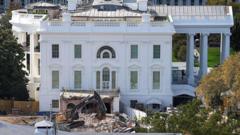
Federal Judge Blocks White House Ballroom Expansion Over Lack of Congressional Approval
A federal court has issued a temporary injunction effectively halting a major construction project at the White House. The initiative, which sought to replace the existing East Wing with a large-scale ballroom, was brought to a standstill by Judge Richard Leon, who ruled that the administration failed to obtain the mandatory Congressional authorization required for such a significant structural alteration to the historic site.
The ruling underscores the legal principle that the President serves as a steward of the White House rather than its owner, meaning unilateral decisions regarding major renovations cannot bypass legislative oversight. The National Trust for Historic Preservation led the legal challenge, asserting that the project bypassed essential regulatory steps, including filing plans with the National Capital Planning Commission and completing necessary environmental impact assessments. The proposed $400 million project, intended to increase event capacity from 500 to 1,350 guests, was slated to be financed through private contributions.
In his comprehensive 35-page decision, Judge Leon rejected the administration’s argument that stopping the construction would create a national security vulnerability. He characterized the current state of the site—which currently sits as an excavation pit—as a consequence of the administration’s own premature decision to begin work without proper legal clearance. While the administration has signaled its intent to appeal, the injunction remains active, granting a 14-day window for further legal action before the stop order potentially becomes permanent.
Key Takeaways
- A federal judge has halted the $400 million White House ballroom expansion project due to a lack of Congressional authorization.
- The National Trust for Historic Preservation successfully argued that the project violated federal law by skipping required environmental and planning reviews.
- The court rejected claims that the construction pause poses a national security risk, noting the administration acted prematurely.
Editor’s Analysis & Impact
This ruling serves as a significant check on executive power regarding the management of federal historic properties. By reinforcing the necessity of Congressional oversight for structural changes to the White House, the court has effectively prioritized regulatory compliance and historic preservation over unilateral executive ambition. The broader implication for the construction and architecture sectors is a reminder that even high-profile, privately funded projects on federal land are subject to rigorous environmental and legislative scrutiny. Moving forward, this case will likely set a precedent for how future administrations approach renovations of national landmarks, ensuring that public transparency and legal procedure remain at the forefront of any development plans. The administration’s failure to secure proper authorization has not only stalled the project but also created a public relations and logistical challenge regarding the current state of the construction site.
Frequently Asked Questions
Q: Why was the White House ballroom project halted?
A: The project was halted because the administration failed to secure the necessary Congressional authorization and neglected to conduct required environmental and planning assessments.
Q: What is the current status of the construction site?
A: The site is currently an excavation pit, which the judge noted was the result of the administration's premature decision to begin work before receiving legal approval.
AI Disclosure: This article is based on verified data and official reports. Our Team and AI have cross-referenced every financial detail with primary sources to ensure total accuracy.
More from this Category