Preparing for Launch: Key Clean Room Equipment Arrives for Nancy Grace Roman Space Telescope
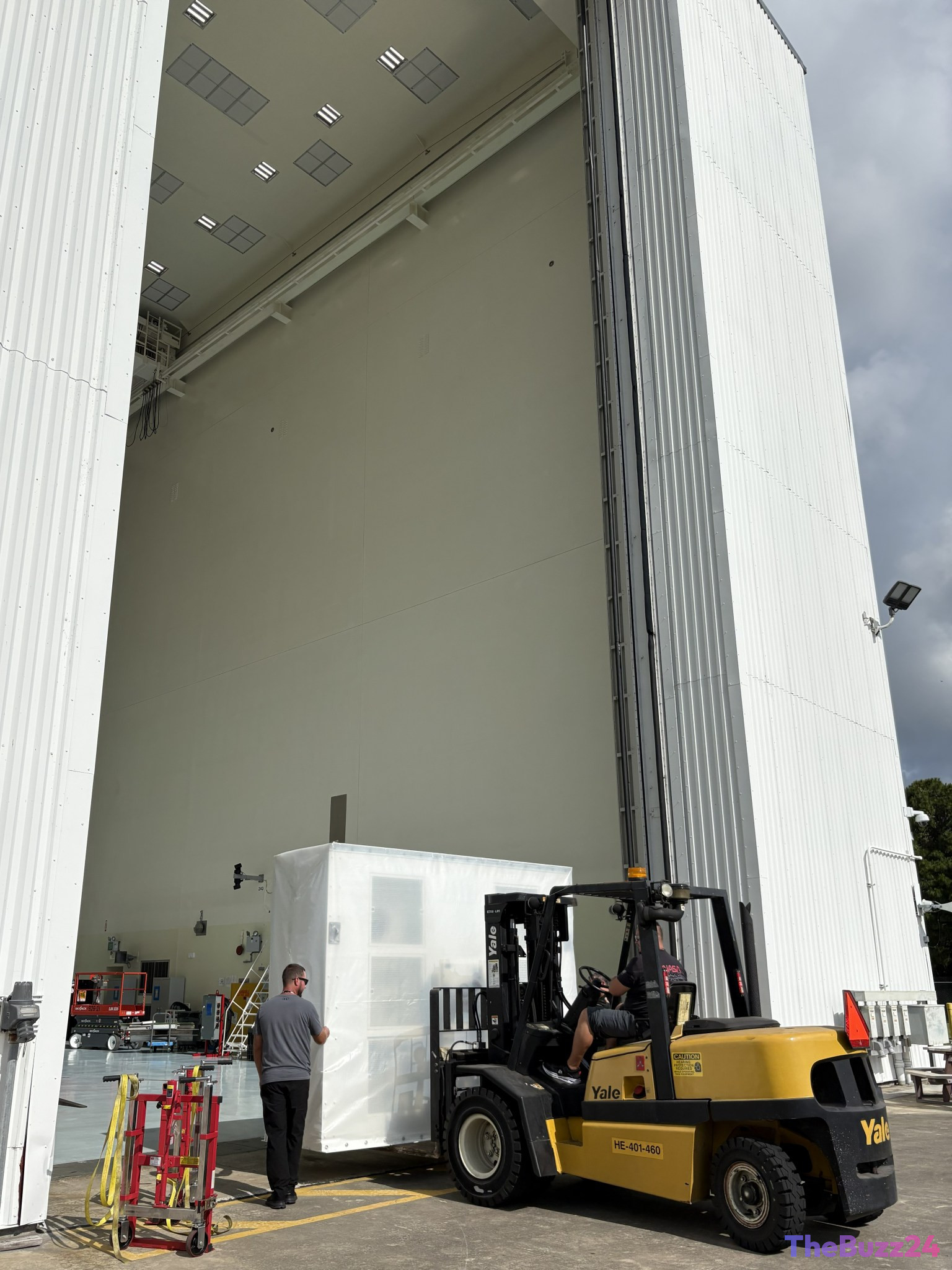
Preparations for the highly anticipated launch of the Nancy Grace Roman Space Telescope have taken a significant step forward. Key ground support equipment, including eight massive high-efficiency particulate air (HEPA) wall modules, recently arrived at the Payload Hazardous Servicing Facility (PHSF) at Kennedy Space Center in Florida. These heavy-duty modules, each weighing approximately 1,800 pounds, were successfully offloaded to upgrade the facility’s clean room systems ahead of the observatory’s arrival.
Maintaining an ultra-clean environment is critical for the delicate instruments onboard the Roman Space Telescope. The newly installed HEPA modules will ensure the facility meets the incredibly stringent cleanliness standards required during final processing. In this controlled environment, technicians will conduct vital pre-launch operations, including the fueling of the spacecraft, ensuring that no microscopic contaminants compromise the telescope’s sensitive optical and electronic systems.
Once deployed, the Roman Space Telescope will revolutionize our understanding of the cosmos. Utilizing its advanced Wide Field Instrument and a cutting-edge Coronagraph Instrument technology demonstration, the observatory will capture expansive panoramic images of the universe in infrared light. Its primary mission objectives include investigating the mysterious acceleration of the universe’s expansion, mapping the distribution of dark matter and normal matter, and advancing the search for and study of distant exoplanets.
The mission is currently targeting a launch window as early as September. The observatory will lift off aboard a SpaceX Falcon Heavy rocket from the historic Launch Complex 39A at Kennedy Space Center, marking the beginning of a new era in space exploration and observational astronomy.
Key Takeaways
- Eight 1,800-pound HEPA wall modules have been delivered to Kennedy Space Center to upgrade clean room systems for the Nancy Grace Roman Space Telescope.
- The specialized clean room environment is essential for protecting the telescope's sensitive infrared instruments during final fueling and pre-launch processing.
- The telescope is scheduled to launch as early as September aboard a SpaceX Falcon Heavy rocket from Launch Complex 39A.
Editor’s Analysis & Impact
The arrival of this specialized ground support equipment underscores the meticulous preparation required for next-generation space observatories. The Nancy Grace Roman Space Telescope represents a massive leap forward in wide-field infrared astronomy, designed to settle fundamental questions about dark energy and cosmic expansion. By upgrading the Payload Hazardous Servicing Facility with advanced HEPA filtration, engineers are mitigating the high-stakes risk of particulate contamination, which could permanently degrade the telescope’s sensitive optics. This milestone also highlights the growing synergy between public space programs and commercial launch providers, as the mission relies on SpaceX’s Falcon Heavy to reach its destination. Ultimately, the success of Roman will pave the way for future deep-space missions, establishing new benchmarks for clean-room preparation and collaborative aerospace logistics.
Frequently Asked Questions
Q: What is the primary mission of the Nancy Grace Roman Space Telescope?
A: The telescope is designed to study dark energy, map the distribution of dark matter, search for exoplanets, and investigate why the expansion of the universe is accelerating, using its advanced infrared imaging capabilities.
Q: Why does the telescope require a specialized clean room?
A: Sensitive optical instruments, like the Wide Field Instrument, can be easily damaged or degraded by microscopic dust and contaminants. The HEPA-filtered clean room ensures the spacecraft remains pristine during final assembly and fueling.
Q: How will the Roman Space Telescope be launched into space?
A: It is scheduled to launch aboard a SpaceX Falcon Heavy rocket from Launch Complex 39A at the Kennedy Space Center in Florida.
AI Disclosure: This article is based on verified data and official reports. Our Team and AI have cross-referenced every financial detail with primary sources to ensure total accuracy.
More from this Category