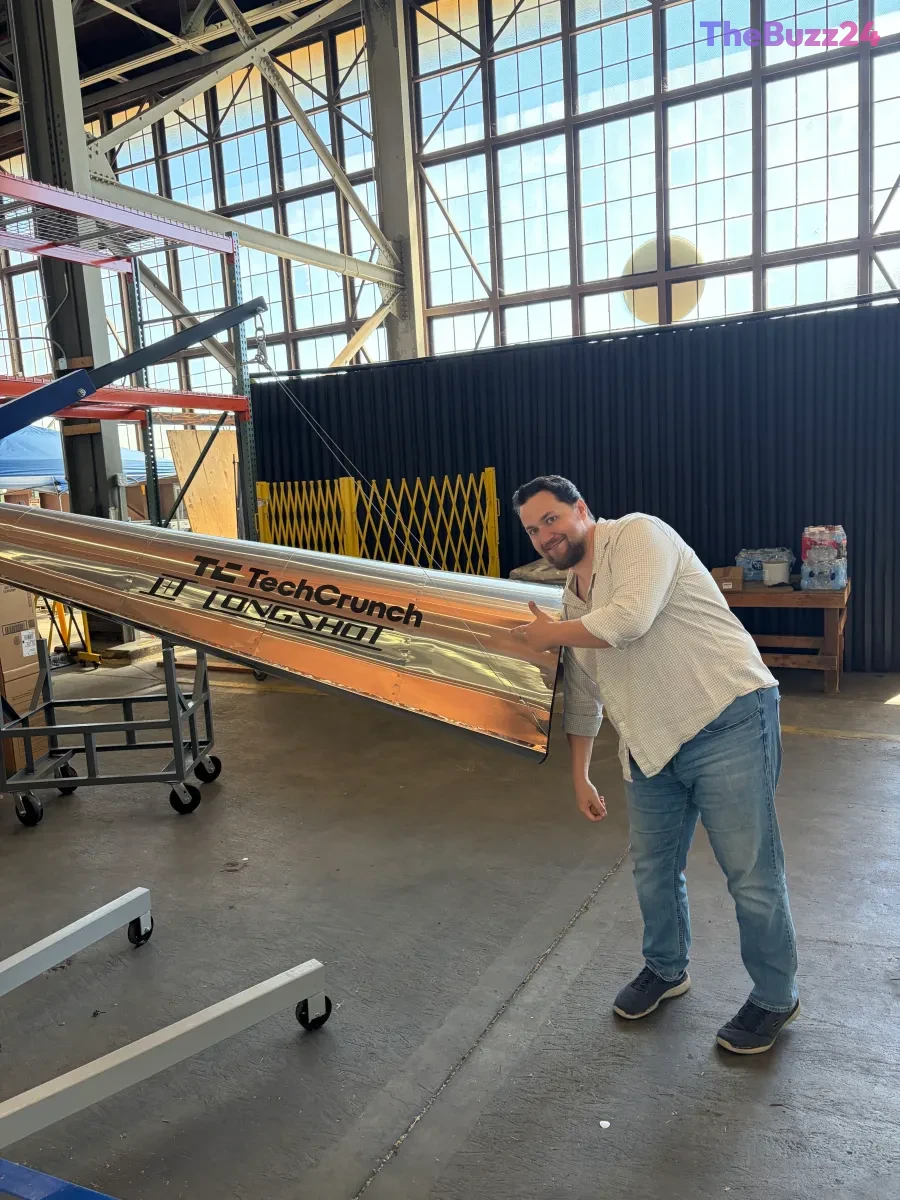
Kinetic Space Launch: How Longshot Plans to Fire Payloads Into Orbit Using Giant Ground Guns
Traditional rocket propulsion has long represented one of aerospace engineering’s most demanding compromises, requiring massive amounts of fuel and near-flawless execution to propel just a tiny fraction of total vehicle mass into orbit. California-based startup Longshot Space Technology is pursuing an alternative that bypasses traditional first-stage rockets altogether: deploying massive, pneumatic ground-based guns to catapult payloads toward space at hypersonic speeds.
Founded by chief executive Mike Grace and chief technology officer Nato Saichek, the Alameda-based venture has secured approximately $20 million in venture funding to revitalize kinetic launch concepts first theorized decades ago. Rather than leaning on unproven, exotic launch mechanisms, Longshot is modernizing multi-injection gas guns originally developed during mid-twentieth-century ballistics research. The architecture utilizes a horizontally mounted steel tube flanked by high-pressure gas canisters that sequentially vent into the chamber behind a moving projectile, providing continuous acceleration down the length of the barrel.
Longshot is progressively validating its hardware at test facilities across California. The company has achieved near-hypersonic velocities using a 70-foot accelerator near Barstow and is now commissioning a 140-foot system in Alameda. Future roadmaps include building a 328-foot facility capable of expanding to 3,000 feet, which would yield the largest kinetic launch barrel in existence. This system is designed to accelerate 220-pound lifting-body payloads to Mach 8, where aerodynamic design allows them to pitch upward and gain rapid altitude after leaving the horizontal muzzle.
While orbital launch remains the primary objective, Longshot is bootstrapping its operational growth through military contracts. The defense sector has a pressing need for economical targets to test hypersonic missile interceptors—a capability that currently costs tens of millions of dollars per conventional test rocket. Longshot claims its systems can replicate these threat profiles for a fraction of the cost. Ultimately, the startup envisions scaling to a 6-mile-long accelerator capable of firing orbital stages at roughly 11,000 miles per hour, potentially slashing orbital cargo costs to an unprecedented $50 per kilogram.
Key Takeaways
- Longshot Space Technology is developing horizontal, multi-injection gas guns to replace traditional rocket first stages with ground-based kinetic acceleration.
- The startup is currently generating revenue via defense contracts by providing low-cost hypersonic target simulations for military interceptor testing.
- Longshot's long-term roadmap aims for a six-mile-long launch tube capable of cutting commercial orbital launch costs to around $50 per kilogram.
Editor’s Analysis & Impact
The commercial launch market has reached unprecedented efficiency thanks to reusable rocketry, yet the physics of chemical propulsion fundamentally caps launch cost reductions. Alternative kinetic launch concepts like Longshot’s address this structural bottleneck by transferring energy generation to reusable ground infrastructure. If successful, dropping launch costs to $50 per kilogram could unlock emerging sectors like orbital data centers and heavy space manufacturing that remain economically unviable today. However, kinetic systems face two steep challenges: enduring extreme g-forces that limit cargo to rugged equipment, and securing vast parcels of land with regulatory clearance to build multi-kilometer acceleration tracks. Leveraging defense testing as an intermediate revenue stream offers a pragmatic path to fund the capital-intensive scaling required for orbital operations.
Frequently Asked Questions
Q: How does Longshot's projectile climb into space from a horizontal barrel?
A: The projectile is engineered as a lifting body, meaning its aerodynamic shape generates lift upon exiting the horizontal barrel, allowing it to naturally bank upward and gain altitude as it travels through the atmosphere.
Q: Can this system carry human passengers into space?
A: No. The intense acceleration and high g-forces generated inside the launch barrel make the system suitable only for hardened cargo, structural materials, and ruggedized satellite components.
Q: Does the projectile enter orbit purely from the gun's launch force?
A: No, orbital mechanics dictate that an object launched from the ground still requires an onboard secondary propulsion system to execute a circularization burn once it reaches orbit.
AI Disclosure: This article is based on verified data and official reports. Our Team and AI have cross-referenced every financial detail with primary sources to ensure total accuracy.
More from this Category