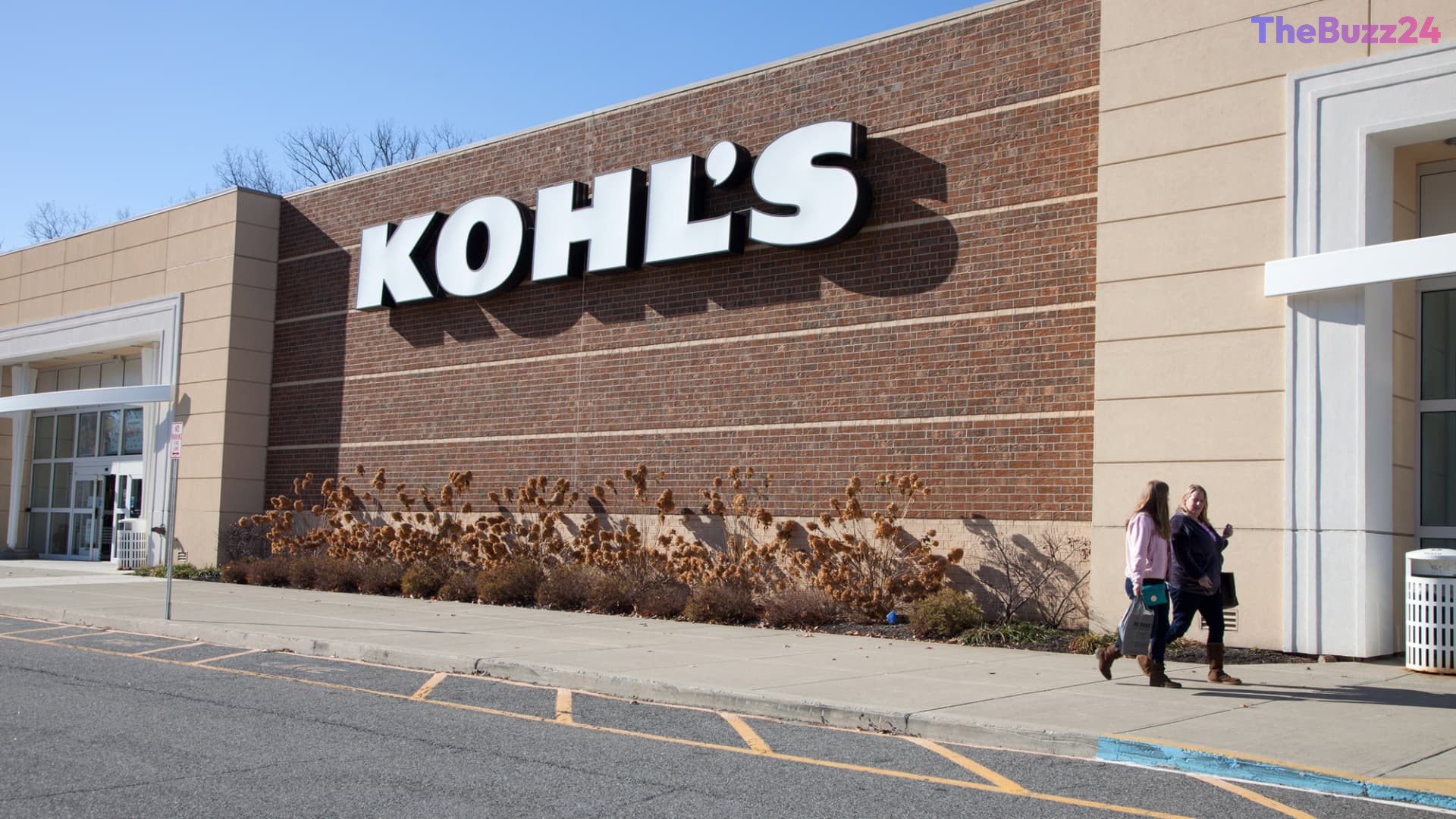
Kohl’s Stock Soars 20% as Retailer Signals Operational Turnaround
Kohl’s shares saw a dramatic 20% increase during Thursday’s trading session, marking a significant shift in investor sentiment following the retailer’s latest quarterly earnings report. The company achieved its strongest comparable sales growth in four years, effectively outperforming Wall Street expectations despite a broader retail landscape defined by economic uncertainty. While total revenue saw a slight dip, the company’s ability to exceed profit and sales forecasts has provided a much-needed boost to its market valuation.
For the fiscal first quarter, Kohl’s reported net sales of $3 billion. Although the firm recorded a net loss of $14 million, or 13 cents per share, the results aligned with year-over-year performance, suggesting a stabilization of the business. CEO Michael Bender attributed the positive momentum to improved operational discipline, specifically highlighting leaner inventory management and a strengthened balance sheet. Bender noted that the company is actively working to recapture market share and is nearing a return to consistent growth.
Looking toward the remainder of the fiscal year, management has maintained its previous financial guidance, anticipating sales to remain flat or decline by up to 2%. The retailer remains mindful of the challenges facing its primary customer base, as middle- and lower-income households continue to grapple with inflationary pressures and elevated energy expenses. To mitigate these impacts, Kohl’s is doubling down on value-driven offerings and enhancing the in-store experience to better serve budget-conscious shoppers.
In addition to its core retail strategy, Kohl’s is seeking to bolster its financial position through a $190 million tariff refund claim. While the capital has not yet been realized, the pursuit of these funds highlights the company’s proactive approach to navigating a difficult macroeconomic climate. After a challenging start to the year that saw the stock price decline by more than 35%, this latest performance update has offered a renewed sense of confidence among investors regarding the company’s long-term viability.
Key Takeaways
- Kohl's stock rallied 20% after reporting its best comparable sales growth in four years.
- The company is focusing on inventory discipline and value-based retail to attract inflation-weary consumers.
- Management is pursuing $190 million in potential tariff refunds to strengthen the company's balance sheet.
Editor’s Analysis & Impact
The 20% surge in Kohl’s stock reflects a classic ‘relief rally’ triggered by a company managing to exceed low expectations in a difficult retail environment. By demonstrating operational discipline—specifically regarding inventory—Kohl’s is signaling to the market that it can survive the current inflationary cycle that has crippled many of its peers. However, the long-term outlook remains cautious. The company’s reliance on middle- and lower-income demographics leaves it highly vulnerable to macroeconomic volatility. While the potential $190 million tariff refund provides a temporary liquidity cushion, the retailer’s ultimate success depends on its ability to differentiate its value proposition in an increasingly crowded discount-retail space. Investors should watch for sustained comparable sales growth in the coming quarters as a true indicator of a structural turnaround versus a temporary bounce.
Frequently Asked Questions
Q: Why did Kohl's stock price jump significantly?
A: The stock surged because the company reported its strongest comparable sales growth in four years and outperformed analyst expectations for both revenue and earnings, signaling a potential turnaround.
Q: What is Kohl's doing to handle inflation?
A: Kohl's is focusing on enhancing the in-store shopping experience and emphasizing value-driven pricing to appeal to budget-conscious consumers who are currently pressured by high inflation and energy costs.
AI Disclosure: This article is based on verified data and official reports. Our Team and AI have cross-referenced every financial detail with primary sources to ensure total accuracy.
More from this Category