Louisiana Students Launch Scientific Payloads to the Edge of Space in NASA-Backed Balloon Campaign
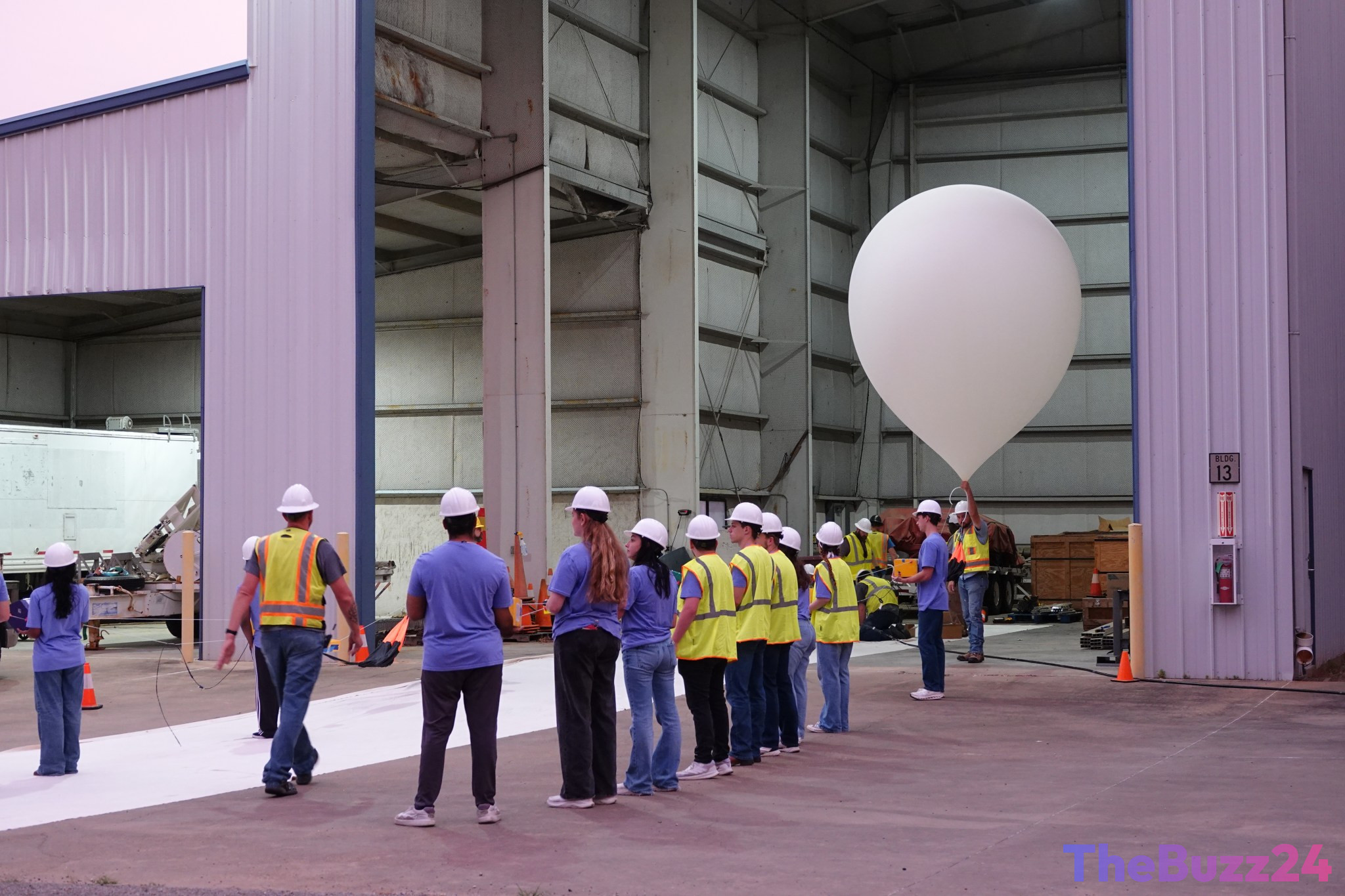
Every spring, the skies over Palestine, Texas, become a testing ground for the next generation of aerospace innovators. Students and faculty from across Louisiana recently gathered at the Columbia Scientific Balloon Facility to launch custom-built scientific payloads to the edge of Earth’s atmosphere. This annual hands-on campaign is part of the Louisiana Aerospace Catalyst Experiences for Students (LaACES) program, designed to offer undergraduates a comprehensive introduction to scientific ballooning and real-world aerospace engineering.
The latest campaign saw the successful launch of the LACES-74 and LACES-75 flight trains. A total of 11 student-developed payloads, engineered by nine university teams—including Louisiana State University, Southern University, and Loyola University—and St. Joseph’s Academy high school, were sent into the stratosphere. These payloads carried experiments designed to study atmospheric science, detect cosmic rays, analyze stratospheric winds, and test solar cell performance under extreme conditions.
To prepare for the flight, students followed a rigorous engineering lifecycle modeled after professional space missions. Each team participated in structured design reviews, defending their technical concepts and proving their payloads were flight-ready. Under the guidance of program directors Doug Granger and Aaron Ryan, and with operational support from the balloon facility’s personnel, the balloons ascended to near-space altitudes. Both missions were successfully tracked and recovered approximately 60 miles north of the launch site near Ben Wheeler, Texas, allowing students to retrieve and analyze their data.
Funded by the National Space Grant College and Fellowship program, LaACES serves as a vital bridge between academic study and practical aerospace operations. Since its inception, the initiative has supported more than 500 students across 13 higher-education institutions, launching over 60 balloon flights. By immersing students in the complete lifecycle of a scientific mission—from concept to data analysis—the program helps secure a steady pipeline of skilled researchers and engineers for the global aerospace sector.
Key Takeaways
- The LaACES program successfully launched 11 student-built payloads to near-space altitudes from the Columbia Scientific Balloon Facility in Texas.
- Participating teams from nine Louisiana universities and one high school conducted experiments on cosmic rays, solar cells, and atmospheric conditions.
- The program utilizes a rigorous engineering lifecycle, requiring students to complete design reviews and analyze post-flight data after successful payload recovery.
Editor’s Analysis & Impact
Programs like LaACES represent a critical, cost-effective pathway for workforce development in the aerospace and defense sectors. By utilizing scientific balloons rather than expensive rocket launches, educational institutions can provide students with authentic, end-to-end mission experience at a fraction of the cost. This hands-on exposure to the engineering lifecycle—from preliminary design reviews to post-flight data analysis—bridges the gap between theoretical classroom learning and industry expectations. As the global space economy continues to expand, driven by both commercial and government initiatives, the demand for highly skilled systems engineers and data analysts is at an all-time high. Initiatives funded by the National Space Grant College and Fellowship program ensure that academic institutions can cultivate a diverse, highly capable pipeline of talent ready to tackle future challenges in space exploration and atmospheric science.
Frequently Asked Questions
Q: What is the LaACES program?
A: The Louisiana Aerospace Catalyst Experiences for Students (LaACES) is an undergraduate program that introduces students to scientific ballooning, hands-on aerospace engineering, and data analysis through real-world payload development.
Q: How high do these scientific balloons travel?
A: These balloons ascend to near-space altitudes, reaching the stratosphere where students can conduct experiments in extreme thermal, radiation, and atmospheric environments.
Q: What kind of experiments were conducted during the recent launch?
A: The student payloads focused on a variety of scientific objectives, including cosmic ray detection, solar cell performance testing, stratospheric wind analysis, and ultraviolet characterization.
AI Disclosure: This article is based on verified data and official reports. Our Team and AI have cross-referenced every financial detail with primary sources to ensure total accuracy.
More from this Category