Maritime Strikes Surge to Record Peak Near Strait of Hormuz, Throttling Crude Shipments
Commercial shipping near the Strait of Hormuz has come under unprecedented pressure as the frequency of attacks on civilian vessels reached historic highs. Over a single seven-day window, a record twelve separate ships were targeted in and around the crucial waterway, marking the most violent maritime stretch since armed conflict erupted across the region. The surge peaked with six ships attacked in a single day, followed by persistent projectile and drone strikes throughout the subsequent days.
The intensified offensive has visibly disrupted the recovery of Middle Eastern crude exports. Daily transit volumes through the strategic bottleneck retreated to approximately 12.6 million barrels, down from 15 million barrels per day late last month and markedly below the historic baseline of 17 million barrels. To circumvent direct threats, Gulf Arab states have relied on coastal shuttle operations hugging Oman’s territorial perimeter, transferring oil to larger supertankers in the Gulf of Oman. However, Iranian authorities have labeled these southern passages unauthorized, insisting that commercial traffic navigate closer to Iranian shores.
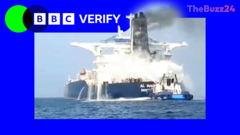
The geographical scope of the attacks has expanded significantly beyond the narrow strait, extending hundreds of miles into neighboring maritime zones. Off the coast of Oman, near Sohar Anchorage, the Nicaragua-flagged tanker Petro Dolphin caught fire following a direct drone impact, leaving two Indian mariners missing after eleven others were rescued. In another incident inside the channel, the container ship GFS Pride sank after taking projectile damage, with Iran’s Islamic Revolutionary Guard Corps later releasing footage of the sinking vessel while alleging it carried contraband along non-permitted routes.
While the United States military’s Central Command continues to escort and assist merchant ships through secured southern transit lanes—ramping up assisted passage rates by 85 percent compared to late summer—the widening perimeter of strikes poses acute logistical challenges. With regional military forces deploying expanded naval formations and launching strikes near Qatar and the United Arab Emirates, maritime operators face soaring operational risks, spiraling insurance premiums, and deepening uncertainty across global supply chains.
Key Takeaways
- Ship attacks reached an all-time weekly high of 12 vessels, with aggression expanding hundreds of miles beyond the Strait of Hormuz into the Gulf of Oman.
- Crude oil transits through the critical maritime corridor dropped to 12.6 million barrels per day, reversing late-September gains.
- Despite an 85% increase in allied naval transit assistance, expanding strike zones and vessel sinkings continue to heighten maritime transport risks.
Editor’s Analysis & Impact
The escalating maritime strikes around the Strait of Hormuz underscore a fundamental shift in regional warfare tactics. By striking commercial vessels well beyond the bottleneck—including near Oman, Qatar, and the UAE—hostile forces are effectively puncturing the perimeter established by international naval convoys. This expansion creates severe friction for the global energy economy. While energy producers have adapted using shuttle-tanker models near friendly coastlines, the widening perimeter of drone and missile threats threatens to render these alternative channels equally perilous. In the near term, global markets should brace for increased tanker charter rates, prohibitive war-risk insurance premiums, and persistent upward pressure on crude benchmarks. Unless diplomatic de-escalation or robust deterrent countermeasures are established, the compounding transit friction could permanently alter Persian Gulf trade logistics.
Frequently Asked Questions
Q: Why is the Strait of Hormuz vital for international oil trade?
A: The Strait of Hormuz serves as the world's most critical maritime oil transit chokepoint, traditionally handling around one-fifth of global petroleum consumption and connecting Gulf crude producers directly to global markets.
Q: What is the tanker 'shuttle' system being utilized in the region?
A: Under the shuttle system, regional exporters load crude onto smaller tankers that navigate close to the Omani shoreline through the strait, later offloading their cargo onto larger ocean-going vessels waiting in safer waters in the Gulf of Oman.
Q: How are international naval forces responding to the surge in attacks?
A: Naval forces, led by United States Central Command, have sharply increased coordinated protection and assisted transits—up 85 percent in early October—to escort commercial vessels along protected corridors in the southern strait.
AI Disclosure: This article is based on verified data and official reports. Our Team and AI have cross-referenced every financial detail with primary sources to ensure total accuracy.
More from this Category