Martian Honeycomb: Curiosity Rover Investigates Mysterious Polygonal Formations and Dark Cobbles in Gale Crater
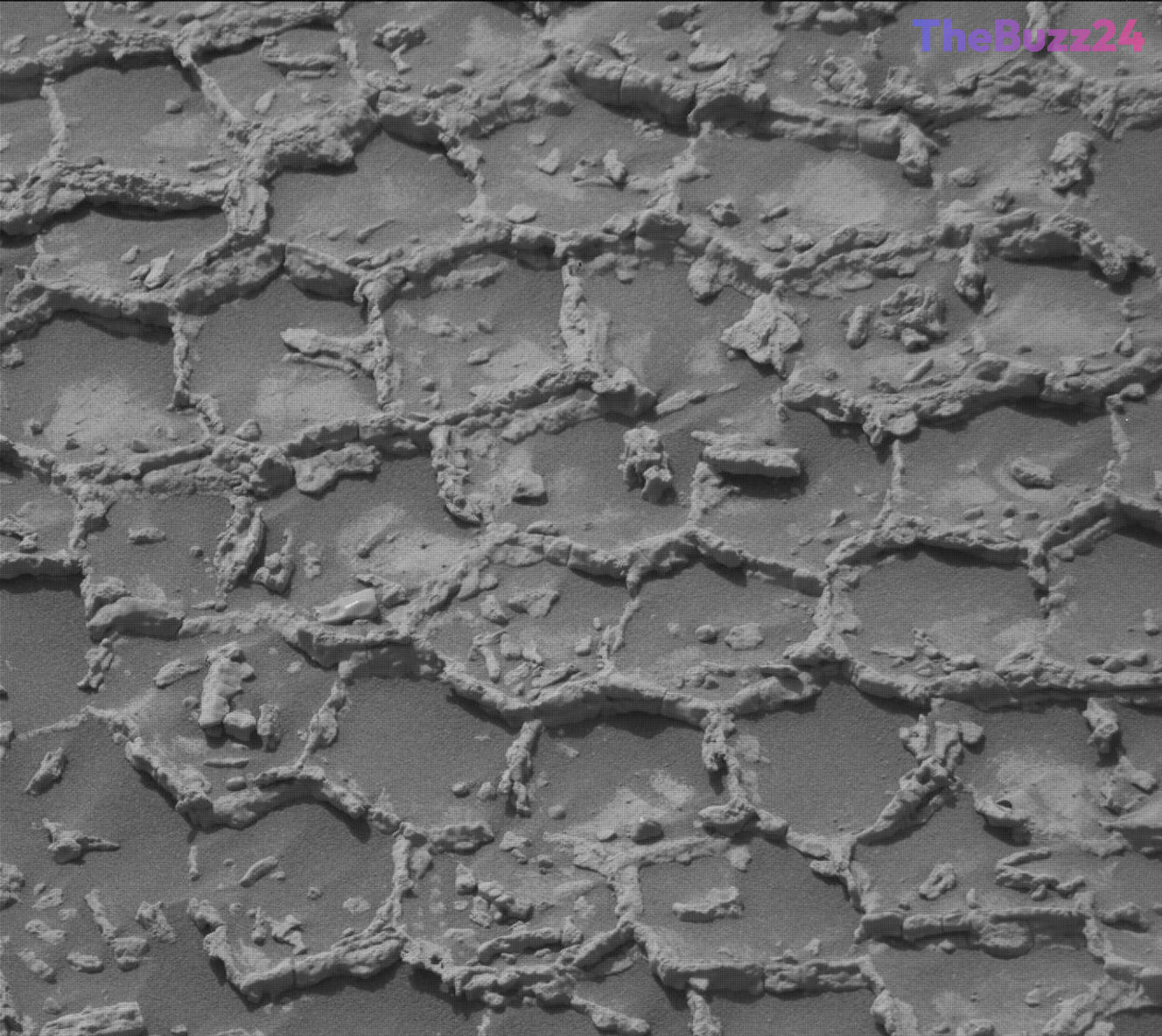
The Curiosity rover has encountered a striking geological landscape on Mars, navigating a region characterized by vast, honeycomb-like polygonal structures. Initially appearing as a smooth, light-toned terrain in orbital imagery, the ground-level reality revealed a complex network of polygonal ridges. As the robotic explorer ventured deeper into this unique geological unit, scientists observed that these ridges became increasingly eroded, offering a fresh window into the Red Planet’s ancient environmental history.
Scattered across this polygonal landscape are numerous dark-toned, pebble-to-cobble-sized rocks. These “float” rocks have sparked intense scientific curiosity. Researchers are currently debating their origins, questioning whether they eroded from higher stratigraphic layers, were ejected from distant impact craters beyond Gale Crater, or are actually meteorites from outer space. Previous analyses of similar dark rocks on Mars revealed high concentrations of nickel—a common signature of meteorites—but further testing is required to determine if this new batch of debris shares the same cosmic origin.
To solve these geological puzzles, a series of multi-sol science plans were executed. The rover utilized its Alpha Particle X-ray Spectrometer (APXS) and Mars Hand Lens Imager (MAHLI) to closely examine the ridges and centers of the polygons. Additionally, the Chemistry and Camera (ChemCam) instrument used its laser-induced breakdown spectroscopy (LIBS) to analyze the composition of the polygonal features and a specific dark cobble dubbed “Cortadera.” Meanwhile, the Mastcam captured detailed mosaic images of nearby features, including the “Cordillera” mesa and the “Valle Grande” channel, while the Navcam monitored the Martian atmosphere for dust devils.
With the investigation of the polygonal unit wrapping up, Curiosity is preparing to transition into a new geological zone. Orbital data suggests this upcoming region consists of darker-toned, rougher-textured materials. This transition promises to provide contrasting data that could help scientists reconstruct the shifting environmental conditions of ancient Mars, particularly how water and wind shaped the Gale Crater over billions of years.
Key Takeaways
- Curiosity discovered an unexpected 'honeycomb' landscape of polygonal ridges in a region that appeared smooth from orbital satellite imagery.
- Scientists are investigating mysterious dark-toned cobbles scattered across the area to determine if they are meteorites or debris from distant impacts.
- The rover utilized its suite of advanced instruments, including APXS, MAHLI, and ChemCam, to analyze the chemical composition of the terrain before moving toward a rougher, darker geological unit.
Editor’s Analysis & Impact
The discovery of polygonal structures and potential meteorites in Gale Crater underscores the limitations of orbital mapping and highlights the indispensable value of ground-level robotic exploration. While satellite imagery provides a broad geological map, in-situ analysis by rovers like Curiosity reveals complex micro-environments that are crucial for understanding Mars’ hydrological and atmospheric history. The presence of polygonal cracks often points to ancient drying cycles, suggesting a history of liquid water, while the potential identification of meteorites offers clues about the rate of cosmic bombardment on Mars. As Curiosity transitions to rougher, darker terrain, these findings will feed into broader models of planetary evolution. This continuous stream of high-fidelity data not only refines our understanding of Martian geology but also helps pave the way for future human exploration by identifying resource-rich or scientifically significant landing sites.
Frequently Asked Questions
Q: What are the polygonal structures discovered by Curiosity?
A: The polygonal structures are honeycomb-like patterns of ridges and cracks on the Martian surface. On Earth, similar formations often occur due to repeated wetting and drying cycles or thermal contraction, suggesting a dynamic environmental history in Mars' past.
Q: Why are scientists interested in the dark-toned rocks found in this area?
A: Scientists want to determine if these 'float' rocks are native to the area, ejected from distant impact craters, or are meteorites. Previous dark rocks analyzed on Mars contained nickel, a key indicator of meteoritic origin.
Q: What instruments did Curiosity use to study this region?
A: The rover deployed several key instruments, including the Alpha Particle X-ray Spectrometer (APXS) and Mars Hand Lens Imager (MAHLI) for close-up analysis, the ChemCam laser for chemical composition, and Mastcam for high-resolution panoramic imaging.
AI Disclosure: This article is based on verified data and official reports. Our Team and AI have cross-referenced every financial detail with primary sources to ensure total accuracy.
More from this Category