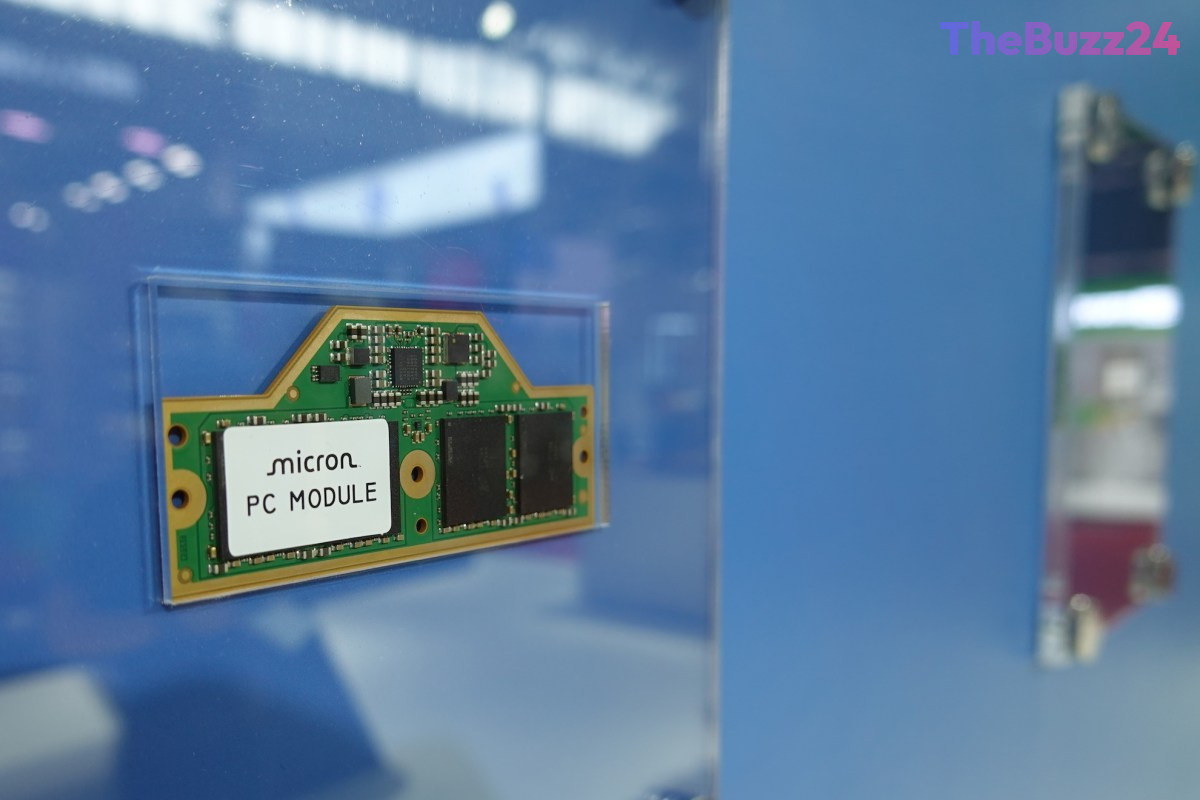
Micron’s Meteoric Rise: Is the Memory Giant the Next AI Powerhouse?
Micron Technology has emerged as the latest darling of Wall Street, experiencing a historic valuation surge that briefly saw the Boise-based chipmaker rival tech titans like Meta and Tesla. Driven by an insatiable demand for High-Bandwidth Memory (HBM) essential for artificial intelligence infrastructure, the company’s stock has climbed over 236% in the last month alone. This rapid ascent marks a significant shift for a firm historically known for consumer-grade storage components, now positioned as a critical backbone of the global AI data center buildout.
The current market environment, often referred to as ‘RAMageddon,’ is characterized by a severe supply crunch for DRAM and NAND chips. As major hyperscalers—including Microsoft, Amazon, Google, and Oracle—scramble to secure memory for massive AI server deployments, the resulting scarcity has driven up prices across the entire electronics sector. Micron’s recent financial performance reflects this intensity, with quarterly revenue quadrupling to $41.45 billion and profits surging to $28.2 billion, signaling a robust demand cycle that analysts expect to persist through 2027.
To mitigate the traditional ‘boom-and-bust’ cycles that have historically plagued memory manufacturers, Micron has pivoted toward a model anchored by long-term strategic customer agreements. By securing 16 major contracts with industry leaders like Nvidia and Anthropic, the company aims to stabilize its revenue streams and protect against future market volatility. While the sustainability of this growth remains a subject of debate, the company’s ability to align its manufacturing capacity with the aggressive expansion of AI infrastructure has fundamentally altered its standing in the global technology market.
Key Takeaways
- Micron’s market valuation has surged significantly, briefly rivaling major tech giants due to the AI-driven demand for high-performance memory chips.
- A persistent supply shortage, dubbed 'RAMageddon,' is expected to keep memory prices elevated through 2027 as AI infrastructure expansion continues.
- Micron is attempting to break the traditional cyclical nature of the memory market by securing long-term strategic supply agreements with key AI industry players.
Editor’s Analysis & Impact
Micron’s recent performance represents a structural shift in the semiconductor industry. Historically, memory manufacturers were viewed as commodity players susceptible to volatile price swings. However, the AI revolution has transformed memory—specifically High-Bandwidth Memory—into a specialized, high-value component that is as critical as the GPU itself. By locking in long-term agreements, Micron is attempting to transition from a cyclical commodity business to a more predictable, contract-based model. If successful, this strategy could decouple the company from the traditional boom-and-bust cycles that have historically decimated memory chip valuations. Investors should monitor whether these long-term agreements provide enough of a buffer to withstand potential cooling in AI capital expenditure, as the company’s current valuation assumes sustained, aggressive growth in data center infrastructure spending.
Frequently Asked Questions
Q: Why is there a shortage of memory chips?
A: The shortage is primarily driven by the massive buildout of AI data centers, which require significantly more high-performance memory (DRAM and HBM) than traditional consumer electronics.
Q: How is Micron trying to avoid the traditional 'boom-and-bust' cycle?
A: Micron is shifting its business model toward long-term strategic customer agreements with major tech companies, which provides more predictable revenue and protects against sudden drops in market demand.
AI Disclosure: This article is based on verified data and official reports. Our Team and AI have cross-referenced every financial detail with primary sources to ensure total accuracy.
More from this Category