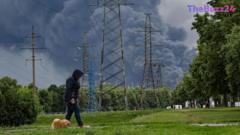
Moscow Residents Face New Reality as Drone Strikes Reach the Capital
A significant drone assault targeting an oil refinery in the Moscow region has brought the ongoing conflict in Ukraine directly to the doorsteps of the Russian capital. The attack, which resulted in thick plumes of black smoke blanketing the skyline, marked one of the most substantial aerial operations near the city since the start of the full-scale invasion. Despite the intensity of the event, which caused damage to residential areas and shopping centers, the reaction among local residents remained strikingly varied, ranging from indifference to profound shock.
While some citizens continued their daily routines—fishing in nearby ponds or visiting supermarkets—others expressed deep concern over the shifting nature of the war. The incident, which tragically resulted in the death of an eight-year-old girl, has forced a re-evaluation of what constitutes ‘normal’ life in Moscow. For many, the perception that the conflict was a distant affair has been shattered as the front line effectively creeps closer to the heart of the nation.
In the aftermath, the official response from the Kremlin and state-aligned media has focused on minimizing the impact of the strikes while emphasizing the scale of Russia’s own military operations in Ukraine. By framing the drone attacks as minor compared to the damage inflicted on Ukrainian infrastructure, officials have sought to maintain a narrative of resilience. However, the increasing frequency of these long-range strikes on critical infrastructure, particularly oil facilities, is beginning to exert tangible pressure on the domestic economy, manifesting in rising fuel prices and localized shortages.
As the conflict continues to evolve, the psychological and economic toll on the Russian population appears to be mounting. With authorities signaling that military operations will persist, residents are increasingly resigned to the possibility that such aerial incursions may become a recurring feature of life in the capital. The disconnect between the government’s rhetoric and the reality on the ground remains a defining tension in the current landscape.
Key Takeaways
- A major drone strike on a Moscow oil refinery has brought the reality of the Ukraine conflict to the Russian capital.
- The attack resulted in civilian casualties and damage to residential infrastructure, challenging the narrative that the war remains a distant event.
- While the Kremlin continues to emphasize its own military effectiveness, the strikes are contributing to economic strain, including rising fuel costs and supply concerns.
Editor’s Analysis & Impact
The escalation of drone strikes targeting the Moscow region represents a significant tactical shift in the war of attrition. By focusing on energy infrastructure, Ukraine is attempting to disrupt the Russian domestic economy and force the Kremlin to divert air defense resources away from the front lines. From a market perspective, the vulnerability of Russian oil facilities poses a long-term risk to domestic fuel stability and could exacerbate inflationary pressures within the country. Politically, the Kremlin faces a delicate balancing act: it must maintain a narrative of strength and inevitability while managing a public that is increasingly exposed to the direct consequences of the conflict. The future outlook suggests a continued cycle of retaliatory strikes, which will likely deepen the economic strain and further erode the sense of normalcy among the Russian urban population.
Frequently Asked Questions
Q: How has the Russian government responded to the drone attacks on Moscow?
A: The Kremlin has largely downplayed the significance of the strikes, focusing instead on the scale of its own military operations in Ukraine and asserting that its attacks on Ukrainian infrastructure are more effective.
Q: Are these drone strikes affecting the Russian economy?
A: Yes, there are reports of rising fuel prices and localized shortages, suggesting that the targeting of oil facilities is beginning to create tangible economic pressure.
AI Disclosure: This article is based on verified data and official reports. Our Team and AI have cross-referenced every financial detail with primary sources to ensure total accuracy.
More from this Category