NASA Develops Revolutionary Moon-Made Plastic to Revolutionize Space Manufacturing
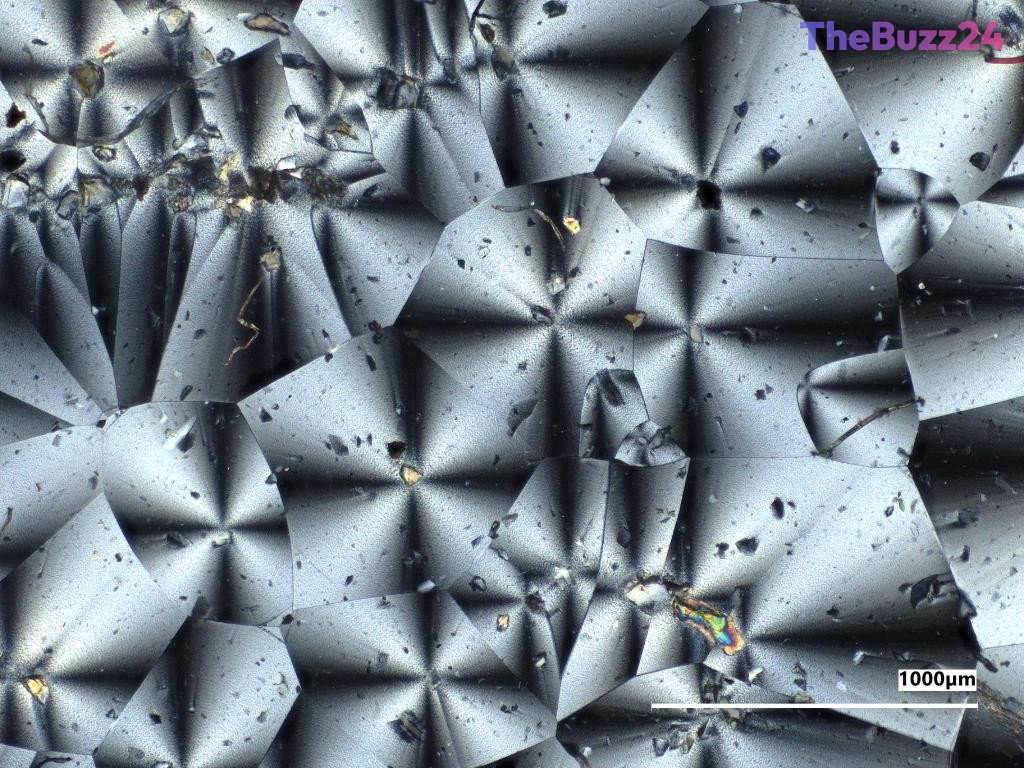
A groundbreaking material engineered specifically for extraterrestrial manufacturing presents a colorful, kaleidoscope-like crystal structure when observed under a microscope. Formulated at the Glenn Research Center in Cleveland, this innovative substance has the potential to be synthesized directly on the surfaces of the Moon or Mars. By enabling in-situ resource utilization, the technology aims to drastically decrease cargo weight and lower overall mission launch expenditures.
The manufacturing process involves combining a unique biodegradable plastic with synthesized lunar and Martian regolith. This specialized polymer originates from biological sources, specifically bacteria capable of producing the material when sustained by crew waste or atmospheric carbon dioxide. Research teams successfully demonstrated that blending simulated planetary dust into the polymer matrix significantly enhances its structural integrity and processability.
Adjusting the composition and concentration of the embedded dust allows scientists to tailor the physical traits of the final product. Practical applications range from interior habitat components such as structural brackets, furniture, and tools to entirely recyclable fabrication systems. Because resupply missions to celestial outposts remain costly and complex, the ability to manufacture and repair critical equipment on-demand marks a major milestone toward establishing permanent human presence in space.
Rigorous testing is currently underway to evaluate the substance’s durability under extreme conditions. Researchers are utilizing specialized simulation rigs to assess performance across fluctuating thermal cycles, while additional samples prepare for exposure to the harsh environment outside the International Space Station. These evaluations will determine whether the biological plastic can withstand unfiltered solar radiation and the vacuum of space.
Key Takeaways
- Researchers developed a novel material combining biodegradable plastic derived from bacteria with simulated Moon and Mars dust.
- The innovative composite is designed for on-demand manufacturing of tools and habitat equipment during long-term space missions.
- Current testing includes exposure simulations in extreme temperatures and upcoming evaluations on the International Space Station.
Editor’s Analysis & Impact
The development of in-situ resource utilization (ISRU) materials represents a foundational shift in aerospace engineering and deep-space exploration economics. Launch costs have historically been dictated by payload weight and volume, heavily constraining the scope and duration of crewed missions. By leveraging biological processes to produce plastics locally and reinforcing them with native lunar or Martian regolith, space agencies can achieve unprecedented supply chain autonomy. This technological breakthrough not only minimizes the logistical burden of resupply missions from Earth but also establishes a scalable model for circular-economy manufacturing in hostile environments. As commercial space endeavors expand, advancements in recyclable, on-demand fabrication will likely spill over into terrestrial industries focused on sustainable materials and extreme-environment engineering.
Frequently Asked Questions
Q: What is the new NASA-developed space material made of?
A: The material is made from a special biodegradable plastic produced by bacteria, mixed with simulated lunar or Martian dust (regolith).
Q: How does this material help future space missions?
A: It allows astronauts to manufacture tools, equipment, and habitat components directly on the Moon or Mars, reducing the need to carry heavy supplies from Earth.
Q: How is the material currently being tested?
A: The samples are undergoing extreme temperature testing in specialized structural test rigs and are slated for exposure testing outside the International Space Station.
AI Disclosure: This article is based on verified data and official reports. Our Team and AI have cross-referenced every financial detail with primary sources to ensure total accuracy.
More from this Category