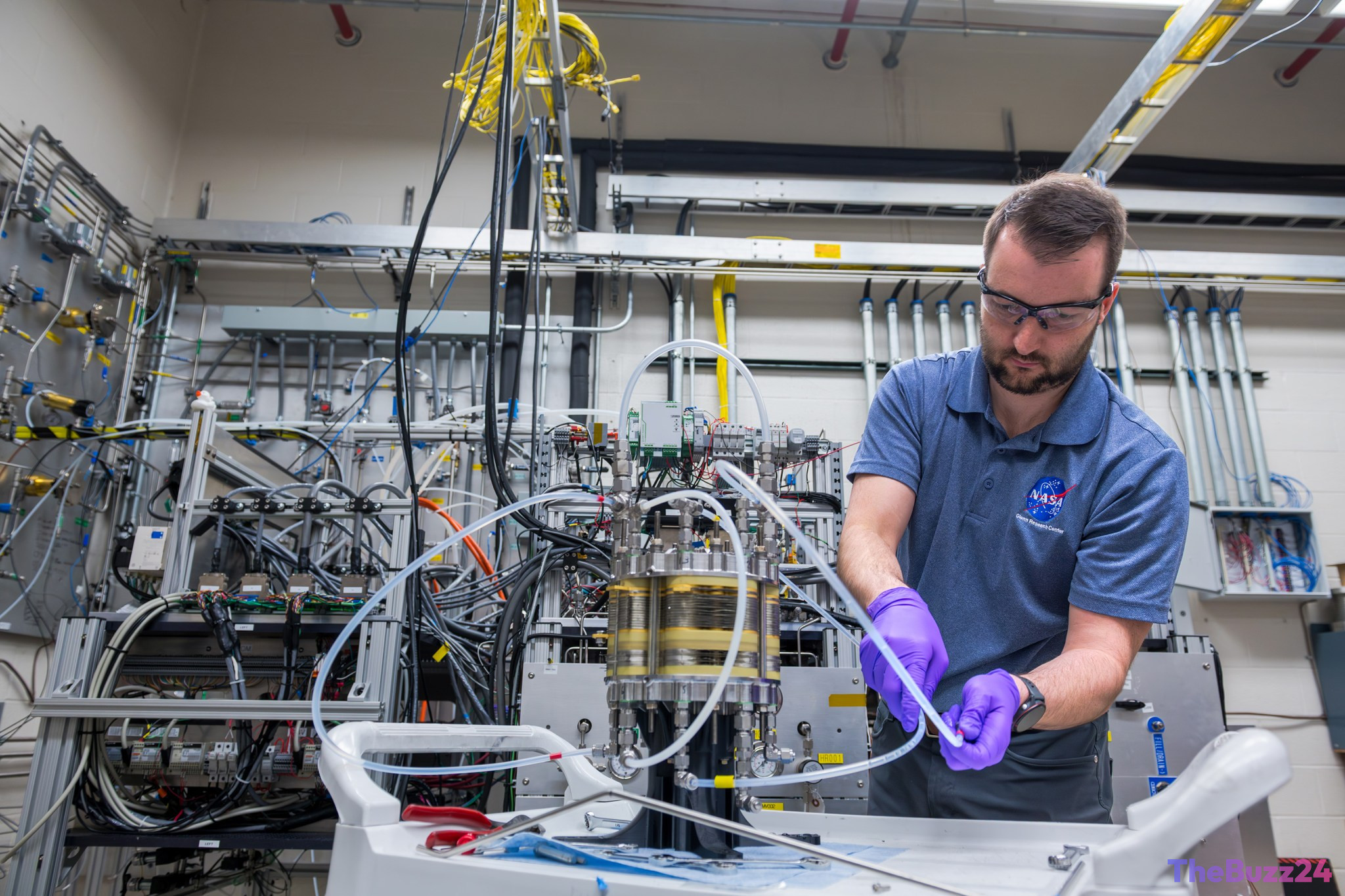
NASA’s Regenerative Fuel Cell Breakthrough Paves Way for Permanent Lunar Presence
NASA has reached a pivotal milestone in deep space energy storage with the successful testing of a regenerative fuel cell system at the Glenn Research Center. This innovative technology functions as a high-capacity, rechargeable battery, specifically engineered to meet the rigorous energy requirements of long-term lunar and Martian exploration. By utilizing a closed-loop process that combines hydrogen and oxygen to generate electricity and heat, and subsequently splitting water back into its elemental gases, the system provides a sustainable and efficient power cycle.
This development is a cornerstone of the Artemis program, offering a significant weight advantage over conventional battery technology. Traditional power storage often struggles with the extreme conditions of the lunar environment, particularly during the weeks-long lunar night. These advanced fuel cells are designed to maintain consistent power for habitats and rovers, effectively reducing the logistical burden of transporting energy supplies from Earth.
Following five years of rigorous component development, the project has transitioned into a critical phase of full-system integration. Researchers are currently focused on the successful storage of hydrogen and oxygen gases, a key metric for determining the system’s overall reliability. As testing progresses, the team plans to move beyond laboratory settings to simulate the harsh, unpredictable conditions of the lunar surface, marking a major step toward establishing a permanent human footprint on the Moon.
Key Takeaways
- NASA is testing a regenerative fuel cell system that acts as a sustainable, closed-loop energy source for deep space missions.
- The technology is designed to survive the weeks-long lunar night, providing a lightweight alternative to traditional batteries.
- The project has moved into full-system testing, with plans to simulate harsh lunar conditions to ensure operational reliability.
Editor’s Analysis & Impact
The development of regenerative fuel cell technology represents a paradigm shift in space logistics. By moving away from reliance on Earth-shipped batteries, NASA is effectively solving one of the most significant bottlenecks in long-duration space exploration: energy density and sustainability. This technology not only supports the Artemis program but also serves as a blueprint for future Mars missions where resource autonomy is non-negotiable. From an industry perspective, the success of this closed-loop system could have terrestrial applications in remote power generation and grid-scale energy storage. As the agency transitions from laboratory testing to environmental simulation, the focus will shift toward scalability and long-term durability. If successful, this innovation will be the bedrock upon which permanent lunar infrastructure is built, fundamentally changing the economics of off-world habitation.
Frequently Asked Questions
Q: How does the regenerative fuel cell system work?
A: The system creates a closed-loop cycle by combining hydrogen and oxygen to produce electricity and heat, then using that electricity to split water back into hydrogen and oxygen to be reused.
Q: Why is this technology better than traditional batteries for lunar missions?
A: Regenerative fuel cells are significantly lighter than traditional batteries and are capable of providing consistent power during the long lunar night, which lasts for several weeks.
AI Disclosure: This article is based on verified data and official reports. Our Team and AI have cross-referenced every financial detail with primary sources to ensure total accuracy.
More from this Category