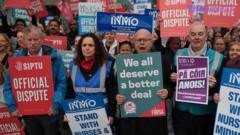
Nationwide Shutdown in Ireland as Over 300,000 Public Servants Walk Out Over Pay
A massive wave of labor unrest has brought public services across the Republic of Ireland to a near standstill, with more than 300,000 public sector employees staging a 24-hour strike. The sweeping industrial action involves a broad coalition of essential workers, including doctors, nurses, educators, and civil servants, who have taken to picket lines in response to an unresolved compensation dispute with the administration.
The widespread disruption has forced widespread school closures and the cancellation of numerous routine hospital appointments nationwide. This full-scale walkout follows weeks of escalating pressure, which began in late September when upwards of 100,000 workers instituted work-to-rule protocols. Tensions further escalated in early October as primary and secondary educators adopted similar restrictive measures, ultimately building toward the current nationwide mobilization after the nation’s largest public service union overwhelmingly backed industrial action.
Labor representatives have criticized government officials for failing to initiate meaningful dialogue, arguing that the traditional goodwill of public servants has been taken for granted. In response, government spokespersons have labeled the widespread stoppage as deeply regrettable, warning of severe repercussions for the domestic economy and essential public infrastructure. As both sides remain entrenched, a follow-up day of industrial action is already scheduled for later in the month, signaling a prolonged standoff between public sector unions and state authorities.
Key Takeaways
- Over 300,000 public sector workers in the Republic of Ireland have launched a 24-hour nationwide strike.
- The industrial action has led to widespread school closures and the cancellation of numerous hospital appointments.
- Labor unions cite ongoing frustration over stagnant compensation and a lack of serious government engagement.
Editor’s Analysis & Impact
The massive public sector strike in Ireland highlights a broader, global economic trend where high inflation and escalating costs of living are straining the relationship between state employers and essential workers. As public servants find it increasingly difficult to afford housing and basic necessities, the reliance on traditional labor unions is seeing a resurgence. For the Irish government, navigating this crisis requires balancing fiscal constraints with the imperative to maintain functioning public health and education systems. If a compromise is not reached swiftly, prolonged industrial unrest could severely impact national productivity, deter foreign investment, and set a precedent for public sector wage negotiations across the wider European region.
Frequently Asked Questions
Q: Why are public sector workers striking in the Republic of Ireland?
A: Workers are striking over an ongoing pay dispute with the government, citing that current compensation packages have failed to keep pace with the rising cost of living and housing expenses.
Q: What services are affected by the 24-hour strike?
A: The strike has caused significant disruptions, including closed schools, canceled hospital appointments, and halted administrative services across the country.
Q: Are further strikes planned if negotiations fail?
A: Yes, public sector unions have already scheduled additional strike action for later in the month should the government fail to establish a formal basis for negotiations.
AI Disclosure: This article is based on verified data and official reports. Our Team and AI have cross-referenced every financial detail with primary sources to ensure total accuracy.
More from this Category