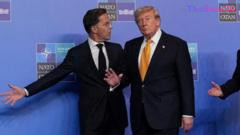
NATO Leadership Defends Alliance Unity Amidst Growing Political Friction
NATO Secretary General Mark Rutte has stepped forward to defend the cohesion of the alliance during a pivotal summit in Turkey. As world leaders gather to address pressing global security threats, Rutte insisted that the member nations remain unified in their mission, despite growing skepticism regarding the alliance’s internal stability.
The summit’s agenda is dominated by critical geopolitical crises, most notably the ongoing war involving Russia and Ukraine, alongside the volatile situation in the Middle East. However, the shadow of US political discourse has loomed large over the proceedings. The continued criticism from US President Donald Trump regarding NATO’s effectiveness and member contributions has introduced a layer of uncertainty that many fear could fracture the alliance’s foundation.
This friction highlights a growing divide between institutional security goals and the shifting political priorities of individual member states. As the alliance attempts to navigate these complex waters, the ability to maintain a unified front against external threats will be tested by the internal political pressures emerging from the world’s most powerful military actor.
Key Takeaways
- NATO Secretary General Mark Rutte reaffirmed the alliance's unity during a high-level summit in Turkey.
- The summit is addressing critical global issues, including the Russia-Ukraine war and Middle East conflicts.
- Political criticism from US President Donald Trump poses a potential threat to NATO's internal cohesion.
Editor’s Analysis & Impact
The tension between NATO’s institutional goals and the shifting political landscape in the United States represents a significant strategic challenge. While Secretary General Mark Rutte seeks to project a front of solidarity, the rhetoric from Donald Trump signals a potential shift in US foreign policy that could prioritize transactional relationships over long-standing security pacts. If the US continues to question its commitment to the alliance, it may force European members to accelerate their own defense spending and seek greater strategic autonomy. This internal friction occurs at a critical juncture, as the alliance must simultaneously manage the war in Ukraine and instability in the Middle East. The long-term stability of NATO will likely depend on its ability to reconcile these domestic political pressures with the necessity of a unified global security posture.
Frequently Asked Questions
Q: Why is NATO's unity being questioned?
A: The unity of the alliance is being scrutinized due to political criticisms from US President Donald Trump, which have raised concerns about the future of US commitment to NATO.
Q: What are the primary security concerns being addressed by NATO leaders?
A: Leaders are currently focused on the war in Ukraine and the ongoing conflicts in the Middle East.
AI Disclosure: This article is based on verified data and official reports. Our Team and AI have cross-referenced every financial detail with primary sources to ensure total accuracy.
More from this Category