Nebius Shares Plunge Amid Weak Outlook and Soaring Capital Expenditure
Shares of Nebius, a prominent player in the neocloud sector, experienced a significant 16% decline on Thursday following the company’s release of disappointing full-year revenue guidance and substantially increased capital expenditure projections. While the company’s third-quarter revenue of $980.8 million surpassed analyst consensus of $907.5 million, marking a 571% jump year-over-year, the forward-looking outlook dampened investor sentiment. Nebius reported a net loss of $37.5 million, or 13 cents per share, an improvement from a $119.6 million loss, or 50 cents per share, in the prior year.
The broader neocloud market has seen mixed signals recently. Competitors like IREN and CoreWeave reported better-than-expected results in the past week, contributing to a rebound in neocloud stocks after a challenging month marked by concerns over a potential slowdown in the artificial intelligence infrastructure buildout. However, the sector continues to grapple with volatility, partly influenced by Nvidia, a key investor in the neocloud space, and recent leadership issues surrounding its CEO, Jensen Huang.
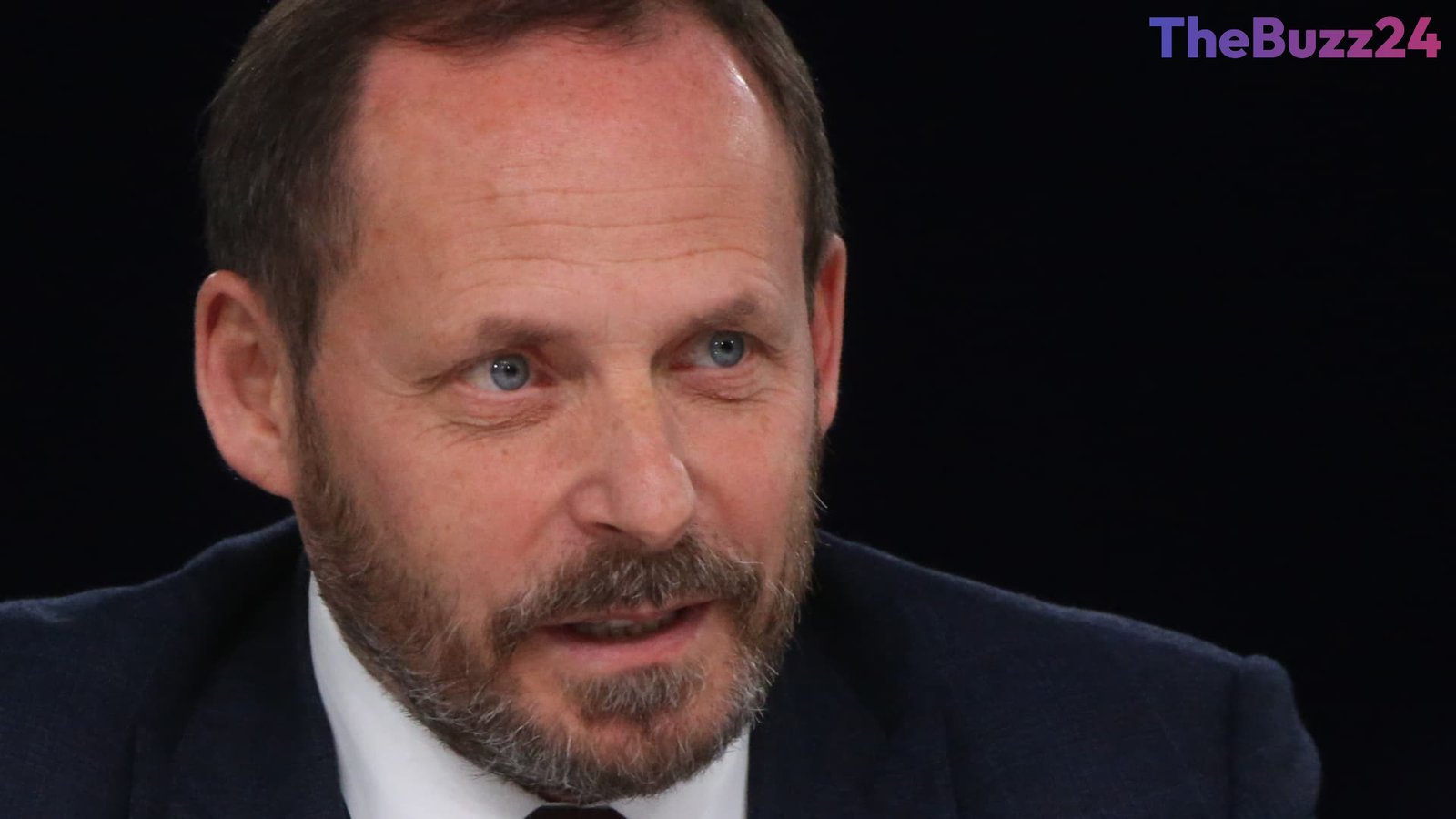
Nebius CEO Arkady Volozh communicated to shareholders that the company anticipates fiscal year 2026 revenue to be at the lower end of its $3 billion to $3.4 billion range, falling short of analyst expectations of $3.37 billion. Furthermore, the company’s initial outlook for 2027 projects revenue between $12 billion and $13 billion, which it described as a “conservative approach to the pace of our buildout,” aligning closely with the $11.98 billion consensus. A major point of concern for investors was the revised capital expenditure guidance: Nebius now expects FY2026 capex to be $27 billion, higher than its previous range of $20 billion to $25 billion and the $23.85 billion analyst forecast. The FY2027 capex projection of $40 billion to $45 billion also significantly exceeded the $28.77 billion expectation.
Volozh addressed the prevailing market sentiment during a conference call, acknowledging the unsettled capital markets. He highlighted two critical questions facing the industry: “how fast can AI build-out happen, and who will pay for it?” Despite these challenges, he affirmed strong demand for AI, stating that building capacity and financing it are solvable tasks. The company recently secured $5.75 billion in debt financing, while CoreWeave aims to keep parent-level debt under $5 billion through 2027. The industry also faces a complex political landscape, with recent ballot initiatives in the U.S. supporting restrictions on data center development, adding another layer of uncertainty to expansion plans.
Key Takeaways
- Nebius shares plummeted 16% after the company issued weak revenue guidance for fiscal year 2026 and significantly increased its capital expenditure projections for FY2026 and FY2027.
- Despite beating Q3 revenue expectations, Nebius's conservative outlook contrasts with some peers like IREN and CoreWeave, who recently reported stronger financial results.
- The neocloud industry faces ongoing challenges related to the rapid pace and financing of AI infrastructure buildout, compounded by market volatility and political considerations regarding data center development.
Editor’s Analysis & Impact
Nebius’s revised financial outlook and substantial increase in capital expenditure signal a potentially more challenging investment landscape for the AI infrastructure sector. While the underlying demand for AI compute remains robust, the immense cost and speed required for capacity expansion are becoming critical concerns. This development could prompt a re-evaluation of growth expectations across the entire neocloud industry, potentially leading to increased scrutiny of balance sheets and financing strategies. The CEO’s comments underscore the industry’s core dilemma: balancing aggressive expansion with sustainable funding. Furthermore, external factors like volatility surrounding key investors such as Nvidia and growing political resistance to data center construction add layers of complexity, suggesting that the market may increasingly favor companies with clearer paths to profitability and more resilient financial models amidst intense competition and high capital demands.
Frequently Asked Questions
Q: Why did Nebius's stock fall significantly?
A: Nebius's shares dropped sharply after the company issued lower-than-expected revenue guidance for fiscal year 2026 and announced significantly increased capital expenditure projections for both FY2026 and FY2027, signaling a more conservative outlook despite strong quarterly revenue growth.
Q: How does Nebius's performance compare to its competitors?
A: While Nebius's Q3 revenue surpassed expectations, its full-year guidance and increased capex contrast with recent better-than-expected results from fellow neocloud companies like IREN and CoreWeave, which had seen their stocks rebound.
Q: What are the main challenges facing the neocloud industry, according to Nebius's CEO?
A: According to CEO Arkady Volozh, the primary challenges for the neocloud industry revolve around the speed at which AI infrastructure can be built out and how this massive expansion will be financed, despite strong underlying demand for AI compute.
AI Disclosure: This article is based on verified data and official reports. Our Team and AI have cross-referenced every financial detail with primary sources to ensure total accuracy.
More from this Category