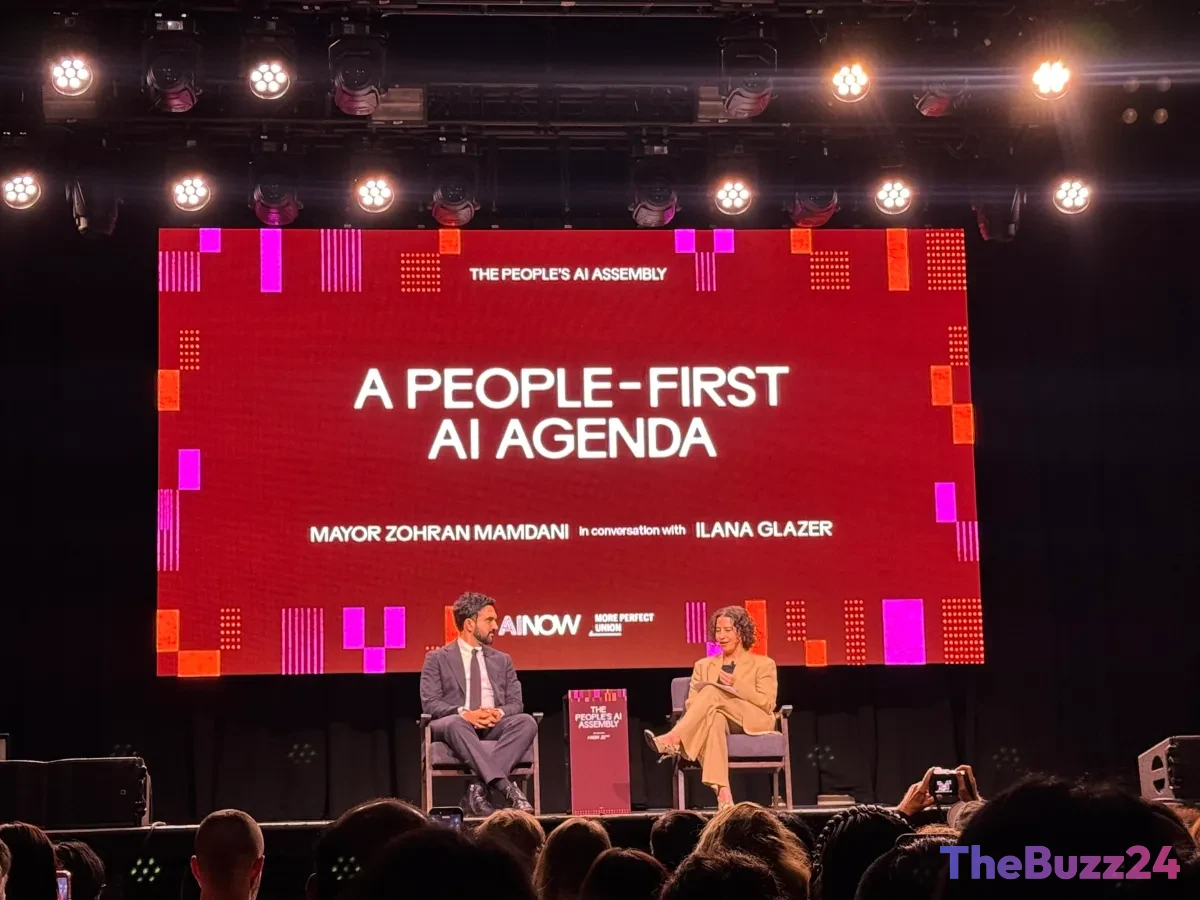
New York Leaders Push Back Against Unchecked AI Expansion as Federal Oversight Lags
During a public forum hosted by the AI Now Institute at Manhattan’s Webster Hall, local leaders and advocates challenged the pervasive narrative that artificial intelligence must be passively accepted across all sectors of society. New York Mayor Zohran Mamdani, appearing alongside activist and performer Ilana Glazer, urged residents to actively resist the sentiment that automated systems are destined to displace workers, compromise privacy, or dominate classrooms without public consent. Mamdani emphasized that municipal authorities possess the power to establish firm boundaries around emerging technologies rather than allowing private developers to dictate the terms of public integration.
To counter the rapid rollout of algorithmic tools, local authorities have already begun taking direct regulatory action. Recent municipal measures include a ban on artificial intelligence tools across elementary and middle schools, addressing widespread anxieties from parents and educators regarding automated systems in learning environments. Additionally, city rules now mandate that real estate platforms, brokers, and landlords explicitly label property listings that utilize AI-generated images or videos, aiming to prevent consumer fraud and deceptive housing practices.
These city-level interventions stand in sharp contrast to national policies, which Mamdani characterized as a complete retreat from meaningful oversight. Federal strategies have increasingly framed artificial intelligence development through the lens of international geopolitical competition, relying heavily on corporate self-regulation rather than imposing binding safeguards. Critics point to severe real-world consequences, including military targeting oversights and systemic societal risks, as evidence that market-driven self-policing is inadequate. As major developers like Anthropic and OpenAI prepare for public market debuts in the coming years, local leaders argue that enforceable public accountability must take precedence over inflated corporate valuations.
Key Takeaways
- Local officials in New York are enacting targeted rules, including a ban on AI in primary classrooms and mandatory disclosures for AI-generated real estate listings.
- Speakers at the AI Assembly criticized federal oversight for relying on corporate self-regulation and treating AI primarily as an international race.
- Major industry players like Anthropic and OpenAI face escalating calls for strict public accountability as they approach prospective IPOs.
Editor’s Analysis & Impact
The divergence between federal and municipal approaches to artificial intelligence highlights a growing governance friction. While national policies focus on geopolitical positioning and corporate flexibility, local leaders are responding to immediate public anxieties surrounding education, housing, and labor. This emerging patchwork of regional restrictions creates operational complexity for technology firms attempting rapid, widespread deployment. For major developers planning future public market listings, localized bans and transparency mandates signal that public trust cannot be taken for granted. To maintain long-term adoption, AI creators will likely need to shift from aggressive market penetration toward verifiable safety measures, ethical standards, and direct compliance with municipal safeguards.
Frequently Asked Questions
Q: What local AI regulations have been introduced in New York?
A: Recent measures include prohibiting AI use in elementary and middle schools, as well as requiring brokers and landlords to disclose AI-generated photos or videos in property listings.
Q: Why are municipal leaders critical of national AI policy?
A: Officials argue that federal policy relies too heavily on voluntary corporate self-regulation and prioritizes global economic competition over consumer safety and humanistic concerns.
Q: How might these regulations impact major AI companies?
A: Increased local scrutiny and regulatory fragmentation could slow market adoption and force leading firms, including Anthropic and OpenAI, to demonstrate greater algorithmic transparency before going public.
AI Disclosure: This article is based on verified data and official reports. Our Team and AI have cross-referenced every financial detail with primary sources to ensure total accuracy.
More from this Category