Military Spouse Detention Sparks Debate Over Immigration Policy and Service Member Support
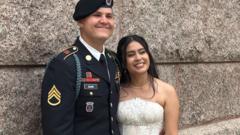
The recent detention of Annie Ramos, the 22-year-old wife of a U.S. Army staff sergeant, has ignited a national discussion regarding the intersection of immigration enforcement and the support systems provided to military families. Ramos, who has resided in the United States since early childhood, was taken into custody by immigration authorities in Louisiana while traveling with her husband, Staff Sergeant Matthew Blank. The couple was en route to a military installation to finalize administrative paperwork, including the processing of her spousal benefits and military identification.
Despite presenting documentation verifying their marriage and Sergeant Blank’s active-duty status, Ramos was detained based on a decades-old immigration order dating back to her infancy—a directive she claims she was entirely unaware of. The five-day detention period caused immense personal strain for the couple, particularly as Sergeant Blank prepares for an upcoming deployment. The incident has raised significant concerns regarding the stability of military households when faced with rigid immigration enforcement protocols.
Following intervention from high-level officials, including Senator Mark Kelly, Ramos was released and has since returned to her biochemistry studies. However, the couple remains in the midst of a complex legal process to formalize her status. The case has become a rallying point for advocates who argue that current immigration policies fail to provide adequate protections or discretion for the families of those serving in the armed forces, creating unnecessary conflict between national security mandates and the welfare of military personnel.
Key Takeaways
- Annie Ramos, the spouse of an active-duty U.S. Army staff sergeant, was detained by immigration authorities despite her long-term residency in the U.S.
- The detention occurred while the couple was attempting to secure military spousal benefits, causing significant distress for the service member ahead of a deployment.
- The incident has prompted calls for policy reforms to protect military families from being caught in standard immigration enforcement actions.
Editor’s Analysis & Impact
The detention of Annie Ramos serves as a critical flashpoint in the ongoing debate over immigration enforcement and its unintended consequences on military readiness and morale. By targeting the spouse of an active-duty service member, the incident highlights a lack of institutional coordination between immigration authorities and the Department of Defense. From a policy perspective, this case illustrates the rigidity of current immigration statutes, which often lack mechanisms to account for humanitarian or military-related exceptions. Moving forward, this situation is likely to increase pressure on lawmakers to establish clearer protections for military families, ensuring that service members are not forced to choose between their commitment to the country and the security of their households. The incident underscores the growing friction between national security priorities and the lived realities of immigrant communities integrated into the fabric of the U.S. military.
Frequently Asked Questions
Q: Why was Annie Ramos detained by immigration authorities?
A: Ramos was detained due to an outstanding immigration order issued when she was 22 months old, of which she stated she had no prior knowledge.
Q: How did this incident affect Sergeant Matthew Blank’s military service?
A: The detention occurred while the couple was traveling to secure military benefits, causing significant personal distress for Sergeant Blank as he prepares for an upcoming deployment.
AI Disclosure: This article is based on verified data and official reports. Our Team and AI have cross-referenced every financial detail with primary sources to ensure total accuracy.
More from this Category