Nvidia Faces Strategic Setback as Next-Gen AI Rack System Pushed to 2028
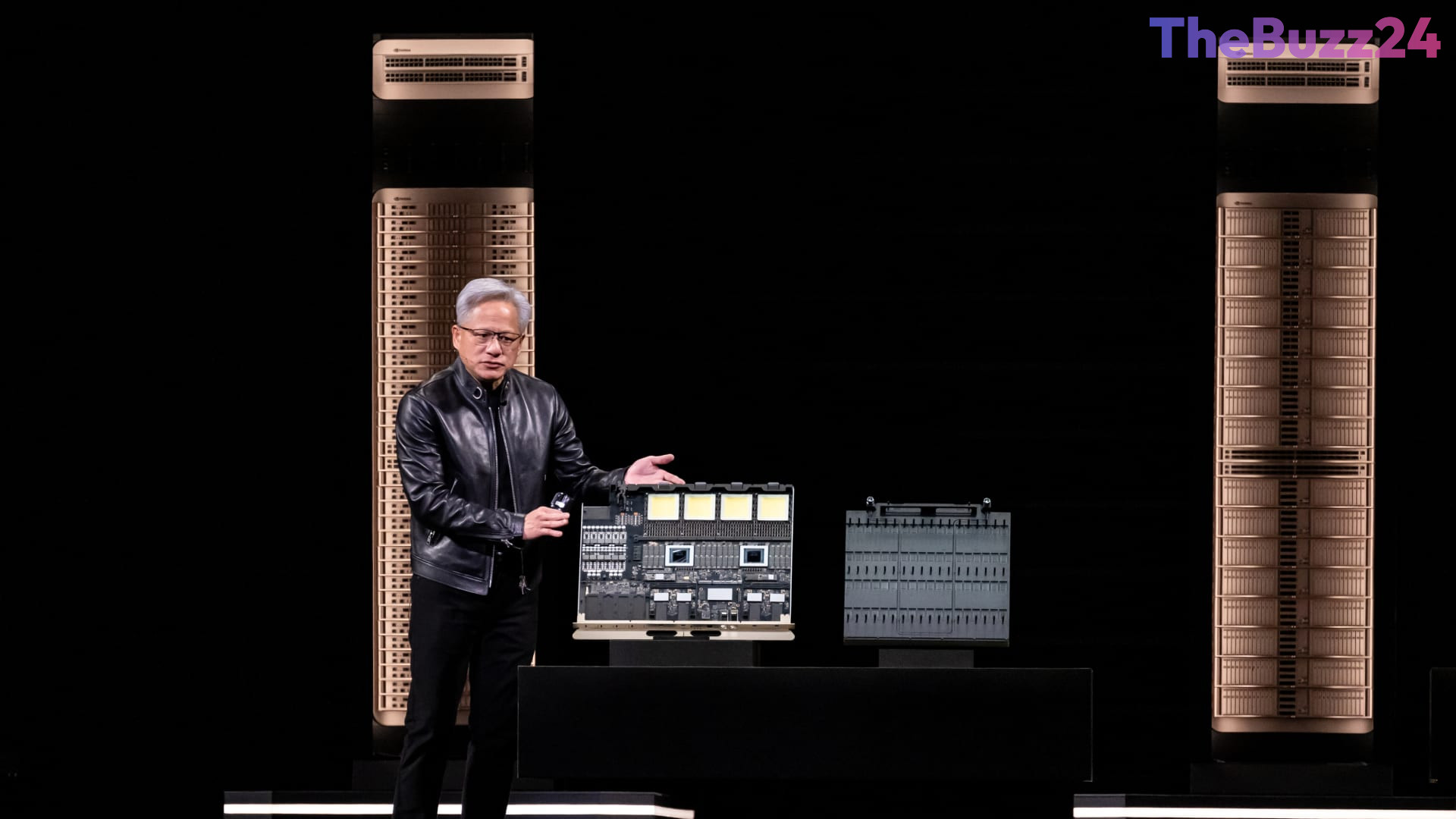
Nvidia is encountering significant hurdles in its ambitious product roadmap, with the highly anticipated Kyber NVL144 rack-scale architecture now delayed until 2028. Originally slated for a 2027 debut alongside the Rubin Ultra chips, the system is designed to house 144 of the company’s most powerful GPUs, functioning as a singular, massive computing unit. This delay represents a notable shift in the company’s aggressive annual release cycle, which has been a cornerstone of its dominance in the artificial intelligence hardware sector.
The primary cause of the delay is rooted in manufacturing complexities involving a specialized, multi-layer printed circuit board (PCB) midplane. This component is critical for the system’s unique vertical design, which aims to maximize density and minimize latency. Furthermore, plans for a larger system, the NVL576, which would link multiple racks via optical connections, are also facing potential delays or significant volume limitations. A proposed interim solution—combining two existing racks—was reportedly abandoned following negative feedback from cloud service providers who cited operational inefficiencies and design flaws.
This development creates a potential window of opportunity for competitors such as AMD and Google, both of which have been aggressively expanding their own AI chip portfolios. While Nvidia continues to see strong demand for its current-generation hardware, the inability to scale its next-generation architecture on the original timeline may force major cloud partners to re-evaluate their infrastructure dependencies. As the industry pushes toward increasingly complex AI models, the pressure on Nvidia to resolve these manufacturing bottlenecks remains high.
Key Takeaways
- Nvidia's Kyber NVL144 rack system has been delayed from 2027 to 2028 due to manufacturing challenges with a critical PCB midplane.
- The delay has forced the cancellation of a backup rack-scaling design that was rejected by major cloud service providers for being too cumbersome.
- The setback may provide a competitive opening for rivals like AMD and Google to capture market share in the high-end AI infrastructure space.
Editor’s Analysis & Impact
The delay of the Kyber architecture highlights the growing friction between Nvidia’s rapid-fire product release cadence and the physical realities of advanced semiconductor manufacturing. By attempting to push the boundaries of rack-scale density, Nvidia has encountered a ‘complexity wall’ that could temporarily stall its momentum. From a market perspective, this is a critical moment; while Nvidia remains the clear leader, the AI hardware market is becoming increasingly sensitive to supply chain reliability and operational efficiency. If Nvidia cannot deliver its next-gen solutions on time, hyperscalers may accelerate the adoption of in-house silicon or alternative architectures from competitors. The next 12 to 18 months will be a test of whether Nvidia’s engineering prowess can overcome these manufacturing hurdles before its rivals can solidify their foothold in the high-end data center market.
Frequently Asked Questions
Q: Why was the Kyber NVL144 system delayed?
A: The delay is primarily due to difficulties in manufacturing a specialized, multi-layer printed circuit board (PCB) midplane that is essential for the system's vertical design.
Q: What impact does this delay have on Nvidia's competitors?
A: The delay creates a rare technical opening for competitors like AMD and Google, who are actively developing their own high-end AI chips and may now have more time to capture market share while Nvidia resolves its manufacturing issues.
AI Disclosure: This article is based on verified data and official reports. Our Team and AI have cross-referenced every financial detail with primary sources to ensure total accuracy.
More from this Category