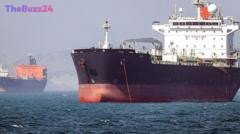
Oil Prices Dip as Diplomatic Hopes Rise for Strait of Hormuz Reopening
Global oil prices experienced a notable decline, reaching a three-week low on Tuesday, following optimistic signals from senior U.S. officials regarding potential progress in negotiations with Iran. The key focus of these discussions is the reopening of the strategically vital Strait of Hormuz, a critical chokepoint for international oil and natural gas shipments.
U.S. Secretary of State Marco Rubio and Treasury Secretary Scott Bessent indicated that talks have advanced, suggesting that maritime traffic through the Strait could resume as early as the current week. This news prompted a significant drop in crude oil benchmarks. Brent crude, the global standard, saw its price fall by nearly 5% to below $80 per barrel, its lowest point since mid-July. Similarly, U.S. West Texas Intermediate prices also decreased by over 5%, settling around $76 a barrel.
While the prospect of eased supply disruptions offers a glimmer of hope for stabilizing volatile energy markets and potentially lowering fuel costs for consumers, past negotiation failures have underscored the fragility of the situation. Analysts caution that previous attempts to de-escalate tensions between the U.S. and Iran have not yielded lasting agreements, leading to significant price fluctuations. The Strait of Hormuz, which before recent escalations handled approximately one-fifth of the world’s daily oil and liquefied natural gas supplies, has been a central element in the ongoing diplomatic efforts.
Despite positive pronouncements from U.S. officials, details of any potential agreement remain undisclosed. Iran’s foreign ministry has stated that direct negotiations with the U.S. are not planned, but confirmed positive discussions with Oman, which is acting as a mediator, concerning a new framework for vessel passage through the Strait. Qatar, another key intermediary, continues its diplomatic endeavors to facilitate a resolution to the conflict, though direct talks are not currently on the horizon. The situation remains fluid, with market participants closely watching for concrete developments that could impact global energy flows and prices.
Key Takeaways
- Oil prices dropped to a three-week low amid hopes of a deal to reopen the Strait of Hormuz.
- U.S. officials expressed optimism about progress in talks with Iran, potentially allowing shipments to resume soon.
- The Strait of Hormuz is a critical global energy chokepoint, and its reopening could ease supply concerns and stabilize prices.
Editor’s Analysis & Impact
The potential reopening of the Strait of Hormuz, driven by diplomatic overtures between the U.S. and Iran, represents a significant development for the global energy market. A resolution, even a temporary one, could alleviate immediate supply chain anxieties and contribute to moderating oil prices, which have been a source of inflationary pressure worldwide. However, the historical volatility and the lack of concrete details surrounding the current negotiations warrant caution. Investors and industry players will be closely monitoring the situation for any signs of breakdown, as past diplomatic efforts have proven fragile. The long-term implications hinge on whether this leads to a sustained de-escalation or merely a brief respite, impacting everything from corporate profits in the energy sector to consumer fuel costs and geopolitical stability in the Middle East.
Frequently Asked Questions
Q: What is the Strait of Hormuz and why is it important?
A: The Strait of Hormuz is a narrow waterway connecting the Persian Gulf and the Gulf of Oman. It is a crucial chokepoint for global oil and liquefied natural gas (LNG) transportation, with approximately one-fifth of the world's daily oil supply passing through it.
Q: What has caused the disruption in the Strait of Hormuz?
A: The disruption is linked to escalating tensions and conflict between the U.S. and Iran. Iran has reportedly halted or restricted traffic through the Strait, while the U.S. has imposed naval blockades in the region, impacting maritime trade.
Q: How do disruptions in the Strait of Hormuz affect oil prices?
A: When the Strait of Hormuz is disrupted or its traffic is threatened, it creates uncertainty about global oil supply. This uncertainty typically leads to increased oil prices due to fears of shortages and higher shipping costs. Conversely, news of potential resolutions or reopenings can cause prices to fall.
AI Disclosure: This article is based on verified data and official reports. Our Team and AI have cross-referenced every financial detail with primary sources to ensure total accuracy.
More from this Category