Pioneering Space Missions: Next-Gen Concepts Funded for 2026
In an ongoing effort to push the boundaries of modern aerospace engineering, the NASA Innovative Advanced Concepts program has officially selected 18 groundbreaking proposals for its 2026 initiative. These visionary projects, spanning early-stage concept development, aim to fundamentally alter how humanity explores both our solar system and the deep cosmos. Rather than focusing on incremental upgrades, the initiative provides vital funding to high-risk, high-reward ideas capable of bringing transformative change to space exploration and the broader aerospace economy.
The 2026 Phase I portfolio comprises 18 distinct awards totaling $3.2 million, with each project receiving up to $175,000 for a nine-month exploratory phase. Leadership at the agency emphasizes that these concepts are exploratory incubators designed to plant the seeds for future missions rather than immediate operational undertakings. Selected researchers, designated as NIAC Fellows, will spend the coming months assessing the feasibility and potential hurdles of their respective designs, ensuring that only the most promising technologies advance toward practical application.
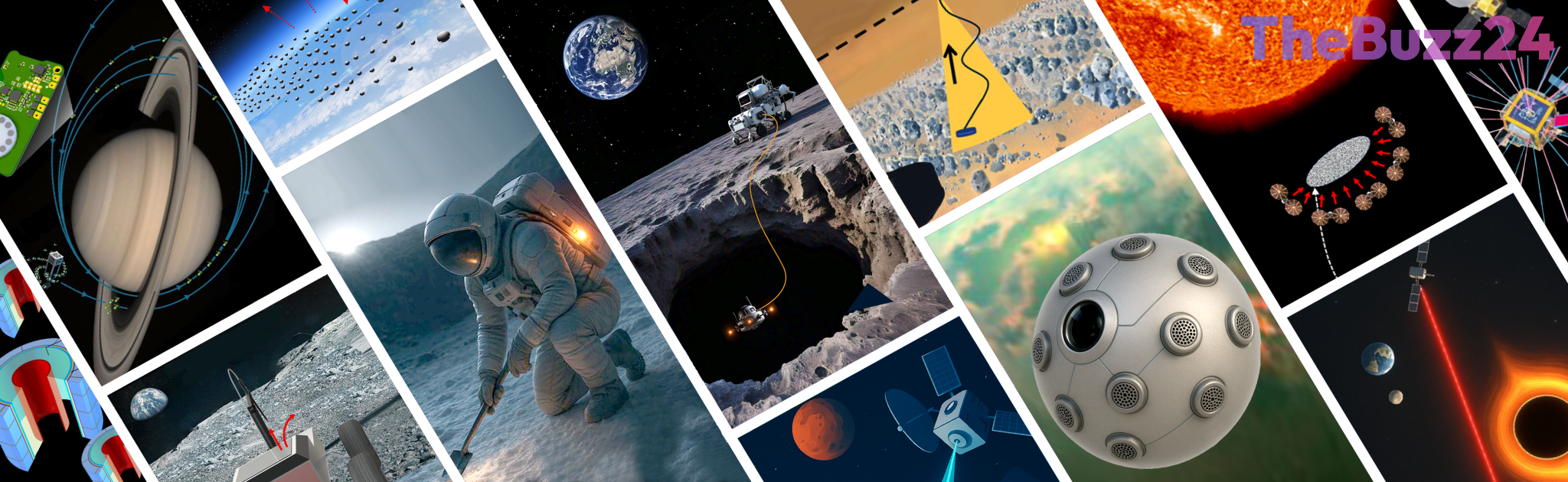
A significant portion of this year’s awards targets the burgeoning infrastructure needed for a sustained human presence on the Moon. Among the selected proposals are hovering robotic systems engineered to investigate subterranean lunar lava tubes, advanced thermal management architectures for tiny mobile rovers, and specialized radioisotope heat systems designed to protect astronauts during the grueling two-week lunar nights. Beyond Earth’s natural satellite, other concepts tackle the extreme environment of Venus, propose swarms of thousands of miniature satellites to map Saturn’s rings, and examine deep-space propulsion for interstellar travel.
Looking even further outward, selected innovators are setting their sights on mapping exoplanet continents, observing photon rings around black holes, and detecting subtle gravitational waves to uncover the secrets of galactic formation. Meanwhile, a few earth-centric proposals even explore using spaceborne dust to mitigate solar radiation. By fostering these visionary concepts, the program continues to bridge the gap between science fiction and the next era of technological breakthroughs.
Key Takeaways
- The program has awarded 18 new Phase I grants totaling $3.2 million to support visionary early-stage aerospace concepts.
- Selected projects include lunar exploration tools, Venus-resilient instruments, and swarms of tiny satellites to study planetary rings.
- Long-range concepts range from interstellar propulsion systems and exoplanet imaging to methods for mitigating solar radiation.
Editor’s Analysis & Impact
The continuous backing of early-stage, high-risk concepts through initiatives like the NIAC program highlights a critical shift in modern aerospace strategy. By funding radical ideas—ranging from subterranean lunar exploration to interstellar propulsion—the agency is not just planning for immediate missions, but actively shaping the long-term trajectory of the global space economy. These investments often serve as a catalyst for commercial aerospace innovation, encouraging startups and academic institutions to push past traditional engineering limits. As space agencies globally pivot toward sustained planetary habitation and deep-space observation, technologies born from these foundational grants will likely underpin the next multi-decade wave of commercial and scientific space infrastructure.
Frequently Asked Questions
Q: What is the primary goal of the NIAC program?
A: The program is designed to fund early-stage, visionary concepts that have transformative potential and eventual feasibility for future space missions and the aerospace economy.
Q: How much funding do the 2026 Phase I awardees receive?
A: The 18 Phase I awards total $3.2 million, with each project receiving up to $175,000 for a nine-month initial investigation.
Q: Are these NIAC-funded projects considered official missions?
A: No, these projects are strictly focused on early-stage concept development and are not classified as official missions.
AI Disclosure: This article is based on verified data and official reports. Our Team and AI have cross-referenced every financial detail with primary sources to ensure total accuracy.
More from this Category